Surbex Z Uses, Dosage and Side Effects: Patient Guide
Learn what Surbex Z can and cannot treat, how to check its ingredients, and when side effects or overlapping supplements need a pharmacist’s review.
By Dr. Amina Rahman, PharmD13 min read
Reviewed by Medical Review Team ·
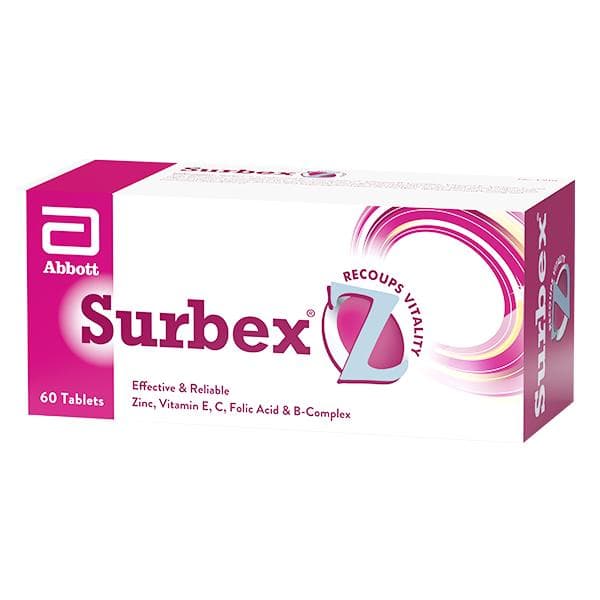
Surbex Z is an oral vitamin-and-zinc supplement used to help prevent or correct inadequate intake of the nutrients it contains. It is not a general treatment for unexplained weakness, and safe use depends on checking the pack, avoiding duplicate supplements, and confirming the dose with a pharmacist.
This guide is educational, not advertising for any company’s product. Compare suitable options with a pharmacist rather than choosing by brand recognition alone.
Quick Information
| Information | Details |
|---|---|
| Generic name | Combination of B vitamins, ascorbic acid (vitamin C), vitamin E and zinc; verify the complete label |
| Brand name(s) or class options | Surbex Z; generic multivitamin-and-zinc combinations, which may have different compositions |
| Drug class | Vitamin and mineral supplement |
| Main uses | Supplementing inadequate intake or addressing selected nutrient deficiencies |
| Available forms | Commonly supplied as oral tablets in Pakistan; confirm the presentation |
| Common strengths | Several ingredient-specific strengths per tablet, not one overall strength; check each amount |
| Route | By mouth |
| Prescription / OTC | Commonly purchased without a prescription; confirm local status and suitability |
| Common side effects | Nausea, stomach discomfort, altered taste and occasional bowel changes |
Introduction — What is Surbex Z?
This is a combination supplement. Unlike a single-ingredient medicine, it has no single International Nonproprietary Name, or INN, that describes everything inside it.
Pakistani formulations are generally described as containing B-complex vitamins, vitamins C and E, and zinc. B vitamins may appear under names such as thiamine, riboflavin, pyridoxine and cyanocobalamin. Read the current pack rather than assuming an online ingredient list matches your tablets.
Check the manufacturer, expiry date, intact seal and ingredient panel. A loose tablet without identifiable packaging is a poor basis for choosing a daily supplement, particularly when you already take other medicines.
How it works — support, not instant energy
B vitamins help enzymes carry out normal processes, including releasing energy from food. Vitamin C supports collagen formation and improves absorption of iron from plant foods; zinc supports normal immune function and wound healing. Vitamin E contributes to antioxidant protection.
These nutrients do not supply calories. Nor does an extra tablet act like an energy drink.
When a deficiency genuinely explains symptoms, improvement may develop over days to weeks, while replenishing depleted stores can take longer. If your intake is already adequate, you may notice no benefit. A lack of improvement is a reason to reassess the cause, not increase the dose.
Uses — when supplementation makes sense
Inadequate dietary intake
A clinician may recommend supplementation when a restricted diet, poor appetite or recovery from illness leaves nutritional gaps. It complements food; it does not replace meals, protein or sufficient calories.
Ask what problem is being treated. A broad supplement may be convenient, but a single nutrient can be more appropriate when a specific deficiency is established.
Selected vitamin or zinc deficiencies
Surbex Z may supply nutrients that are low, but its combination and amounts may not match the treatment needed. Significant vitamin B12 deficiency, for example, may require a targeted regimen and investigation of poor absorption.
Do not assume it treats iron-deficiency anaemia. Check whether your product contains iron; commonly described Surbex Z formulations should not be treated as iron replacement.
Tiredness, hair shedding and recovery
Supplements may help when inadequate nutrition contributes. They do not reliably treat fatigue, hair loss, diabetes-related nerve symptoms or sexual difficulties without identifying the cause.
Persistent weakness deserves assessment, especially with breathlessness, weight loss, fever, unusual bleeding or excessive thirst. In Pakistan’s summer heat, dizziness may reflect dehydration rather than a vitamin shortage. Discuss whether examination and targeted blood tests are needed instead of repeatedly buying another bottle.
Dose and how to take it
Follow the directions on your specific pack or prescription. The exact dose and dosing frequency depend on age, condition, formulation and medical history; confirm them with your doctor or pharmacist.
For adults, do not copy another person’s schedule or add extra tablets for faster results. Check whether directions refer to one tablet, one serving or a different presentation.
Take it with water. Taking it after a meal often reduces zinc-related nausea, unless your clinician gives different instructions. Breakfast or lunch may be convenient, but a particular clock time is not usually essential.
Swallow tablets as directed. Do not assume they can be chewed, crushed or split; check the coating and manufacturer’s instructions with a pharmacist if swallowing is difficult.
Children need separate advice. An adult combination is not automatically suitable at half a tablet, and childhood supplementation should address the child’s age, diet and reason for treatment.
Agree on a review point. Do not extend an intended short course indefinitely because the tablets are available without a prescription.
Side effects — what to watch for
Common problems include nausea, abdominal discomfort, an unpleasant taste and sometimes diarrhoea or constipation. Taking the tablet with food may help mild nausea. Persistent symptoms warrant a pharmacist’s review rather than simply tolerating them.
Riboflavin can make urine bright yellow. That colour alone is usually harmless and does not show that treatment is working. Painful urination, blood, fever or unusually dark urine with yellow eyes needs assessment.
Stop taking the supplement and seek urgent medical help for facial swelling, breathing difficulty, faintness or a widespread blistering rash.
Less obvious problems can develop with prolonged excessive intake. Too much vitamin B6 can injure peripheral nerves, causing tingling, burning, numbness or poor balance; excessive zinc can reduce copper absorption and contribute to anaemia or neurological problems.
Do not dismiss new tingling. Stop nonessential overlapping supplements and arrange prompt medical assessment, bringing every pack you use.
Warnings and precautions
Pregnancy changes the requirements. Do not substitute this product for a prescribed prenatal supplement, and do not assume its folate content meets pregnancy recommendations. During breastfeeding, review the complete nutrient totals alongside any postnatal vitamins.
People with kidney disease, dialysis, recurrent kidney stones or significant liver disease should obtain individual advice. Some ingredients or amounts may be unsuitable, and higher vitamin C intake is a particular consideration in susceptible stone-formers.
Older adults may have poor absorption, several medicines or difficulty swallowing. A tablet may conceal rather than solve those problems if no one checks the underlying cause of poor intake.
Heart disease alone does not create a need for this supplement. Bring heart medicines to the review, especially anticoagulants. People with haemochromatosis, an iron-overload disorder, should discuss vitamin C supplementation because it can increase iron absorption.
Check inactive ingredients if you have known allergies. Children should receive an age-appropriate product only when there is a clear reason to supplement.
Drug interactions — check medicines and nutrient totals
Zinc can reduce absorption of certain antibiotics, including tetracyclines and quinolones, when taken too close together. It can also interfere with penicillamine. The required spacing depends on the medicine; ask the pharmacist to write an exact schedule on the pack.
Vitamin B6 can affect levodopa when levodopa is taken without a protective partner such as carbidopa. Vitamin E supplements warrant review with warfarin or other medicines that increase bleeding risk, particularly at higher total intakes.
The easiest interaction to miss is duplication. A multivitamin, a “nerve” tablet and an immunity supplement can all contribute B6 or zinc even though their front labels describe different purposes.
Bring photographs of all ingredient panels. Ask the pharmacist to total each nutrient per day, distinguishing the weight of a zinc compound from the amount of elemental zinc it supplies.
Food is usually helpful for tolerance. Alcohol does not improve absorption or cancel the need for balanced meals, and heavy drinking can cause deficiencies that need medical assessment rather than self-treatment.
Who should not use it?
Do not take a product containing an ingredient to which you have had a confirmed allergic reaction. Avoid unidentified, expired or damaged tablets.
Do not start it on your own if you have a diagnosed nutrient excess, suspected supplement-related nerve injury, or instructions to restrict one of its ingredients. Children and people with complex kidney or liver disease need suitability checked first.
Unexplained anaemia should not be treated blindly. Some vitamin combinations can improve part of the blood picture while an underlying cause, such as inadequately treated B12 deficiency, remains unresolved.
Overdose — act before symptoms worsen
Taking too many tablets may cause nausea, vomiting, abdominal pain or diarrhoea. The risk depends on the ingredients, amount taken, age and other products involved; being a supplement does not make an overdose harmless.
For a child’s accidental ingestion, a substantial overdose or an uncertain amount, seek urgent medical advice immediately. Contact a local emergency department or poison-information service where available.
Do not induce vomiting. Bring the bottle, remaining tablets and details of when the ingestion happened. Severe pain, repeated vomiting, confusion, collapse or breathing difficulty requires emergency care.
Missed dose — do not double up
Take a forgotten dose when remembered unless it is nearly time for the next scheduled dose. In that case, skip it and return to the usual schedule.
Never double without medical advice. Missing an occasional supplement dose is generally less concerning than repeatedly taking extra tablets to catch up.
How long is it used?
Duration follows the reason for treatment. Temporary poor intake may need a limited course, whereas a documented deficiency or ongoing absorption problem may require longer, targeted care with review.
There is no typical withdrawal syndrome. However, stopping before a deficiency is corrected may allow the problem to persist or return.
At the planned review, ask whether symptoms improved, whether diet has recovered and whether testing or a different preparation is needed. Continued fatigue is not proof that you need a stronger multivitamin.
Storage — protect tablets from heat and moisture
Follow the pack’s storage temperature. Keep tablets in their original, tightly closed container, away from direct sunlight, kitchen steam and bathroom humidity.
Heat matters in Pakistan. A parked car or a window ledge is not suitable storage, even when the bottle looks intact.
Keep all supplements out of children’s sight and reach. Do not use tablets past their expiry date or those that are damp, crumbling or visibly changed. Ask a pharmacy about local disposal options.
Forms and strengths — read each ingredient separately
Surbex Z is commonly encountered as tablets in Pakistan. Do not assume a similarly named syrup, capsule or imported product contains the same formula, or that it exists under this exact brand locally.
Combination supplements have multiple strengths. The useful information is the amount of each nutrient per tablet and the number of tablets in a serving.
Check units carefully. Milligrams and micrograms are different, and some vitamin labels use international units. Ask a pharmacist to interpret unfamiliar units rather than comparing front-of-pack numbers alone.
Brand comparison — choose by composition and purpose
No brand is best for everyone. Compare Surbex Z with generic multivitamin-and-zinc preparations or targeted single-nutrient supplements, using the current labels.
A combination offers convenience when several intake gaps exist, but adds ingredients you may not need. A targeted preparation can avoid duplication and suit a confirmed deficiency, although it will not address unrelated nutritional gaps.
Similar ingredient names do not guarantee identical amounts, formulations or absorption. Check a switch with your pharmacist or clinician, particularly during deficiency treatment. Compare cost per intended daily serving, not bottle price alone; current prices and pack sizes should be checked locally.
Common misconceptions
- Myth: It cures every kind of weakness. Truth: Fatigue has many causes; supplementation helps only when relevant to the problem.
- Myth: Water-soluble vitamins cannot cause harm. Truth: Excessive vitamin B6 can damage nerves despite being water-soluble.
- Myth: Bright yellow urine proves benefits. Truth: Riboflavin can change urine colour without showing whether a deficiency has improved.
- Myth: More zinc means stronger immunity. Truth: Excess zinc can cause harm, including copper deficiency.
- Myth: A supplement can replace treatment. Truth: It cannot replace prescribed therapy for anaemia, infection, thyroid disease or diabetes.
Patient FAQ
Can I take Surbex Z every day?
Only according to the verified label or professional advice. Daily use should have a clear purpose and a review point, especially if other supplements contain overlapping nutrients.
Should I take it before or after food?
After food is often easier on the stomach. If nausea continues despite taking it with a meal, ask a pharmacist whether the preparation is appropriate.
Will it help hair growth or skin problems?
It may help if a relevant deficiency contributes. It is not a reliable treatment for hereditary hair loss, acne or unexplained shedding without assessment.
Does it increase weight or appetite?
It does not supply meaningful calories. Correcting a deficiency may help someone feel better, but unexplained appetite loss or weight change needs its own evaluation.
Can it affect sleep or driving?
It is not a sleeping tablet and is not ordinarily sedating. If you feel dizzy or unwell, avoid driving and investigate the symptom rather than assuming it is harmless.
Is it safe during pregnancy or breastfeeding?
Check with your maternity clinician or pharmacist before starting. Bring your prenatal or postnatal supplement so they can compare nutrient totals and avoid unnecessary duplication.
Can children take adult Surbex Z tablets?
Do not give an adult tablet without paediatric advice. Suitability depends on the formulation, the child’s needs and whether a supplement is necessary at all.
Can I take it with antibiotics?
Some antibiotics interact with zinc. Show the pharmacist the antibiotic name and supplement label so they can confirm whether separation is needed and specify the timing.
What should I do if it causes tingling?
Stop nonessential supplements containing B6 and seek prompt assessment. Bring all packs; tingling can have several causes, and increasing a “nerve vitamin” may make supplement-related toxicity worse.
Is it addictive, and can I stop suddenly?
It is not addictive and generally needs no taper. If prescribed for a confirmed deficiency, discuss stopping so the nutritional problem does not remain untreated.
Sources
These references support nutrient safety and interaction guidance; your current pack remains the reference for its formulation.
- NIH Office of Dietary Supplements: Multivitamin/mineral Supplements
- NIH Office of Dietary Supplements: Zinc
- NIH Office of Dietary Supplements: Vitamin B6
- NIH Office of Dietary Supplements: Vitamin C
Important Medical Disclaimer
This article is for general educational purposes only and is not a substitute for advice from a qualified doctor or pharmacist. Always consult your doctor/pharmacist before using any medicine, changing a dose, or starting treatment.
Related reading
If this article on Surbex Z Uses, Dosage and Side Effects: Patient Guide was helpful, explore these related guides for more practical information on similar topics.
- Celbex Tablet Uses: Check the Ingredient and Use Safely — Check Celbex’s active ingredient before use, then learn about celecoxib pain relief, stomach and heart risks, interactions, and when to s…
- Zentel Tablet Uses: Worm Treatment and Safe Dosing — Learn which worm infections Zentel treats, why doses and food instructions differ, and when children or adults need testing instead of an…
- Rigix Tablet Uses: Allergy Relief, Dose and Safety — Learn what Rigix treats, how to check its cetirizine strength, and when sleepiness, kidney problems or persistent itching need a pharmaci…
- Calpol Syrup Uses: Fever, Pain and Safer Dosing Tips — Learn when Calpol syrup helps fever and pain, how to check its strength, and which dosing mistakes or symptoms need urgent attention in c…
- Deltacortril Tablet Uses: Benefits, Risks and Safe Use — Learn why prednisolone is prescribed, which Deltacortril label details to check, and when side effects or stopping treatment need medical…
- Gravinate Syrup Uses, Dosage Guidance and Side Effects — Learn when Gravinate syrup helps nausea and travel sickness, how to check the bottle strength, and which symptoms need care rather than a…