Gravinate Syrup Uses, Dosage Guidance and Side Effects
Learn when Gravinate syrup helps nausea and travel sickness, how to check the bottle strength, and which symptoms need care rather than another dose.
By Dr. Amina Rahman, PharmD13 min read
Reviewed by Medical Review Team ·
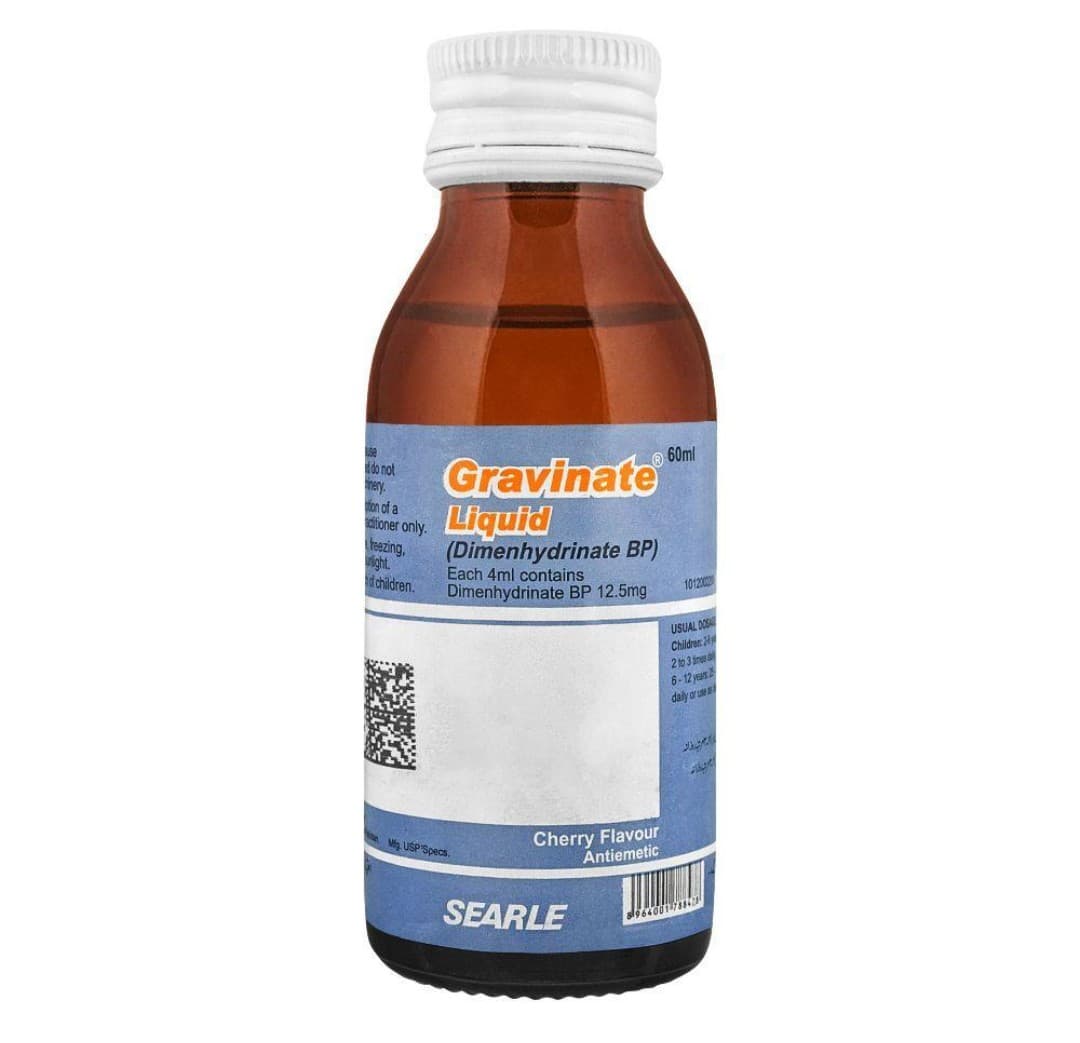
Gravinate syrup contains dimenhydrinate, a sedating antihistamine mainly used to prevent and relieve motion sickness, including nausea, vomiting, and travel-related dizziness. It can cause marked sleepiness and is not suitable for every cause of vomiting, especially when dehydration or another illness needs treatment.
This guide is educational, not advertising for any company's product. Compare suitable options with a pharmacist; the ingredient, concentration, and patient's needs matter more than the brand name.
Quick Information
| Information | Details |
|---|---|
| Generic name | Dimenhydrinate |
| Brand name(s) | Gravinate; Dramamine Original Formula in some countries—check ingredients because brand variants differ |
| Drug class | First-generation, sedating antihistamine; antiemetic, meaning anti-vomiting medicine |
| Main uses | Prevention and relief of motion sickness; selected nausea or balance-related symptoms under medical advice |
| Available forms | Oral liquid, tablets, and clinician-administered injections, depending on market |
| Common strengths | Pakistani Gravinate syrup is commonly listed as 12.5 mg/4 mL; verify your bottle |
| Route | Syrup is taken by mouth |
| Prescription / OTC | Confirm locally in Pakistan; availability without a prescription does not establish suitability |
| Common side effects | Drowsiness, dry mouth, blurred vision, constipation, dizziness |
Introduction — What is Gravinate syrup?
Dimenhydrinate belongs to an older group of antihistamines that enter the brain and can reduce nausea arising from the balance system. Although antihistamines are often associated with allergies, this medicine is generally chosen for its anti-sickness effect rather than routine allergy treatment.
The liquid allows measurement when tablets are unsuitable. It is not automatically child-safe. A child's eligibility and dose still depend on age, weight, the reason for vomiting, and the exact product instructions.
Check the active ingredient first. Similar-looking names, imported packs, and different formulations should never be assumed to contain the same medicine.
How it works and when relief may begin
During travel, the eyes and inner ear can send conflicting movement signals to the brain. Dimenhydrinate reduces activity in pathways involving histamine and acetylcholine, chemical messengers involved in nausea and balance-related symptoms.
Prevention often works better than rescue. Motion-sickness labels commonly advise taking it 30–60 minutes before travel, although the instructions on your own product take priority. Relief is not instantaneous, and vomiting may interfere with absorption.
Sleepiness is a side effect, not proof that the illness is improving. A quieter child may still be dehydrated, while an adult who feels less nauseated may remain unsafe to drive.
Uses: when it helps—and when it does not
Motion sickness during travel
Its clearest role is preventing or relieving nausea, vomiting, and dizziness triggered by cars, buses, boats, or other movement. Someone who predictably becomes nauseated on winding roads may benefit when a pharmacist confirms suitability.
Simple measures still help. Face forward, look towards the horizon, avoid reading, and choose a light meal rather than a heavy one before departure. Fresh air can also reduce discomfort.
Selected dizziness and nausea
A clinician may recommend dimenhydrinate briefly for nausea associated with some inner-ear balance disorders. However, dizziness has many causes, including low blood pressure, medicine effects, and neurological disease.
New dizziness with weakness, trouble speaking, inability to walk, or a severe headache needs urgent assessment—not a trial of syrup.
Vomiting from illness
It is not a universal vomiting treatment. Gastroenteritis, food poisoning, pregnancy-related sickness, migraine, and surgical abdominal conditions require different decisions.
For vomiting with diarrhoea, oral rehydration solution (ORS) replaces lost water and salts; dimenhydrinate does not. Offer small, frequent sips if the person is alert and can swallow, following the ORS packet's exact mixing instructions. Do not delay care for persistent vomiting or dehydration.
Dose and how to take it safely
The exact dose depends on age, condition, formulation, and medical history; confirm it with your doctor or pharmacist. Adult and child directions are not interchangeable, and the minimum interval and maximum daily amount must come from the verified label or prescription.
For adults, occasional travel-related use is different from repeated treatment for unexplained vomiting. Do not keep adding doses because symptoms persist; reassessment may be more useful than stronger symptom suppression.
For children, provide both age and current weight. Dimenhydrinate should not be given to children under two unless specifically directed by a doctor, and older children still need product-specific advice.
Measure the liquid, not a household spoon
Use an oral syringe or marked medicine cup. Kitchen teaspoons vary. Check whether the prescription states milligrams, the amount of drug, or millilitres, the volume of liquid; ask the pharmacist to write both clearly.
The denominator matters: 12.5 mg/4 mL is not 12.5 mg/5 mL. Never reuse another bottle's millilitre instructions without checking its concentration. Follow any label instruction about shaking.
The syrup can generally be taken with or without food; a small snack may help stomach discomfort. There is no tablet to crush or chew, and tablets should not be dissolved to improvise a syrup at home.
If vomiting follows a dose, do not automatically repeat it. Absorption is uncertain, so seek advice about the timing and amount already given.
Side effects: what to watch for
Common effects include sleepiness, dry mouth, blurred vision, constipation, and reduced alertness. Dizziness may also occur, even though the medicine can treat some motion-related dizziness.
Do not drive through the drowsiness. Avoid motorcycles, machinery, climbing, and other tasks where slower reactions could cause injury. For dry mouth, try water sips or sugar-free gum if appropriate.
Less commonly, children may become restless or unusually excited instead of sleepy. Difficulty passing urine, pronounced confusion, or significant agitation warrants prompt medical advice before another dose.
Seek emergency care for:
- Trouble breathing, facial swelling, or collapse.
- A seizure or an irregular, racing heartbeat with faintness.
- Severe confusion, hallucinations, or inability to wake normally.
Stop taking the medicine if a serious reaction is suspected. Take the bottle to the treating team.
Warnings and precautions before the first dose
Pregnancy: Do not assume that all pregnancy-related vomiting is ordinary morning sickness. A clinician should assess severity and choose treatment, particularly if fluids will not stay down.
Breastfeeding: Check before use. Dimenhydrinate may make a breastfed infant sleepy, and larger or repeated doses may affect milk supply. Poor feeding or unusual infant sleepiness needs advice.
Children: Never use it to make a child sleep during a journey. Sedation can obscure worsening illness, and some children develop agitation instead.
Older adults: Confusion, falls, constipation, and urinary retention are greater concerns. Ask whether a less sedating approach would be safer.
Other conditions: Tell the pharmacist about glaucoma, prostate enlargement, difficulty urinating, seizures, significant breathing disease, or bowel obstruction. Mention kidney or liver disease and any heart rhythm problem before treatment; these may change the risk assessment or monitoring needed.
Heat deserves attention in Pakistan. Because this medicine can impair sweating, avoid overheating in crowded vehicles or summer heat, particularly in children and older adults. Drowsiness also makes it easier to miss drinking opportunities.
Drug interactions: check the whole medicine list
Alcohol increases sedation and accident risk. Avoid combining it with dimenhydrinate.
Other important combinations include sleeping tablets, benzodiazepines, opioid painkillers, sedating antidepressants, antipsychotics, and medicines such as pregabalin or gabapentin. Cough-and-cold mixtures and allergy tablets may already contain a sedating antihistamine.
Check ingredients, not just brand names. Dimenhydrinate contains a diphenhydramine component, so adding a diphenhydramine-containing sleep, cold, or allergy product can duplicate effects.
Medicines with similar drying effects can worsen constipation, blurred vision, and urinary retention. Monoamine oxidase inhibitors, a particular antidepressant group, also require an interaction check.
Show the pharmacist all prescriptions, OTC products, vitamins, and herbal remedies. Ordinary food is not usually the main interaction concern, but sedating supplements can still matter.
Who should not use it?
Do not use dimenhydrinate if you have had an allergic reaction to it or a relevant ingredient in the liquid. A history of allergy to diphenhydramine also needs professional review.
Other exclusions depend on the label. People with narrow-angle glaucoma, urinary retention, or suspected gastrointestinal obstruction should not self-treat without medical clearance. Some conditions are precautions rather than absolute contraindications, so individual assessment matters.
Overdose: act before symptoms become severe
An overdose can cause extreme sleepiness or agitation, hallucinations, enlarged pupils, hot dry skin, a fast heartbeat, seizures, and unconsciousness. Children may deteriorate quickly.
Seek emergency help immediately after a suspected overdose, even if the person initially looks well. Contact the nearest emergency department or local ambulance service; Rescue 1122 operates in many parts of Pakistan.
Do not induce vomiting. Bring the bottle and report the estimated amount and time taken. Do not give anything by mouth to an unconscious person.
Missed dose: never double up
For occasional travel use, a missed dose usually does not need catching up after the journey. If prescribed on a schedule, follow the label's missed-dose directions and skip the missed dose when the next is nearly due.
Never double a dose without medical advice. Record dose times when several caregivers share responsibility.
How long is it used?
Motion sickness generally needs occasional, short-term treatment. Repeated daily use for unexplained nausea or dizziness deserves a diagnosis rather than repeated bottle purchases.
A brief recommended course usually needs no gradual reduction. However, prolonged high-dose use can lead to misuse, dependence, and withdrawal problems; seek supervised advice rather than stopping such use alone.
Once the planned need ends, stop routine dosing. Returning symptoms should prompt reassessment, not automatic continuation.
Storage in a Pakistani home
Follow the bottle's temperature instructions and protect it from direct sunlight, excess heat, and moisture. Do not leave it on a dashboard or in a parked car. Refrigerate only if the label says to do so.
Keep the cap closed and store it out of children's sight and reach, preferably locked away. Mark the opening date if an after-opening limit is stated.
Avoid expired or visibly altered medicine. Ask a pharmacist about safe disposal rather than pouring leftover syrup into household drains.
Forms and strengths: do not interchange by volume
Dimenhydrinate is supplied as oral liquids, tablets, and injections in different markets. Tablets commonly contain 50 mg; Gravinate syrup in Pakistan is commonly listed as 12.5 mg per 4 mL. Your pack remains the authority.
Injection use belongs in clinical care. A tablet strength or injectable concentration cannot be used as a home syrup instruction, and availability may differ between pharmacies.
Brand comparison: compare ingredients before names
| Option | Useful distinction | Limitation |
|---|---|---|
| Gravinate syrup | Liquid dimenhydrinate permits measured oral administration | Requires a verified concentration and suitable measuring device |
| Dramamine Original Formula | A dimenhydrinate option in some countries | Often supplied as tablets; other Dramamine variants may contain different ingredients |
| Generic dimenhydrinate | May provide another suitable same-ingredient option | Local availability, formulation, excipients, and directions vary |
No brand is recommended as best. The same ingredient does not guarantee identical formulation or bioavailability—the amount reaching the bloodstream. Ask a pharmacist or clinician before switching, especially between liquids and tablets.
Common misconceptions
- Myth: It cures every kind of vomiting. Truth: It controls selected symptoms, not infections, dehydration, or surgical causes.
- Myth: Sleep means the child is recovering. Truth: Drug-related sedation can hide deterioration; assess waking, drinking, and urine output.
- Myth: Syrup is weaker than tablets. Truth: The measured amount of active ingredient determines exposure.
- Myth: An available-without-prescription medicine is harmless. Truth: Age restrictions, interactions, and overdose risks still apply.
Patient FAQ
Can Gravinate syrup stop vomiting from food poisoning?
It may reduce nausea in selected cases, but it does not treat the cause or replace ORS. Bloody vomit, severe abdominal pain, confusion, or inability to retain fluids needs urgent assessment.
Can I take it on an empty stomach?
Generally, yes. A light snack may make it easier to tolerate, but forcing food during active vomiting is unnecessary. Prioritise small, frequent fluids and seek help if those will not stay down.
Does it make you sleepy, and can you drive?
Sleepiness is common and may outlast the nausea. Do not drive or ride a motorcycle if affected; caffeine does not reliably restore safe reaction time. Arrange another driver for travel when needed.
Is it safe for babies or young children?
Do not self-dose a baby. Children under two need explicit medical direction, and older children need age-appropriate label advice. Persistent vomiting, reduced urine, or difficulty waking calls for assessment rather than repeated medicine.
Can it be used during pregnancy?
Sometimes a clinician may select dimenhydrinate, but suitability depends on pregnancy stage, symptom severity, and other medicines. Reduced urination, faintness, or inability to drink suggests a need for prompt care.
Can a breastfeeding mother take it?
Ask before taking it, particularly repeatedly or while feeding a newborn. Discuss alternatives and watch for unusual infant sleepiness or poor feeding. Do not stop breastfeeding automatically without advice.
Is Gravinate an antibiotic or appetite syrup?
Neither. Dimenhydrinate is an anti-sickness antihistamine, not an antibiotic, nutritional supplement, or appetite stimulant. Using it to encourage sleep or feeding exposes the person to risks without addressing the underlying problem.
What if my child sleeps after the vomiting stops?
Check that the child wakes and responds normally, drinks when awake, and continues passing urine. Difficulty waking, abnormal breathing, marked weakness, or very little urine requires urgent medical help, even if vomiting has stopped.
Can I use it every day or become dependent?
Daily use needs medical review. Short-term recommended use is different from prolonged or high-dose misuse, which can cause dependence. Never increase the amount to chase sleepiness or another non-medical effect.
What is the price in Pakistan?
Prices vary by pack size, manufacturer, and pharmacy. Check the current printed retail price, expiry, seal, and purchase receipt at a licensed pharmacy. An unusually cheap bottle with unclear labelling is not a safe saving.
Sources
- MedlinePlus: Dimenhydrinate—patient information on uses, administration, precautions, and adverse effects.
- CDC Yellow Book: Motion Sickness—travel-related prevention and treatment guidance.
- NCBI Bookshelf: LactMed—breastfeeding medicine reference; see the dimenhydrinate entry.
These references do not replace the directions on a Pakistan-market product label.
Important Medical Disclaimer
This article is for general educational purposes only and is not a substitute for advice from a qualified doctor or pharmacist. Always consult your doctor/pharmacist before using any medicine, changing a dose, or starting treatment.
Related reading
If this article on Gravinate Syrup Uses, Dosage Guidance and Side Effects was helpful, explore these related guides for more practical information on similar topics.
- Rigix Tablet Uses: Allergy Relief, Dose and Safety — Learn what Rigix treats, how to check its cetirizine strength, and when sleepiness, kidney problems or persistent itching need a pharmaci…
- Nims Tablet Uses: Pain Relief, Dose and Liver Safety — Learn what Nims tablets may treat, how to check the ingredient, and when to stop. Practical guidance on dosing, liver risks and safer pai…
- Celbex Tablet Uses: Check the Ingredient and Use Safely — Check Celbex’s active ingredient before use, then learn about celecoxib pain relief, stomach and heart risks, interactions, and when to s…
- Ascard Tablet Overview: Uses, Dosage and Safe Use Tips — Understand what Ascard contains, why doctors prescribe it, and how to avoid bleeding risks, missed-dose mistakes and unsafe tablet substi…
- trimetabol syrup uses in urdu — ٹرائی میٹابول شربت (Trimetabol Syrup) کے استعمال — مکمل اور آسان اردو رہنمائی تعارف بھوک نہ لگنا ایک ایسا مسئلہ ہے جس کا سامنا چھوٹے بچوں…
- Medication Therapy Management in Community Practice — How structured MTM visits improve outcomes and expand the pharmacist's clinical role.