Ascard Tablet Overview: Uses, Dosage and Safe Use Tips
Understand what Ascard contains, why doctors prescribe it, and how to avoid bleeding risks, missed-dose mistakes and unsafe tablet substitutions.
By Dr. Amina Rahman, PharmD13 min read
Reviewed by Medical Review Team ·
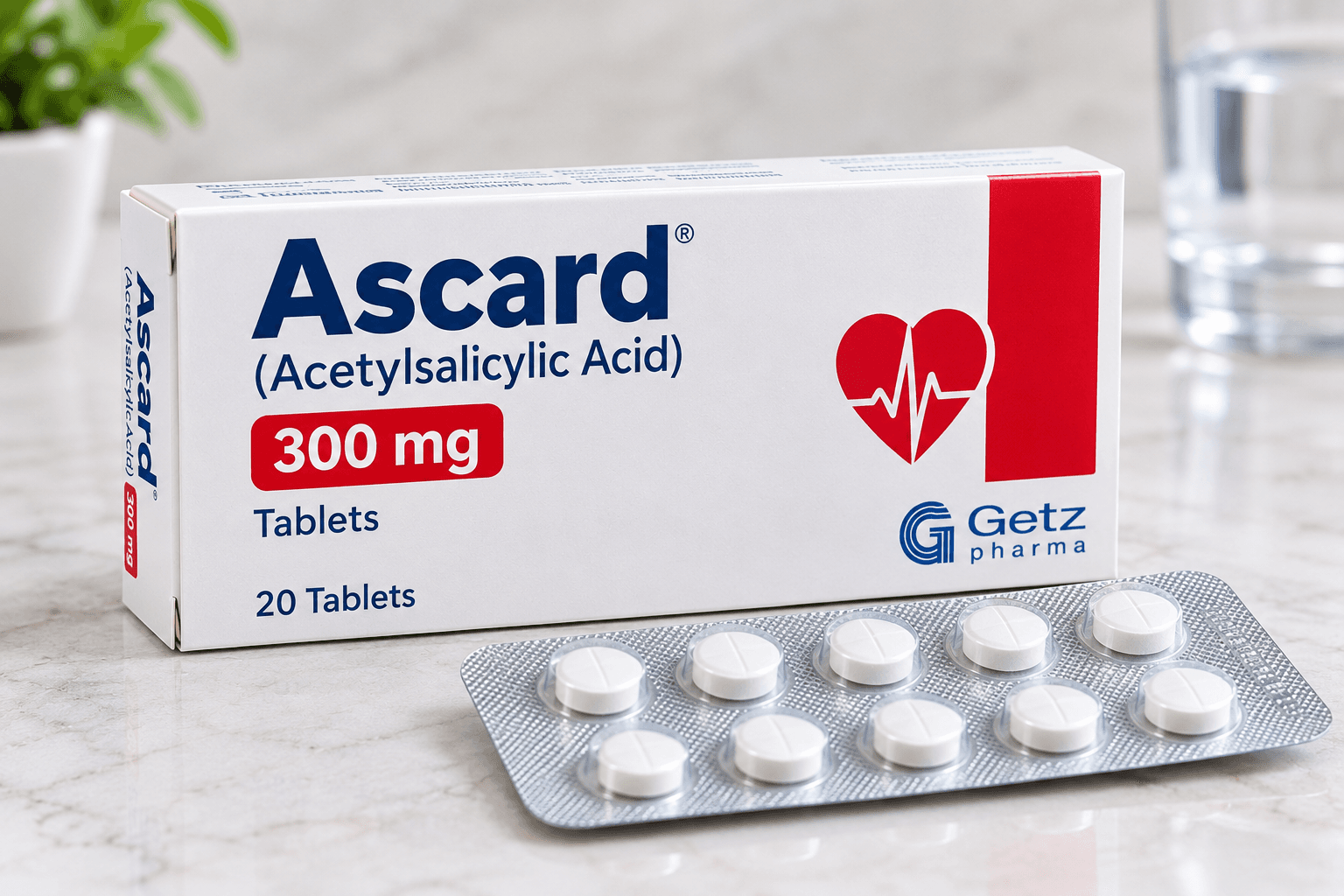
Ascard tablets contain aspirin, also called acetylsalicylic acid, an antiplatelet medicine used in prescribed low doses to help prevent certain heart attacks and strokes. Bleeding is the main safety concern: do not start it for routine prevention or stop a prescribed course without medical advice.
This guide is educational, not advertising for any company. Compare suitable aspirin options with a pharmacist; the ingredient, strength and tablet formulation matter more than the brand name.
Quick Information
| Information | Details |
|---|---|
| Generic name | Aspirin, also called acetylsalicylic acid |
| Brand names | Ascard; Disprin is another aspirin brand, but its strength and formulation may differ |
| Drug class | Antiplatelet; aspirin also belongs to the non-steroidal anti-inflammatory drug family |
| Main uses | Prevention of further heart attacks and certain clot-related strokes; prescribed care after coronary procedures |
| Available forms | Ascard is commonly supplied as enteric-coated tablets; verify the pack |
| Common strengths | Commonly listed Ascard strengths include 75 mg and 150 mg; confirm local availability and the actual label |
| Route | By mouth |
| Prescription / OTC | Confirm locally; long-term preventive treatment needs medical assessment |
| Common side effects | Indigestion, easier bruising and prolonged bleeding from small cuts |
Introduction — What is Ascard?
Low-dose aspirin helps prevent unwanted blood clots. It is often described as a “blood thinner,” although it does not literally make blood thinner or dissolve an existing clot.
Strength matters here. An aspirin tablet intended for pain relief is not automatically interchangeable with a low-dose tablet prescribed after a heart attack, even when both contain the same ingredient.
In Pakistan, check the original strip or carton rather than relying on tablet colour or a shopkeeper’s description. Read the generic name, strength, formulation and expiry date before the first dose.
How it works and when effects begin
Platelets are blood cells that stick together to help stop bleeding. Aspirin blocks their production of thromboxane A2, a chemical signal that encourages this sticking, making certain artery-blocking clots less likely.
The effect outlasts the tablet. Affected platelets remain less active for the rest of their lifespan, roughly seven to ten days, while the body steadily makes replacements.
An antiplatelet effect begins within hours, but enteric coating can delay absorption. You will not usually feel it working. Do not use your daily coated tablet as a substitute for emergency assessment of chest pain or stroke symptoms.
Uses: when doctors recommend aspirin
After a heart attack or coronary procedure
Doctors commonly prescribe aspirin after a heart attack, coronary stent placement or some bypass operations. This is secondary prevention: reducing the chance of another cardiovascular event in someone with established disease.
After a stent, aspirin may be combined with another antiplatelet medicine. The combination and its duration are deliberate; dropping either tablet without the cardiology team’s advice can be dangerous.
After certain strokes or transient ischaemic attacks
Aspirin may help prevent another ischaemic stroke, caused by a blocked blood vessel, or a transient ischaemic attack, sometimes called a mini-stroke.
Not every stroke involves a clot. Some involve bleeding, and others require different preventive medicines. Never give aspirin for new stroke symptoms before emergency assessment.
Selected other situations
Specialists sometimes prescribe low-dose aspirin during pregnancy to reduce pre-eclampsia risk, a potentially serious blood-pressure complication. Eligibility and timing require obstetric assessment.
Daily aspirin is not routinely suitable for everyone with diabetes, high cholesterol or increasing age. In people without established cardiovascular disease, bleeding may outweigh preventive benefit; recommendations vary by country and individual risk.
Dose and how to take it
For cardiovascular prevention, aspirin is commonly taken once daily. The prescribed strength depends on why it is needed, whether other clot-preventing medicines are used and the person’s bleeding risk.
The exact dose depends on age, condition, formulation and medical history; confirm it with your doctor or pharmacist. Do not copy a relative’s prescription or add a tablet because blood pressure is high.
Take it consistently each day. Follow the leaflet about food; taking low-dose aspirin with or just after food may reduce stomach discomfort, but does not prevent serious bleeding.
Swallow enteric-coated or gastro-resistant tablets whole with water. Do not crush, chew or split them unless the specific product instructions permit it. If swallowing is difficult, ask about an appropriate alternative rather than breaking the coating.
Children need specialist prescribing, not a smaller portion of an adult tablet. Missed-dose instructions appear below; never compensate by taking extra tablets together.
Side effects: what needs action?
Common or usually non-emergency effects
Indigestion, mild stomach discomfort, easier bruising and bleeding that takes longer to stop can occur. Mention persistent symptoms to your clinician, particularly if they began after another medicine was added.
Patterns matter more than one bruise. Photograph unexplained bruising and note nosebleeds or gum bleeding so the prescriber can assess whether the change is significant.
Serious effects and emergency symptoms
Seek emergency care for:
- Vomiting blood or material resembling coffee grounds.
- Black, sticky, tar-like stools, particularly with weakness or dizziness.
- Bleeding that will not stop with firm pressure.
- Sudden severe headache, one-sided weakness, confusion or fainting.
- Wheezing, breathing difficulty, or swelling of the lips, tongue or face.
If major bleeding or a severe allergic reaction is suspected, do not take another dose while seeking immediate medical care. Bring the medicine packs. For minor bruising alone, contact the prescriber rather than abruptly stopping essential treatment.
Warnings and precautions
Tell the prescriber about previous stomach ulcers, gastrointestinal bleeding, bleeding disorders, uncontrolled high blood pressure, gout, kidney disease or liver disease. These can change whether aspirin is suitable or how closely treatment should be monitored.
Older adults need particular care. Bleeding risk rises with age, especially when several medicines are taken, and unexplained fatigue or breathlessness may warrant assessment for anaemia from hidden blood loss.
Pregnancy: low-dose aspirin can be appropriate when prescribed for a specific obstetric reason. Do not self-start it, increase the dose or apply advice about pain-relief aspirin to a specialist low-dose plan.
Breastfeeding: seek individual advice about dose, duration and the baby’s health. Do not assume that a pregnancy prescription should continue unchanged after delivery.
Children: aspirin is generally avoided under age 16 unless a specialist prescribes it because of its association with Reye’s syndrome, a rare but serious illness, particularly around viral infections.
Tell your dentist or surgeon early. Many procedures do not require aspirin withdrawal; stopping it yourself may create more risk than continuing it.
Drug interactions: check the whole medicine bag
Aspirin can interact with prescribed treatment and familiar pharmacy purchases. Bring a written list or photographs, including supplements, to a medication review.
| Medicine or product | Practical concern |
|---|---|
| Anticoagulants such as warfarin, apixaban or rivaroxaban | Bleeding risk increases; combinations need a clear clinical reason |
| Other antiplatelets such as clopidogrel | Sometimes intentionally prescribed together; do not add or remove either yourself |
| Ibuprofen, naproxen and other anti-inflammatory painkillers | More stomach and bleeding risk; ibuprofen may also interfere with aspirin’s antiplatelet effect |
| Corticosteroids and some antidepressants | May increase gastrointestinal bleeding risk |
| Methotrexate | Aspirin can increase toxicity, depending on the doses and circumstances |
| Herbal products and supplements | Some, including ginkgo or concentrated garlic supplements, may increase bleeding risk |
Do not improvise a timing gap for ibuprofen. Ask a pharmacist which painkiller suits your history; paracetamol is often considered instead, but still requires appropriate dosing and suitability checks.
No special diet replaces aspirin. Ordinary food portions are different from concentrated supplements, and aspirin does not require the vitamin K restrictions sometimes discussed with warfarin. Avoid heavy drinking because alcohol increases stomach irritation and bleeding risk.
Who should not use it?
Aspirin is generally unsuitable for someone with active significant bleeding, an active bleeding ulcer, or a previous serious aspirin-related allergic reaction. A history of wheezing after aspirin or another anti-inflammatory painkiller also needs careful assessment.
Severe kidney or liver disease and certain bleeding disorders may rule it out. Specialist advice is essential.
Do not self-treat suspected stroke, unexplained chest pain or a new severe headache with Ascard. Emergency professionals must establish the cause and advise treatment; aspirin can worsen a bleeding-related emergency.
Overdose: get help before symptoms worsen
Possible aspirin poisoning symptoms include ringing in the ears, reduced hearing, nausea, vomiting, sweating, rapid or deep breathing, fever and confusion. Severe poisoning may cause seizures or loss of consciousness.
Do not wait for symptoms. After a suspected overdose, an uncertain large ingestion or any accidental ingestion by a child, seek emergency care immediately and bring the packaging.
Do not induce vomiting or try a home remedy. Coated tablets can delay absorption, so initially feeling well does not exclude danger.
Missed dose: never double up
If you remember a missed daily dose on the same day, take it unless it is nearly time for the next dose. If you remember the next day, skip the forgotten tablet and resume your usual schedule.
Never double the dose without medical advice. Follow any different instructions on your own prescription.
During Ramadan, agree on a consistent dosing time with your pharmacist before changing the schedule. Do not squeeze two doses together when moving between fasting and non-fasting routines.
How long is treatment needed?
After a heart attack or certain strokes, treatment may continue for years or indefinitely. Pregnancy-related use and combinations prescribed after procedures have different schedules.
There is no universal course. Feeling better does not mean the clotting risk has disappeared, and stopping aspirin can remove protection even though it causes no dependence or withdrawal syndrome.
Ask the prescriber to record the indication and review date. When a planned course ends, confirm whether aspirin itself stops or only the companion medicine; discharge instructions sometimes give different end dates for each.
Storage in Pakistan’s heat and humidity
Keep tablets in their original packaging, away from moisture, direct sunlight and children. Follow the pack’s stated storage temperature rather than assuming every aspirin formulation has identical requirements.
Cars and bathrooms are poor choices. During hot weather, avoid leaving the strip on a dashboard or near a kitchen stove, where temperatures can exceed normal room conditions.
Do not use expired tablets or strips with damaged seals. Ask a pharmacist about local disposal arrangements; never leave unwanted medicine where children or animals can reach it.
Forms and strengths: read beyond the number
Ascard is commonly encountered as an enteric-coated aspirin tablet, including 75 mg and 150 mg strengths. Availability can change, so this is not a complete local product catalogue.
Aspirin more broadly comes in plain, dispersible, chewable and gastro-resistant formulations. These do not all release the medicine at the same speed.
Coating does not make aspirin bleed-proof. It changes where the tablet dissolves but does not remove aspirin’s whole-body effect on platelets or eliminate ulcer risk. Never identify a suitable replacement by milligram strength alone.
Brand comparison: compare the prescription, not popularity
Ascard and Disprin are aspirin brand names encountered in Pakistan, but that does not make their packs interchangeable.
| Option | Useful distinction | Limit to check |
|---|---|---|
| Ascard | Commonly associated with low-dose enteric-coated aspirin | Verify the exact strength and coating on the supplied pack |
| Disprin | Another aspirin brand, commonly encountered in dispersible presentations | Strength and intended use may differ from a daily low-dose prescription |
| Other generic aspirin | May provide an appropriate alternative | The pharmacist must confirm strength, formulation and suitability |
Neither brand is automatically better. The same active ingredient does not guarantee identical absorption timing or bioavailability; obtain professional advice before switching.
Keep a photo of the previous strip. Comparing the generic name, milligrams and coating helps catch a substitution error that a brand-only request can miss. Confirm current prices with a licensed pharmacy rather than relying on an old online listing.
Common misconceptions
- Myth: everyone over a certain age needs aspirin. Truth: preventive benefit must outweigh bleeding risk.
- Myth: coated aspirin cannot damage the stomach. Truth: coating does not eliminate ulcers or internal bleeding.
- Myth: bruising means the dose is working perfectly. Truth: bruising cannot measure protection; new or excessive bruising deserves review.
- Myth: a higher strength provides better daily protection. Truth: taking more can increase harm without improving your prescribed plan.
Patient FAQ
Is Ascard a blood-pressure medicine?
No. It reduces platelet clumping but does not treat high blood pressure. Continue any separately prescribed blood-pressure medicines.
Can I take Ascard after food?
Often, yes; follow your leaflet. Food may ease discomfort, but persistent stomach pain still needs assessment and food does not prevent bleeding.
Can I take it at night?
A consistent time generally matters more than morning versus evening. Follow your prescription and ask before changing a complicated medicine schedule.
Does Ascard cause sleepiness or affect driving?
Sleepiness is not a typical effect. Do not drive if you become dizzy, faint or unwell; these symptoms may require assessment rather than a timing change.
Is it addictive?
No. Long-term use reflects an ongoing medical need, not addiction. That does not make sudden discontinuation safe after a heart attack or stent.
Can I take it during pregnancy or breastfeeding?
Only with individual medical advice. Prescribed low-dose use in selected pregnancies differs from self-treatment, and breastfeeding requires a separate review.
Can I give it to a child with fever?
Do not give aspirin to a child under 16 unless specifically prescribed by a specialist. Ask for an age-appropriate fever treatment instead.
What if I notice black stools?
Black, tar-like stools can indicate internal bleeding. Seek urgent assessment, especially with dizziness or weakness, rather than assuming food or iron tablets explain them.
Can I drink alcohol while taking it?
Avoid heavy drinking. If you drink at all, ask about your individual risk, especially with previous ulcers or another clot-preventing medicine.
Do I need routine blood tests?
Aspirin does not require routine INR monitoring like warfarin. Your clinician may still check blood counts or kidney function when your history or symptoms justify it.
Sources
- NHS: Low-dose aspirin, including how and when to take it, side effects, interactions, pregnancy and breastfeeding.
- MedlinePlus: Aspirin drug information.
- US Preventive Services Task Force: Aspirin Use to Prevent Cardiovascular Disease: Preventive Medication. This US guidance concerns primary prevention; local decisions may differ.
Important Medical Disclaimer
This article is for general educational purposes only and is not a substitute for advice from a qualified doctor or pharmacist. Always consult your doctor/pharmacist before using any medicine, changing a dose, or starting treatment.
Related reading
If this article on Ascard Tablet Overview: Uses, Dosage and Safe Use Tips was helpful, explore these related guides for more practical information on similar topics.
- Solid Dosage Formulation Principles — Binders, disintegrants, and compression science for tablet development.
- betnelan tablet uses in urdu — بیٹنیلان ٹیبلٹ کس لیے استعمال ہوتی ہے؟ اگر آپ کے ڈاکٹر نے آپ کو Betnelan Tablet لینے کا کہا ہے اور آپ سوچ رہے ہیں کہ آخر یہ دوا ہے کیا، ت…
- Immunization Updates for Pharmacy Practice — Seasonal recommendations and workflow tips for pharmacy-based vaccination services.
- spiromide tablet uses in urdu — اسپائرومائیڈ ٹیبلٹ — سوجن اور پانی کی زیادتی کے بارے میں مکمل رہنمائی اگر آپ کے پیروں، ٹخنوں یا پیٹ میں غیر معمولی سوجن رہتی ہے، یا دل، ج…
- Tegral tablet uses in urdu — Tegral Tablet Uses in Urdu — مکمل معلومات، استعمال، خوراک اور احتیاط جب کسی شخص کو ڈاکٹر Tegral Tablet استعمال کرنے کا مشورہ دیتا ہے تو ا…
- gabica tablet uses in urdu — گیبیکا ٹیبلٹ (Gabica) کے استعمالات، فوائد اور احتیاطی تدابیر — مکمل رہنمائی اردو میں تعارف اگر آپ کے ڈاکٹر نے آپ کو گیبیکا تجویز کی ہے یا…