Deltacortril Tablet Uses: Benefits, Risks and Safe Use
Learn why prednisolone is prescribed, which Deltacortril label details to check, and when side effects or stopping treatment need medical advice.
By Dr. Amina Rahman, PharmD13 min read
Reviewed by Medical Review Team ·
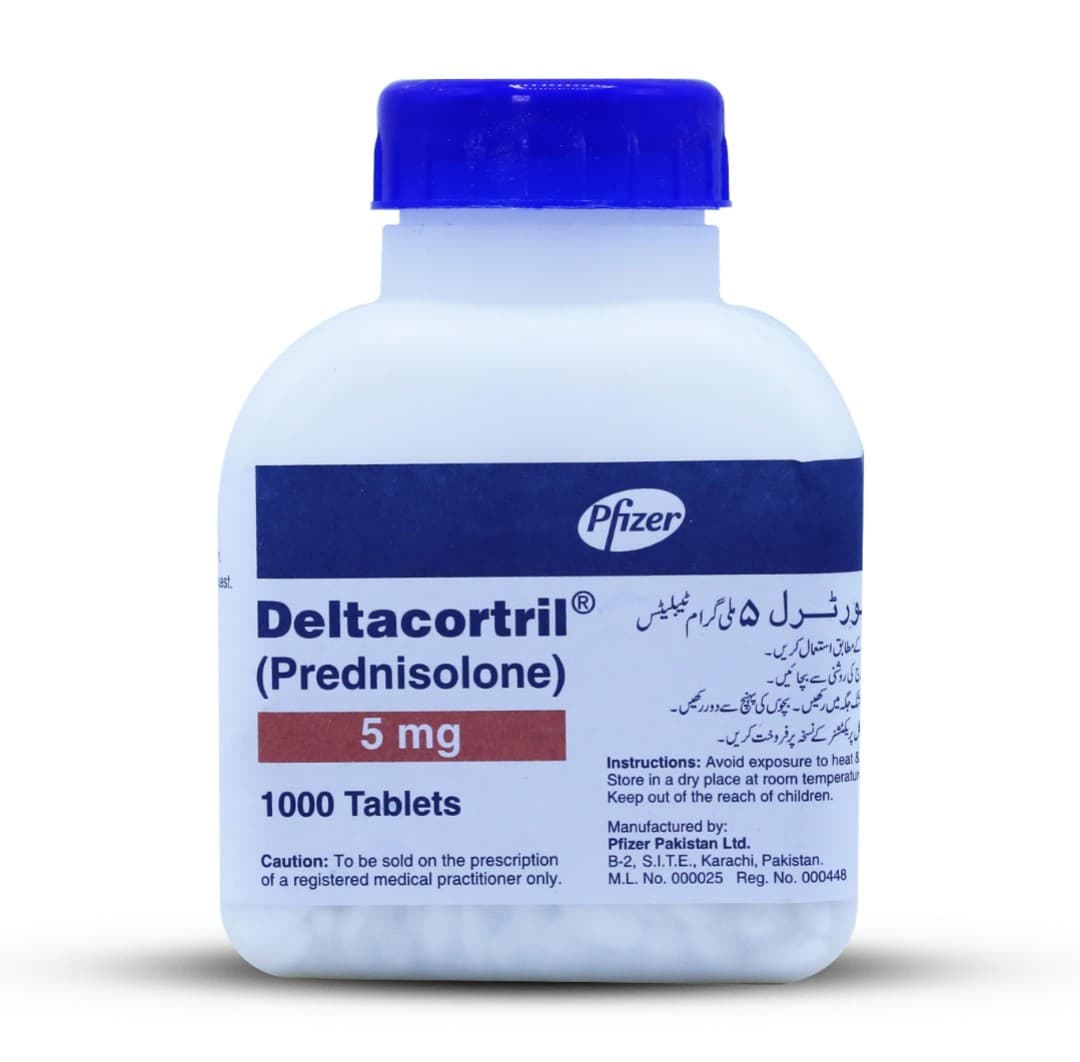
Deltacortril tablets contain prednisolone, a corticosteroid used to reduce inflammation and suppress an overactive immune response in conditions such as severe allergies, asthma flare-ups and autoimmune disease. They require medical supervision: infections, blood sugar changes and unsafe sudden withdrawal are important risks.
This guide is educational, not advertising for any company. Compare suitable prednisolone options with a pharmacist, and check your own strip or carton before taking a tablet.
Quick Information
| Information | Details |
|---|---|
| Generic name | Prednisolone |
| Brand name(s) or generic options | Deltacortril; generic prednisolone from other manufacturers, subject to local availability |
| Drug class | Systemic corticosteroid; glucocorticoid |
| Main uses | Selected inflammatory, allergic and autoimmune conditions |
| Available forms | Oral tablets; other prednisolone formulations vary by market |
| Common strengths | 5 mg is a recognised tablet strength; verify your pack |
| Route | Oral, for tablets |
| Prescription / OTC | Prescription treatment; confirm local dispensing requirements |
| Common side effects | Indigestion, increased appetite, disturbed sleep and mood changes |
Introduction — What is Deltacortril?
Prednisolone resembles cortisol, a hormone your adrenal glands normally produce. These glands sit above the kidneys. The medicine reduces excessive inflammation, but it also affects immunity, glucose regulation and the body's own cortisol production.
It is not an ordinary painkiller. It is also different from anabolic steroids used for muscle building.
In Pakistan, being able to obtain a strip without much discussion does not make self-treatment safe. Confirm the diagnosis, intended duration and stopping instructions, especially if someone recommends it for recurring cough, body aches or weakness.
How it works and when improvement starts
Prednisolone changes how cells produce inflammatory signals and reduces certain immune responses. This can ease swelling, wheezing, stiffness or inflammation-related pain when the underlying condition responds to steroids.
Relief is not always immediate. Some symptoms improve within hours; others take several days, depending on the illness and treatment plan.
Feeling better does not prove that the cause has disappeared. Steroids can reduce fever and inflammation while an infection remains active, which is why a temporary improvement should not become a reason to repeat the tablets yourself.
Uses: when doctors may prescribe it
Asthma flare-ups and selected breathing problems
A clinician may prescribe a short course for an asthma exacerbation or certain flare-ups of chronic obstructive pulmonary disease. It reduces airway inflammation but does not replace a prescribed reliever inhaler. Severe breathlessness needs urgent assessment, not extra tablets at home.
Severe allergies and inflammatory skin disease
Prednisolone sometimes helps severe allergic reactions or troublesome eczema when simpler treatments are insufficient. It is not usually needed for an ordinary sneeze or mild itch. For anaphylaxis, a life-threatening allergic reaction, emergency adrenaline and hospital care take priority; steroid tablets are not rescue treatment.
Arthritis and autoimmune conditions
Doctors use it in conditions such as rheumatoid arthritis, lupus and vasculitis, where immune activity damages the body's own tissues. It may control a flare while another medicine takes effect. Improvement in joint pain does not mean it is suitable for every painful knee.
Bowel, kidney and blood disorders
Selected cases of inflammatory bowel disease, nephrotic syndrome and immune-related blood disorders may require prednisolone. Treatment targets differ substantially. A dose used for one condition cannot safely be borrowed for another, even when both prescriptions name the same tablet.
Dose and how to take it
There is no universal adult dose for these uses. The exact dose depends on age, condition, formulation and medical history; confirm it with your doctor or pharmacist. Children often need weight-based or body-surface-area calculations and closer monitoring.
When prescribed once daily, prednisolone is generally taken in the morning with breakfast to reduce stomach irritation and sleep disruption. Follow different timing instructions if your clinician gives them. Do not rearrange divided doses independently.
Check milligrams, not just tablet numbers. If the pharmacy supplies a different strength, the old instruction to take a particular number of tablets may become wrong.
- Swallow enteric-coated or gastro-resistant tablets whole; do not crush or chew them.
- Split a standard tablet only if that product is suitable and the pharmacist confirms the required portion.
- If swallowing is difficult, ask about an appropriate alternative formulation.
- Request written instructions showing the daily amount, duration and any planned reduction.
If a taper is prescribed, ask the pharmacist to translate each step into the correct tablet count for your actual pack. Keep that written plan with the strip. Do not improvise reductions because symptoms have improved.
Side effects: what needs action?
Increased appetite, indigestion, sweating, restlessness, disturbed sleep and mild mood changes can occur. Taking a once-daily dose earlier may help sleep, but persistent symptoms deserve review rather than an unsupervised dose change.
With greater exposure, risks include weight gain, fluid retention, high blood pressure, raised blood sugar, easy bruising, muscle weakness, osteoporosis and cataracts or glaucoma. Osteoporosis means weakened bones that fracture more easily.
Seek emergency care for vomiting blood, black tarry stools, severe breathing difficulty, facial or throat swelling, suicidal thoughts, or severe confusion or agitation that makes someone unsafe.
Other symptoms need prompt medical assessment:
- Fever, worsening cough, painful urination or a wound that is not healing may indicate infection.
- Marked thirst, frequent urination or unusual drowsiness may reflect high blood sugar.
- New blurred vision, eye pain or major behavioural changes need urgent review.
Do not simply stop an established course when a side effect appears. Explain the symptom and your steroid history so a clinician can manage both problems safely.
Warnings and precautions
Tell the prescriber about diabetes, high blood pressure, heart failure, ulcers, glaucoma, osteoporosis, psychiatric illness and previous steroid reactions. Kidney disease, liver disease and swelling also matter because treatment and monitoring may need adjustment.
Infection history deserves particular attention. Mention tuberculosis, recurrent infections and possible exposure to chickenpox, shingles or measles. Contact the treating team promptly after a significant exposure, even if you feel well; preventive treatment may sometimes be needed.
During pregnancy, prednisolone may be appropriate when benefits outweigh risks. Do not stop necessary treatment after a positive pregnancy test. Breastfeeding is often possible, but higher or prolonged doses may require additional advice or infant monitoring.
Children need growth monitoring during prolonged treatment. Older adults may be more vulnerable to fractures, blood sugar problems, fluid retention and interactions with existing medicines.
For longer courses, ask what monitoring is planned for blood pressure, glucose, eyes and bone health. Do not start high-dose calcium or vitamin supplements without checking whether they fit your kidney function and overall treatment.
Drug interactions, food and alcohol
Bring a complete medicine list. Include injections, inhalers, creams, herbal products and medicines borrowed from relatives; total steroid exposure is easy to overlook.
| Medicine or product | Why it matters |
|---|---|
| Ibuprofen, diclofenac, naproxen and aspirin | May increase stomach ulcer or bleeding risk; do not stop prescribed aspirin without advice |
| Diabetes medicines | Blood sugar may rise, requiring a monitoring or treatment adjustment |
| Warfarin | Its effect may change; additional clotting tests may be needed |
| Rifampicin, carbamazepine or phenytoin | Can reduce steroid exposure and alter response |
| Ritonavir, cobicistat and some antifungals | Can increase steroid exposure and adverse effects |
| Certain diuretics | May increase the risk of low potassium |
Live vaccines may be unsuitable during immunosuppressive treatment; the decision depends on dose, duration and vaccine type. Check before vaccination.
Alcohol can worsen indigestion and complicate diabetes or bone health. Ask whether avoiding it is appropriate. Gastro-resistant tablets may need separation from antacids; confirm the interval on the leaflet rather than guessing.
Who should not use it?
Do not take prednisolone if you have had a serious allergic reaction to it or a listed ingredient. Untreated systemic fungal infection and other uncontrolled infections are major reasons to avoid starting it unless a specialist has a specific treatment plan.
An ulcer, diabetes or pregnancy is not automatically an absolute contraindication. These circumstances require an individual benefit–risk assessment, not an internet yes-or-no rule.
Overdose: what to do
Taking too much may worsen agitation, insomnia, stomach symptoms, blood pressure or glucose levels. A single extra dose and repeated excessive dosing are different situations, but neither should be managed by guessing.
Contact a doctor, pharmacist or local poison-information service promptly with the strength, amount and timing. For a child, unknown amount or severe symptoms, seek urgent care. Do not induce vomiting. Take the pack with you.
Missed dose
For a once-daily schedule, usual advice is to take the missed dose when remembered that day. If you remember the next day, skip it and resume the normal schedule. Never double without medical advice.
Tapering or alternate-day schedules need individual instructions. Repeated vomiting, diarrhoea or missed doses during established treatment warrants prompt advice because inadequate steroid absorption can become dangerous.
How long is it used, and can you stop suddenly?
Some illnesses need a brief course; others require months of carefully reviewed treatment. A short course may end without tapering when prescribed that way. Longer, higher-dose or repeated courses can suppress natural cortisol production.
Sudden withdrawal can then cause adrenal insufficiency: the body cannot supply enough cortisol. Severe weakness, vomiting, abdominal pain, fainting or confusion after reducing or stopping steroids needs urgent assessment.
Repeated short courses matter too. Keep a record of steroid tablets and injections received from different clinics, rather than reporting only your current prescription.
Ask whether you need a steroid alert card and written illness or surgery instructions. Fever, injury, an operation or inability to keep tablets down may require a temporary treatment adjustment. Never invent your own “stress dose.”
Storage in Pakistan's climate
Follow the temperature limit printed on your pack. Keep tablets dry, protected from light and in their original packaging, away from children.
A parked car or sunny kitchen shelf can become much hotter than the room. Avoid both, particularly during summer. Do not refrigerate unless instructed. Return expired or damaged tablets through a pharmacy disposal service where available; never share leftover courses.
Forms and strengths: avoid substitution mistakes
Prednisolone is available internationally as standard tablets, gastro-resistant tablets and oral liquids. Available strengths and formulations differ between countries and suppliers. Do not assume every Deltacortril pack has the same release characteristics or strength.
The dosage form matters. Prednisolone eye drops are not a substitute for oral treatment, and another steroid is not interchangeable milligram for milligram. A liquid substitution needs its own concentration check and measuring device, not a household spoon.
Brand comparison: choose by ingredient and formulation
This guide keeps alternatives generic rather than ranking companies. A Deltacortril product and another manufacturer's prednisolone may serve the same purpose when their strength and formulation match and the prescriber accepts the substitution.
The same ingredient does not guarantee identical release or bioavailability, meaning how much medicine reaches the circulation. Ask a pharmacist before switching. Compare the manufacturer, expiry, intact packaging, authorised supply and cost of the full prescribed course—not price alone. Verify current prices locally.
Common misconceptions
- “It is a strong antibiotic.” No. Prednisolone does not kill bacteria and can hide infection symptoms.
- “More appetite means it is a healthy weight-gain tablet.” Increased appetite and weight gain are adverse effects, not reasons to prescribe it.
- “A coated tablet prevents all stomach harm.” Coating does not remove ulcer or bleeding risks, especially with anti-inflammatory painkillers.
- “If my pain returns, I can reuse the old course.” Recurrence needs reassessment; infection or another diagnosis may now be responsible.
- “Every steroid course must be tapered.” Some brief courses do not require tapering. Follow the actual prescription, not a borrowed reduction schedule.
Patient FAQ
Is Deltacortril used for an ordinary cough or sore throat?
Not routinely. It may be prescribed for a specific inflammatory breathing condition, but a cough alone does not establish that need. Persistent cough, fever, coughing blood or breathlessness requires assessment.
Should I take it before or after food?
It is generally taken with breakfast when prescribed once daily. Follow your formulation's leaflet and the prescriber's timing instructions, particularly if you have divided doses or gastro-resistant tablets.
Can it cause sleeplessness?
Yes. Morning dosing may help when compatible with your prescription. Report severe insomnia, racing thoughts, unusual energy or marked irritability; these can be steroid-related mood effects rather than ordinary poor sleep.
Is it addictive?
It does not usually cause addiction in the craving sense. However, the body can become dependent on an external steroid supply while natural cortisol production is suppressed. That explains why stopping sometimes requires a plan.
Can someone with diabetes take it?
Sometimes, with monitoring. Ask how often to check glucose, what readings require contact and whether medicines need adjustment. Seek urgent help for vomiting, pronounced drowsiness or dehydration with high readings.
Can I take paracetamol with it?
Paracetamol is generally compatible, but suitability depends on liver health and other medicines. Check combination cold remedies to avoid accidentally duplicating paracetamol. Do not assume ibuprofen or diclofenac is equally suitable.
Is it safe during pregnancy or breastfeeding?
It can be used when clinically indicated. Tell the prescriber about pregnancy, plans to conceive or breastfeeding so the dose, duration and any monitoring can be reviewed. Do not discontinue necessary treatment independently.
Can children take these tablets?
Only with a child-specific prescription. The diagnosis, size of the child and formulation determine treatment. Never give a child a fraction of an adult's course or estimate liquid quantities using a kitchen spoon.
Can I drive while taking it?
Many people can, but avoid driving if you develop dizziness, blurred vision, confusion or significant sleep loss. New visual symptoms deserve medical review rather than simply waiting for the next dose to pass.
What if symptoms return after the course ends?
Contact the treating clinician rather than restarting leftovers. Explain when symptoms returned, your last dose and every recent steroid course. Severe weakness, fainting or persistent vomiting needs urgent assessment, particularly after longer treatment.
Sources
- NHS: Prednisolone — patient guidance on administration, adverse effects, pregnancy and interactions.
- European Society of Endocrinology and Endocrine Society: Glucocorticoid-Induced Adrenal Insufficiency guideline, 2024.
Local pack information and the individual prescription take priority for product-specific instructions.
Important Medical Disclaimer
This article is for general educational purposes only and is not a substitute for advice from a qualified doctor or pharmacist. Always consult your doctor/pharmacist before using any medicine, changing a dose, or starting treatment.
Related reading
If this article on Deltacortril Tablet Uses: Benefits, Risks and Safe Use was helpful, explore these related guides for more practical information on similar topics.
- Rigix Tablet Uses: Allergy Relief, Dose and Safety — Learn what Rigix treats, how to check its cetirizine strength, and when sleepiness, kidney problems or persistent itching need a pharmaci…
- Celbex Tablet Uses: Check the Ingredient and Use Safely — Check Celbex’s active ingredient before use, then learn about celecoxib pain relief, stomach and heart risks, interactions, and when to s…
- Nims Tablet Uses: Pain Relief, Dose and Liver Safety — Learn what Nims tablets may treat, how to check the ingredient, and when to stop. Practical guidance on dosing, liver risks and safer pai…
- Ascard Tablet Overview: Uses, Dosage and Safe Use Tips — Understand what Ascard contains, why doctors prescribe it, and how to avoid bleeding risks, missed-dose mistakes and unsafe tablet substi…
- Calpol Syrup Uses: Fever, Pain and Safer Dosing Tips — Learn when Calpol syrup helps fever and pain, how to check its strength, and which dosing mistakes or symptoms need urgent attention in c…
- betnelan tablet uses in urdu — بیٹنیلان ٹیبلٹ کس لیے استعمال ہوتی ہے؟ اگر آپ کے ڈاکٹر نے آپ کو Betnelan Tablet لینے کا کہا ہے اور آپ سوچ رہے ہیں کہ آخر یہ دوا ہے کیا، ت…