Left Upper Quadrant Pain: Causes and Pharm-D Triage
Study left upper quadrant pain with a practical differential, emergency warning signs, medicine-related causes, and pharmacist counseling checkpoints.
By Dr. Amina Rahman, PharmD13 min read
Reviewed by Medical Review Team ·
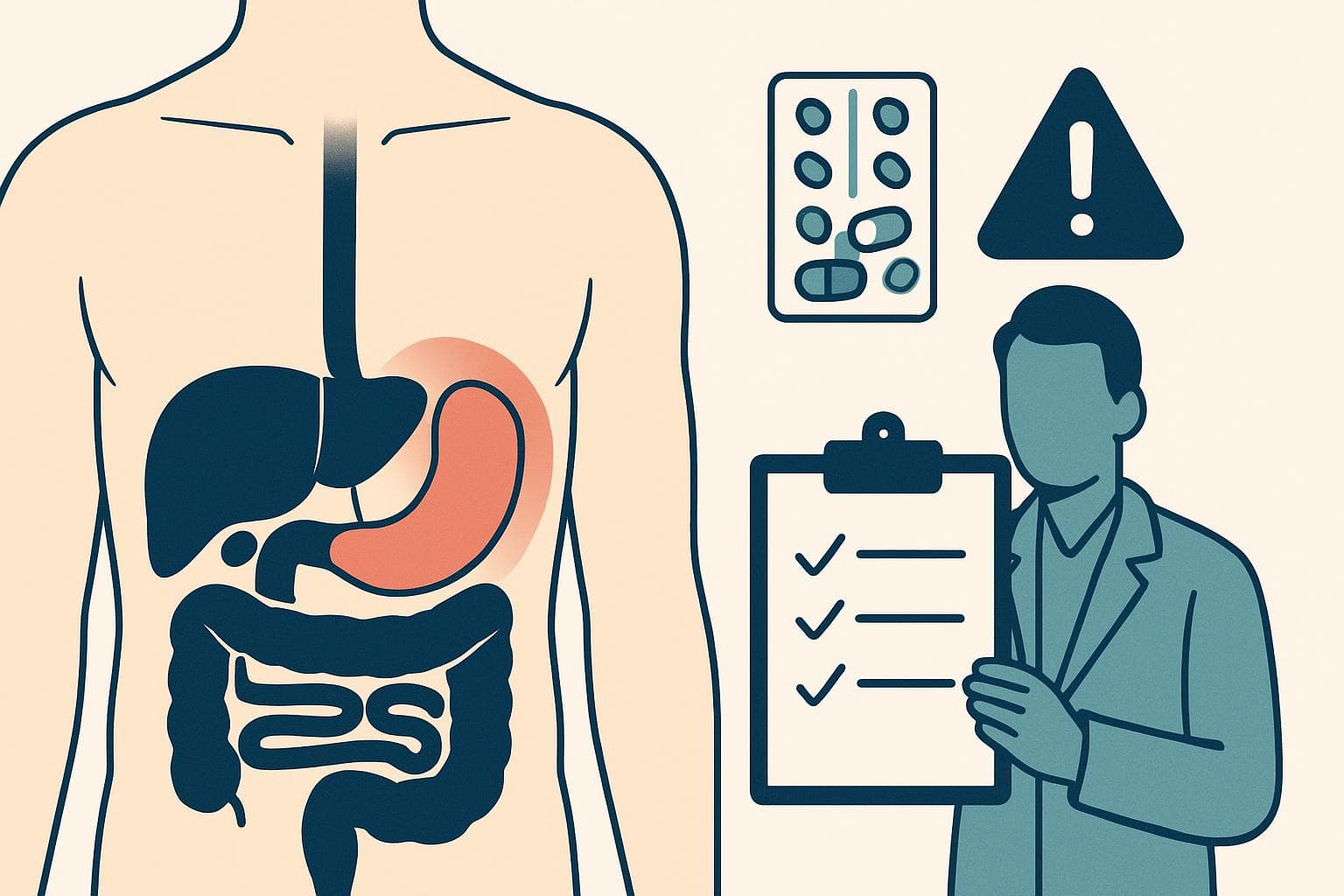
Pain in the left upper quadrant—the upper-left abdomen beneath the ribs—can arise from the stomach, spleen, pancreas, bowel, left kidney, or nearby chest structures. Sudden or severe pain, fainting, bleeding, breathlessness, or pain after an injury needs urgent assessment rather than a trial of indigestion medicine.
These Pharm-D study notes connect anatomy, differential diagnosis, and medication safety. They are educational only, not advertising for any company’s product; compare treatment options with a pharmacist the likely cause is established.
Quick Answer / Overview
Left upper quadrant (LUQ) pain describes a location, not a diagnosis. Gas, constipation, and dyspepsia are possible explanations, but the same region can hurt with pancreatitis, splenic injury, kidney infection, or a heart attack.
Start with urgency, not a medicine choice. A comfortable patient with mild meal-related discomfort requires a different pathway from someone who is pale, sweating, vomiting repeatedly, or taking an anticoagulant after a fall.
For revision, organize the assessment around three questions: Is the patient unstable? Which organ system fits? Could a medicine be causing harm or increasing its consequences?
Key Definitions: Terms That Change the Assessment
- Left upper quadrant: The area left of the abdominal midline and above the umbilicus, or belly button.
- Visceral pain: Pain from internal organs, often poorly localized and described as pressure, aching, or cramping.
- Somatic pain: Pain involving the body wall or parietal peritoneum, the abdominal lining; it is often sharper and more localized.
- Referred pain: Pain perceived away from its source, such as shoulder pain from irritation beneath the diaphragm.
- Peritonism: Examination findings suggesting irritation of the abdominal lining, including involuntary guarding or rigidity.
- Dyspepsia: Upper-abdominal pain or discomfort, sometimes accompanied by early fullness, burning, or meal-related symptoms.
Location is clue. Referred pain explains why an apparently abdominal complaint may require chest examination and cardiac testing rather than stomach treatment alone.
First Decision: Emergency, Same-Day Review, or Monitoring?
Seek emergency assessment now
Arrange emergency care for sudden severe pain, a rigid abdomen, collapse, confusion, cold clammy skin, or rapidly worsening symptoms. Do not drive yourself if faint or unstable.
Other emergency patterns include:
- Vomiting blood, coffee-ground material, or passing black, tarry stool.
- Upper-abdominal discomfort with chest pressure, sweating, breathlessness, or pain spreading to the arm, jaw, or back.
- Significant pain after a blow, fall, or contact-sport injury, especially with left shoulder pain or dizziness.
- Severe pain with persistent vomiting, marked abdominal swelling, or inability to pass stool and gas.
A recent injury matters even if it seemed minor. Splenic bleeding may present after a delay, and anticoagulants can increase the consequences of otherwise limited trauma.
Arrange same-day assessment
Fever with abdominal or flank pain, urinary symptoms, repeated vomiting, inability to keep fluids down, or new unexplained persistent pain warrants prompt clinical review. Use a lower threshold during pregnancy, in older adults, and in immunocompromised patients.
Mild, brief symptoms without warning signs may be monitored initially. However, recurrent pain, swallowing difficulty, unintentional weight loss, or unexplained anemia needs planned investigation rather than repeated over-the-counter treatment.
IMPORTANT — Triage before treatment: Temporary relief after an antacid or analgesic does not establish a harmless diagnosis.
Anatomy-Based Differential Diagnosis
Several structures share this small region. Pain quality and associated symptoms narrow the possibilities, but no single pattern reliably confirms or excludes a diagnosis.
| Source | Suggestive pattern | Clinical distinction |
|---|---|---|
| Stomach or duodenum | Burning, meal-related discomfort, nausea | Ulceration may bleed or perforate; symptoms alone cannot distinguish an ulcer from dyspepsia. |
| Spleen | Pain after trauma, shoulder referral, fullness | Rupture, infarction, or enlargement requires medical assessment. |
| Pancreas | Persistent upper-abdominal pain, sometimes radiating to the back | Severe symptoms and vomiting raise concern for acute pancreatitis. |
| Colon | Bloating, altered stool frequency, cramping | Gas near the splenic flexure can hurt, but obstruction and inflammation remain alternatives. |
| Left kidney or ureter | Flank pain, urinary symptoms, radiation toward the groin | Fever suggests infection; an infected obstructed kidney is an emergency. |
| Chest or heart | Pain with breathing, cough, chest pressure, exertional symptoms | Pneumonia, pulmonary embolism, or acute coronary syndrome may mimic abdominal disease. |
| Ribs, muscles, or nerves | Pain with movement, focal tenderness, skin sensitivity | Consider strain, rib injury, or shingles; reproducibility does not exclude internal disease. |
The splenic flexure is the bend in the colon near the spleen. Gas can collect there, but “trapped wind” should not become a default label for unexplained persistent LUQ pain.
Mechanisms and High-Yield Disease Patterns
Gastric irritation and peptic ulcer disease
Gastritis means inflammation of the stomach lining. Peptic ulcers are mucosal defects in the stomach or duodenum, commonly associated with Helicobacter pylori infection or nonsteroidal anti-inflammatory drugs (NSAIDs).
NSAIDs inhibit cyclooxygenase enzymes and reduce protective prostaglandins. This weakens mucosal defenses, so harm can occur even when a tablet is taken with food; food may improve tolerance but does not reliably prevent ulcers.
Pain patterns overlap considerably. Symptoms cannot establish whether an ulcer is present, bleeding, or caused by H. pylori.
Acute pancreatitis
Pancreatic inflammation commonly causes persistent upper-abdominal pain, sometimes extending into the back, with nausea or vomiting. Gallstones and alcohol are important causes; medicines are less common potential contributors.
Diagnosis generally requires two of three findings: characteristic pain, amylase or lipase more than three times the upper limit of normal, or characteristic imaging. Lipase elevation alone is not the entire diagnosis.
Treatment is cause-directed and supportive. Suspected acute pancreatitis is not a pharmacy self-care problem, and antibiotics are not routinely indicated for sterile pancreatic inflammation.
Splenic and renal disease
Splenic rupture causes bleeding; splenic infarction means interrupted blood supply to splenic tissue. Both can cause LUQ pain, but their contexts differ: trauma suggests injury, whereas embolic or hematologic conditions may suggest infarction.
Kidney pain often feels farther around the side or back. A ureteric stone may produce waves of severe pain, while kidney infection more often adds fever and systemic illness; these patterns still require confirmation.
A Practical Assessment Sequence
Begin with the patient's own description. Ask them to point to the painful area before offering organ names, because “stomach pain” may actually mean lower chest, flank, or generalized abdominal discomfort.
Document onset, duration, severity, radiation, and whether the pain is constant or episodic. Ask about meals, breathing, movement, bowel movements, urination, trauma, alcohol, and previous episodes.
Then check the accompanying symptoms: fever, vomiting, stool changes, urinary symptoms, rash, breathlessness, and pregnancy possibility. Record medicines, allergies, relevant procedures, and major conditions such as atrial fibrillation or previous ulcers.
A simple reasoning pathway is:
Upper-left abdominal pain
 |
 v
Instability, bleeding, chest symptoms, or significant trauma?
 | Yes -> Emergency assessment
 | No
 v
Persistent pain, fever, vomiting, urinary symptoms, or high-risk context?
 | Yes -> Prompt clinical assessment
 | No
 v
Mild, short-lived symptoms with a plausible benign explanation?
 | Yes -> Limited self-care plus a clear review plan
 | No -> Clinical assessment rather than repeated symptom suppression
This is a triage aid, not a diagnostic algorithm. A patient who deteriorates moves to a higher-urgency pathway regardless of the initial working explanation.
Investigations: Match the Test to the Question
Testing follows the history and examination. Depending on the suspected cause, clinicians may request a complete blood count, renal function, electrolytes, liver tests, lipase, urinalysis, and pregnancy testing where relevant.
An electrocardiogram and troponin testing may be necessary when cardiac ischemia is possible. Do not reserve cardiac assessment for patients who use the words “chest pain.”
Imaging depends on the clinical question. Ultrasound, computed tomography, or other approaches may be selected according to suspected disease, stability, pregnancy status, renal function, and local resources.
A normal early result is not always reassuring. For example, hemoglobin can initially appear normal during acute bleeding, so the patient's circulation and evolving symptoms matter more than an isolated number.
Medication Review: Look Beyond the Painkiller
Medication reconciliation is part of diagnosis. Ask for actual packs, photographs, or a written list, including combination products, herbal preparations, recently stopped medicines, and drugs obtained without a prescription.
| Medicine group | Why it matters | Pharmacist checkpoint |
|---|---|---|
| NSAIDs: ibuprofen, diclofenac, naproxen | Ulceration, bleeding, and kidney injury | Check duplicate products, dehydration, previous ulcer, and interacting medicines. |
| Anticoagulants and antiplatelets | Greater bleeding risk or severity | Ask about trauma and bleeding; emergency clinicians should direct interruption or reversal. |
| Systemic corticosteroids | Additional gastrointestinal concern, particularly with NSAIDs | Identify combinations; do not advise abrupt withdrawal after prolonged treatment. |
| Opioids | Constipation, nausea, and reduced gut motility | Check bowel function and possible obstruction before treating presumed constipation. |
| GLP-1 receptor agonists | Gastrointestinal effects; pancreatitis warnings in product information | Persistent severe abdominal pain needs urgent assessment and product-specific instructions. |
For a GLP-1 receptor agonist, suspected pancreatitis generally requires stopping the medicine and urgent evaluation according to its label. Association is not proof that a drug caused the episode.
One overlooked counseling point is the two-clock history: establish when pain began and, separately, when each medicine was started, increased, restarted, or taken more frequently. This often reveals risks that a simple current-medication list misses.
REMEMBER — Check ingredients, not just names: Two differently named pain or cold products may contain the same NSAID or paracetamol.
Symptom Relief: Mechanism, Limits, and Dose Caution
There is no single LUQ-pain prescription. The appropriate drug, if any, depends on whether the problem is acid-related, bowel-related, inflammatory, infectious, vascular, or surgical.
Acid-related treatments
Antacids neutralize existing acid and can provide short-term relief of occasional acid symptoms. Some alter the absorption of other medicines, so spacing requirements must be checked for the exact products.
Omeprazole and pantoprazole are proton pump inhibitors that suppress gastric acid production. They are useful for defined acid-related indications, but they are not immediate diagnostic tests or substitutes for investigating warning signs.
Longer treatment needs a clear indication and review plan. Acid suppression can affect H. pylori testing, so follow the testing service's instructions about withholding medicines rather than guessing a washout period.
Analgesics and bowel medicines
Paracetamol, also called acetaminophen, generally causes less gastric mucosal injury than NSAIDs, but excessive intake can cause serious liver injury. Check combination products and seek individualized advice with liver disease, low body weight, or substantial alcohol use.
Do not reflexively add an NSAID to undiagnosed upper-abdominal pain. Conversely, appropriate clinician-supervised analgesia should not be withheld because of the outdated assumption that all pain relief prevents diagnosis.
Laxatives may help confirmed uncomplicated constipation. Avoid self-treatment when severe pain, vomiting, distension, or failure to pass gas suggests obstruction; antispasmodics also should not substitute for assessment of unexplained severe pain.
Dose and PK/PD checkpoints
Pharmacokinetics describes how the body handles a medicine; pharmacodynamics describes its effects. Renal impairment, dehydration, hepatic disease, age, pregnancy, and interacting medicines can change the benefit–harm balance.
This symptom guide does not provide a universal dose because doing so would imply a diagnosis. Always confirm the exact medicine, strength, formulation, dose, interval, and duration on the label and with a doctor or pharmacist. Country-specific approvals and instructions differ.
Common Mistakes and Important Differences
The most consequential error is premature closure: deciding on “gas” or “acidity” before checking competing explanations. Improvement with food, position, or medication may be informative, but none is a reliable safety test.
| Common confusion | Safer distinction |
|---|---|
| LUQ pain means stomach disease | The spleen, pancreas, kidney, chest, and abdominal wall may be responsible. |
| No visible blood means no bleeding | Internal bleeding and occult gastrointestinal bleeding may be invisible. |
| Pain after eating confirms an ulcer | Meal-related symptoms occur in several conditions. |
| A tender muscle excludes a heart problem | Reproducible tenderness does not reliably exclude cardiac disease. |
| All prescribed medicines should be stopped | Stop decisions are drug-specific; abrupt withdrawal can create additional harm. |
Do not use leftover antibiotics. They neither treat ordinary gas nor reliably cover the possible causes of abdominal infection, and unnecessary treatment can delay appropriate care.
Quick Pharm D Notes
- Definition: LUQ pain is a regional symptom, not a disease entity.
- Classification: Organize causes as gastrointestinal, splenic, renal, cardiopulmonary, and musculoskeletal or neuropathic.
- Process: Inflammation, distension, ischemia, bleeding, and referred pain explain major presentations.
- Examples: Peptic ulcer, pancreatitis, splenic injury, kidney infection, and lower-lobe pneumonia.
- Clinical significance: Triage and medication reconciliation precede empirical therapy.
- Exam point: NSAIDs reduce protective prostaglandins; taking them with food does not eliminate ulcer risk.
- Exam point: Pancreatitis diagnosis integrates symptoms, enzymes, and imaging rather than relying on finding.
STICKY NOTE — Context changes urgency: Anticoagulation, recent trauma, pregnancy, and immunosuppression lower the threshold for clinical assessment.
FAQ
Can gas cause pain under the left ribs?
Yes. Gas near the splenic flexure can cause discomfort and bloating, but persistent, severe, or systemic symptoms should not be attributed to gas without assessment.
When is left upper quadrant pain an emergency?
Seek emergency care for sudden severe pain, collapse, bleeding, breathlessness, chest symptoms, or significant pain after injury. A rigid abdomen or rapidly worsening condition also requires immediate assessment.
Can a heart attack feel like upper-left abdominal pain?
Yes. Cardiac ischemia can present as upper-abdominal discomfort, sometimes with nausea, sweating, or breathlessness rather than obvious chest pain. Suspected cardiac symptoms require emergency care.
Which painkiller is safest before the cause is known?
No medicine is universally safest. Paracetamol may be appropriate for some people, but liver risks and duplicate ingredients require checking; avoid reflexive NSAID use and never delay urgent assessment.
What if the pain keeps returning after antacids?
Arrange clinical review instead of repeatedly extending self-treatment. Recurrent symptoms may require assessment for ulcer disease, H. pylori, medicine-related injury, or a non-gastric cause.
Last-Minute Revision
- Identify instability before building the differential.
- Ask about trauma, chest symptoms, bleeding, and pregnancy possibility.
- Review actual ingredients and recent medication changes.
- Treat pain appropriately without confusing relief with diagnosis.
- Give a specific escalation plan whenever recommending self-care.
References
- American Family Physician: Acute Abdominal Pain in Adults: Evaluation and Diagnosis.
- American College of Gastroenterology: Guidelines: Management of Acute Pancreatitis (2024).
- National Institute of Diabetes and Digestive and Kidney Diseases: Peptic Ulcers (Stomach or Duodenal Ulcers).
- National Institute of Diabetes and Digestive and Kidney Diseases: Kidney Infection (Pyelonephritis).
Important Medical Disclaimer
This article is for general educational purposes and is not a substitute for advice from a qualified doctor or pharmacist. Always consult your doctor/pharmacist before using any medicine, changing a dose, or starting treatment.
Related reading
If this article on Left Upper Quadrant Pain: Causes and Pharm-D Triage was helpful, explore these related guides for more practical information on similar topics.
- Define Hemorrhage: Detailed Pharm-D Notes and Safety — Understand hemorrhage through classification, mechanisms, morphology, clinical signs, and medicine-related risks, with clear exam notes a…
- Define Edema in Detail: Mechanisms and Pharm-D Notes — Understand edema through fluid balance, clinical patterns, medicine-related causes, and treatment principles, with exam notes and urgent…
- Celbex Tablet Uses: Check the Ingredient and Use Safely — Check Celbex’s active ingredient before use, then learn about celecoxib pain relief, stomach and heart risks, interactions, and when to s…
- Early Pregnancy Symptoms: Timing, Tests and Red Flags — Learn when early pregnancy symptoms start, how to interpret urine tests, and which pain, bleeding or vomiting signs need urgent clinical…
- Chronic Inflammation: Symptoms, Causes, Related Diseases & Treatment — Chronic Inflammation — Notes (Based on the Document) What is Chronic Inflammation? Chronic inflammation is a prolonged inflammatory respo…
- Define acute inflammation describe different morphological patterns of acute inflammation — Definition Acute inflammation is a rapid and short-duration inflammatory response of vascularized tissue to injury or infection. It is ch…