Chronic Inflammation: Symptoms, Causes, Related Diseases & Treatment
Chronic Inflammation — Notes (Based on the Document) What is Chronic Inflammation? Chronic inflammation is a prolonged inflammatory response — it can last weeks, months, or even years. It means the body keeps sending
By Dr. Amina Rahman, PharmD3 min read
Reviewed by Medical Review Team ·
Chronic Inflammation — Notes (Based on the Document)
What is Chronic Inflammation?
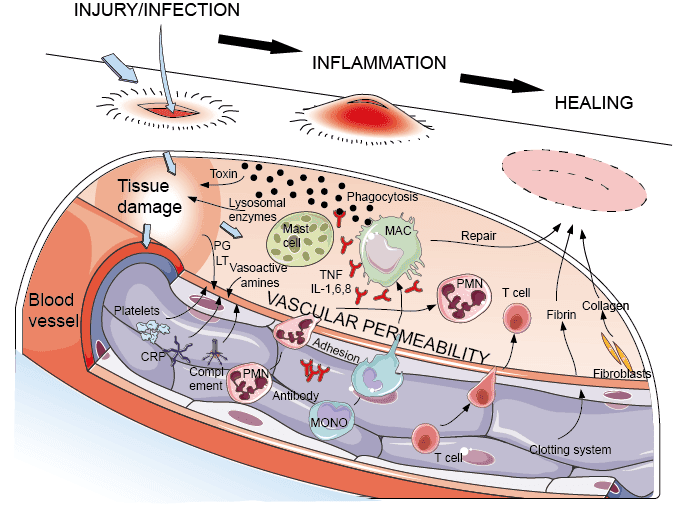
Chronic inflammation is a prolonged inflammatory response — it can last weeks, months, or even years. It means the body keeps sending inflammatory cells without real cause, even when there's no actual danger present.
In simple words: The same process that normally protects the body (like in acute inflammation) ends up harming the body when it becomes chronic.
It can happen in two ways:
- Following acute inflammation — if the harmful agent isn't fully cleared
- Starting from scratch as chronic — without any acute phase (e.g., in TB, autoimmune diseases)
Acute vs Chronic — Key Differences
Point Acute Chronic Duration Hours to days Months to years Cells Neutrophils Macrophages, lymphocytes, plasma cells Function Immediate response Injury and healing occur together
Features of Chronic Inflammation
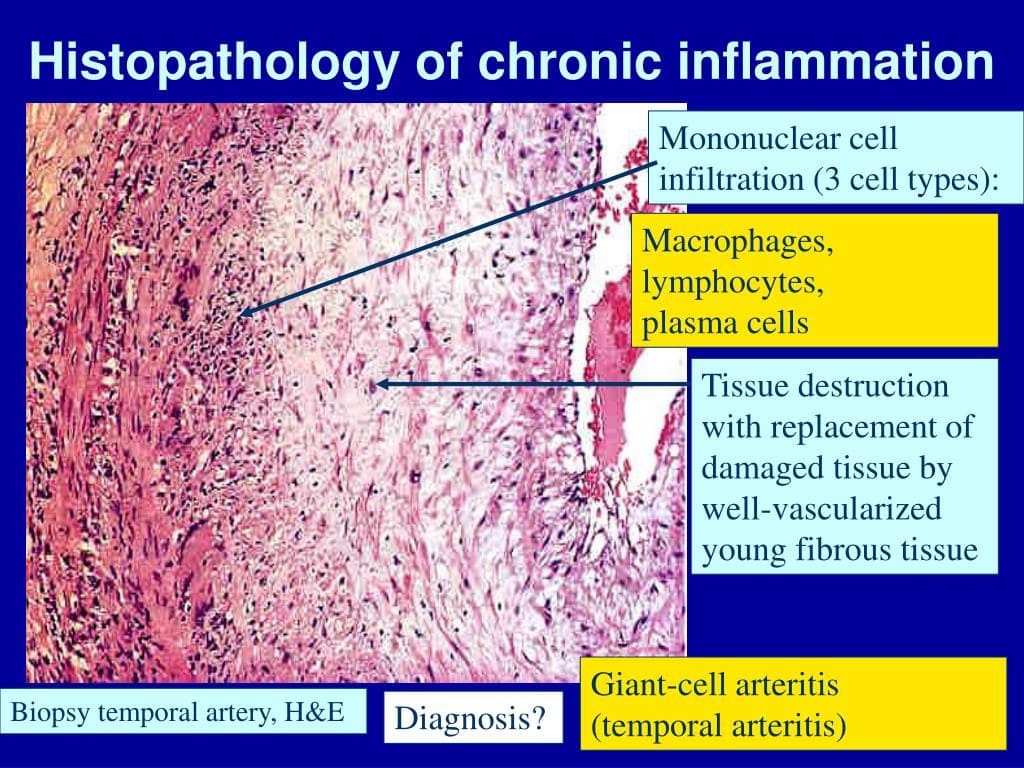
- Infiltration by mononuclear cells — Macrophages, lymphocytes, and plasma cells collect at the site (instead of neutrophils)
- Tissue destruction — Caused by both the persistent injury and the inflammatory cells themselves
- Healing attempts — Angiogenesis (formation of new blood vessels) and fibrosis (scar tissue formation) happen alongside injury
- Injury and repair occur simultaneously — Both processes happen at the same time, not after another
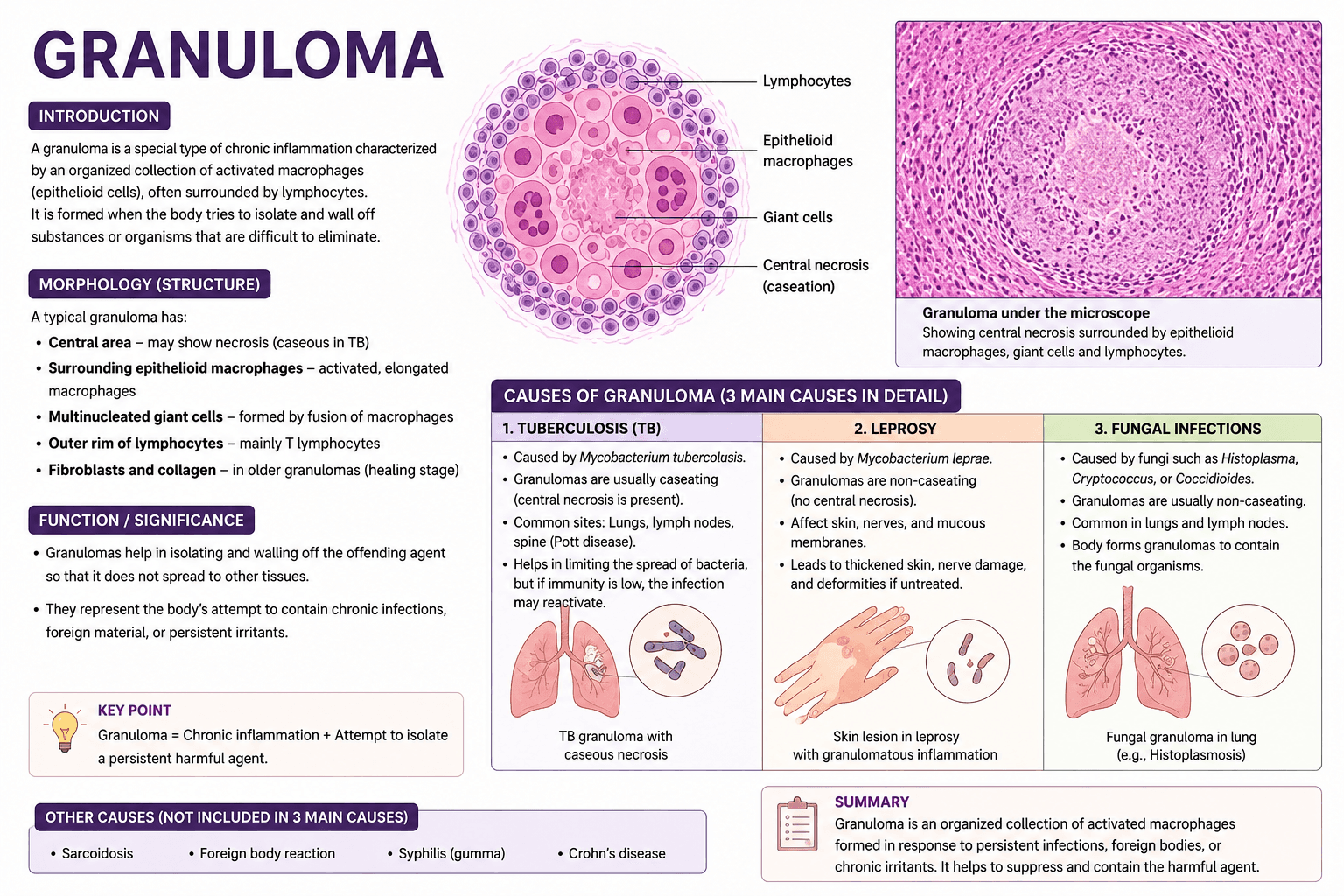
- Granuloma formation (in some cases) — Macrophages cluster together to "wall off" something the body can't destroy
- Systemic symptoms — Fever, weight changes, fatigue, joint pain, mood issues may also occur (due to cytokines)
Symptoms (According to the Document)
Chronic inflammation symptoms are harder to spot because they're quite general:
- Abdominal (belly) pain
- Chest pain
- Fatigue/insomnia
- Fever
- Joint pain or stiffness
- Mouth sores
- Skin rash
- Depression, anxiety
- GI issues (diarrhea, constipation, acid reflux)
- Weight gain or weight loss
- Frequent infections
Conditions Associated with Chronic Inflammation
- Autoimmune diseases — Lupus, Rheumatoid arthritis, Psoriasis, Ankylosing spondylitis
- Cardiovascular diseases — Heart disease, high blood pressure
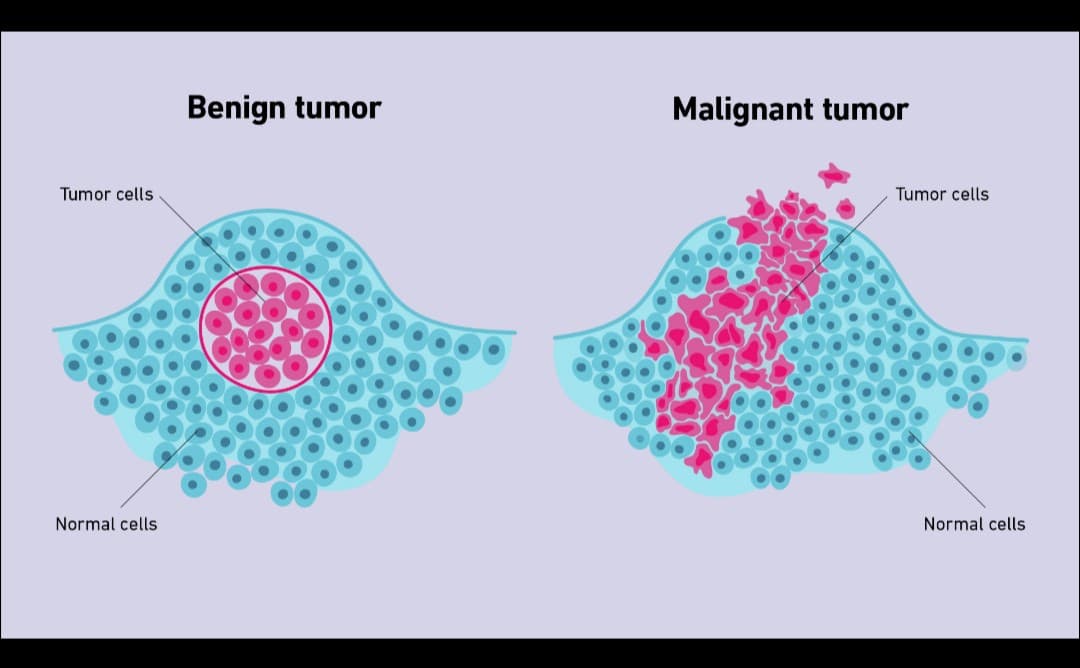
- Certain cancers
- GI diseases — Crohn's disease, IBD
- Lung diseases — Asthma, COPD
- Mental health conditions — Depression, anxiety
- Metabolic diseases — Type 2 diabetes
- Neurodegenerative diseases — Alzheimer's, Parkinson's
Interesting fact: Inflammatory diseases account for more than half of all deaths globally.
Causes of Chronic Inflammation.

Treatment/Management
- Rest, ice/cold pack, wound care (for acute inflammation)
- Supplements — Zinc, certain vitamins, omega-3 (consult your provider first)
- NSAIDs — Ibuprofen, aspirin, naproxen (don't use for more than 10 consecutive days without consulting a doctor)
- Corticosteroids — Injection or oral medication (like prednisone) — used for RA, lupus, vasculitis
Anti-inflammatory foods: Fatty fish (salmon), fresh fruits, leafy greens, turmeric, ginger, garlic — Mediterranean or DASH diet can help.
Foods that cause inflammation: Trans fat foods, fried foods, cured/processed meats, high-salt foods, refined carbs (sugar, white bread)
Prevention Tips
- Aim for 150 minutes of moderate exercise per week
- Avoid smoking/tobacco
- Eat fresh, minimally processed food
- Maintain a healthy weight
- Limit alcohol intake
- Reduce exposure to toxins/chemicals
Related reading
If this article on Chronic Inflammation: Symptoms, Causes, Related Diseases & Treatment was helpful, explore these related guides for more practical information on similar topics.
- write a note on granuloma and write down 3 causes of granuloma in details — How Patients Find the Right Doctor Today Finding the right doctor used to mean asking a neighbor, calling your insurance company,…
- Define acute inflammation describe different morphological patterns of acute inflammation — Definition Acute inflammation is a rapid and short-duration inflammatory response of vascularized tissue to injury or infection. It is ch…
- Understanding Drug–Drug Interactions in Clinical Pharmacy Practice — A practical overview of clinically significant interactions.
- Medication Therapy Management in Community Practice — How structured MTM visits improve outcomes and expand the pharmacist's clinical role.
- Define neoplasia. Discuss in detail the features of malignant tumors. — Neoplasia — Definition Neoplasia is an abnormal, uncontrolled and excessive proliferation of cells that continues even after the original…
- Shock: Types, Causes, Pathophysiology and Stages Explained — Shock: Types, Causes, Pathophysiology and Stages Explained (Complete Pharm D Notes) Introduction Shock is of the most important topic…