Define Edema in Detail: Mechanisms and Pharm-D Notes
Understand edema through fluid balance, clinical patterns, medicine-related causes, and treatment principles, with exam notes and urgent warning signs.
By Dr. Amina Rahman, PharmD12 min read
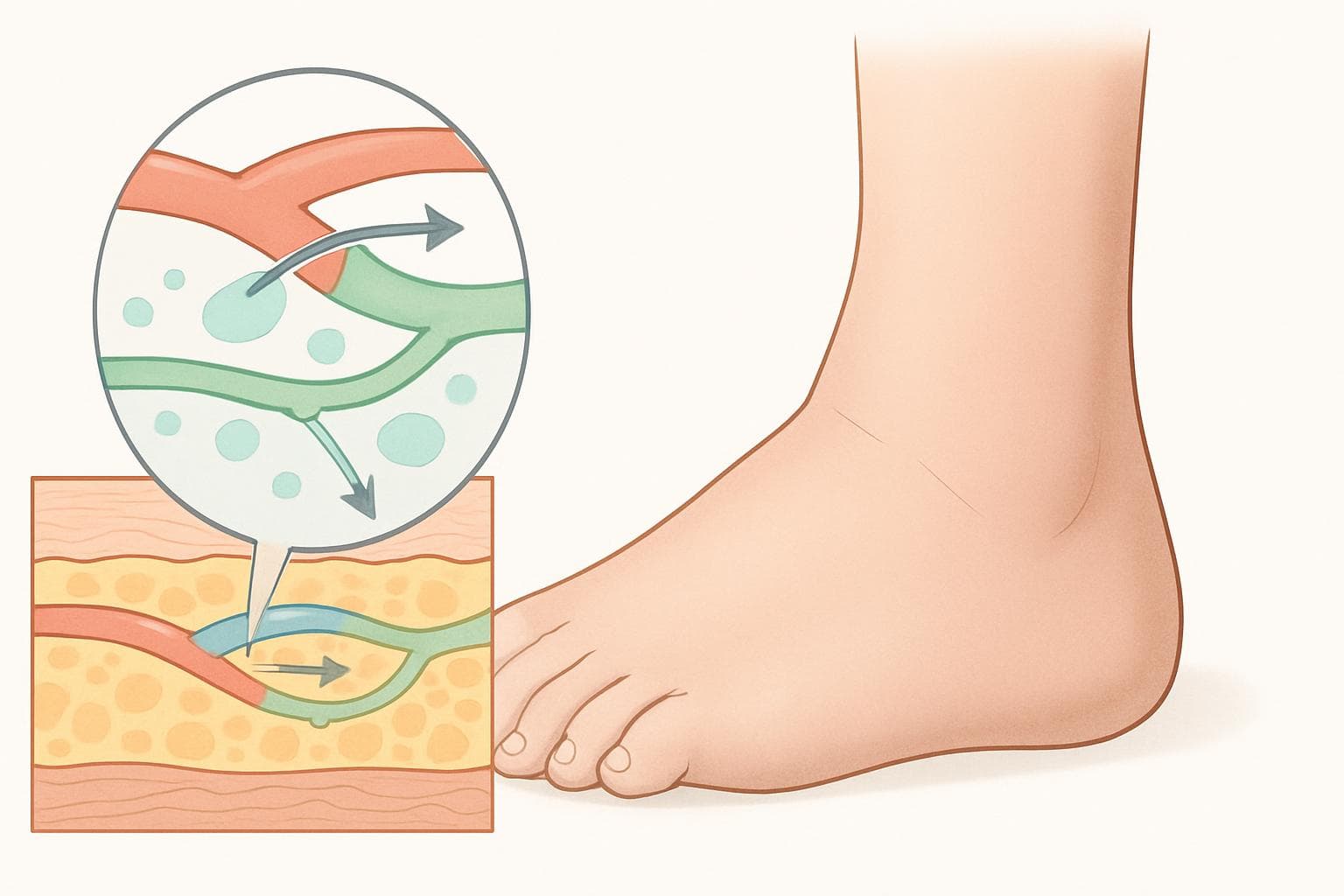
Edema is an abnormal accumulation of fluid in the interstitial spaces between tissue cells; fluid accumulation in body cavities is usually described by specific terms, such as ascites or pleural effusion. It develops when fluid filtration from blood vessels exceeds lymphatic drainage because of altered pressures, increased vascular permeability, lymphatic obstruction, or sodium and water retention.
These Pharm-D study notes connect pathology with bedside assessment and medicine safety. The material is educational, not advertising for any company's product; compare treatment options with a pharmacist rather than choosing by brand.
Quick Answer / Overview
Edema is a sign, not a diagnosis. Swollen ankles may reflect venous disease or a medicine effect, while breathlessness with pulmonary edema can indicate a medical emergency.
The central question is not simply, “Where is the swelling?” Ask why fluid is leaving the circulation, why drainage cannot keep up, and whether the patient actually has excess circulating volume.
Swelling does not always mean fluid overload.
Key Definitions
- Interstitial fluid: Fluid surrounding cells outside blood and lymphatic vessels.
- Hydrostatic pressure: The pressure that pushes fluid across a vessel wall.
- Oncotic pressure: The osmotic pull generated by proteins, especially albumin, across a protein-restricting barrier.
- Lymphatic drainage: Return of filtered fluid and escaped proteins to the bloodstream through lymph vessels.
- Anasarca: Severe, widespread edema involving subcutaneous tissues.
- Ascites: Excess fluid in the peritoneal cavity within the abdomen.
- Effusion: Abnormal fluid accumulation in a body cavity, such as the pleural space around the lungs.
- Effective arterial blood volume: The portion of circulating volume effectively supporting arterial perfusion; it can be reduced despite excess total body water.
How Edema Develops: Five Core Mechanisms
Normally, capillary filtration and lymphatic return remain balanced. Edema appears when that balance fails.
1. Increased hydrostatic pressure
Raised venous pressure increases upstream capillary pressure, pushing more fluid into tissues. Heart failure, deep vein thrombosis, and chronic venous insufficiency are important examples.
Distribution offers a clue. A local venous blockage usually produces regional swelling, whereas systemic venous congestion can cause bilateral dependent edema and ascites.
2. Reduced plasma pressure
Albumin helps retain water within the circulation. Significant albumin loss or reduced synthesis weakens this effect, favoring edema when compensatory mechanisms are overwhelmed.
Causes include nephrotic syndrome, advanced liver disease, protein-losing enteropathy, and severe malnutrition. Low albumin is a finding to explain, not a complete diagnosis.
3. Increased vascular permeability
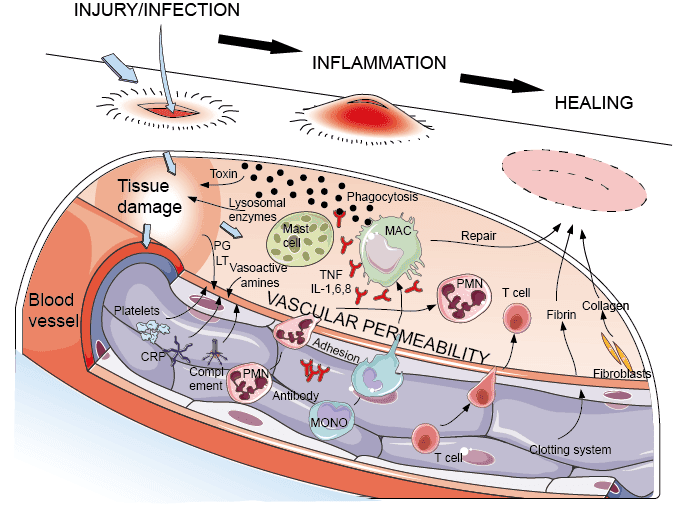
An injured or activated endothelial barrier allows more protein and fluid to escape. Local inflammation, burns, and systemic capillary leak can produce this pattern.
Escaped proteins increase interstitial pull. Consequently, swelling may develop even without a major rise in venous pressure.
4. Impaired lymphatic drainage
Lymphatic obstruction or dysfunction prevents clearance of interstitial fluid and protein. Causes include lymph-node surgery, radiotherapy, malignancy, filariasis, and congenital abnormalities.
Persistent protein accumulation promotes tissue remodeling and fibrosis. Chronic lymphedema therefore becomes less compressible and may eventually stop pitting.
5. Sodium and water retention
Renal sodium retention expands extracellular fluid volume and can raise hydrostatic pressure. It may result directly from kidney dysfunction or occur through compensatory hormonal responses in heart failure and cirrhosis.
The renin–angiotensin–aldosterone system promotes sodium retention, while vasopressin increases water conservation. These responses can worsen congestion despite attempting to defend perfusion.
STICKY NOTE — Modern Starling physiology: The endothelial glycocalyx, a thin surface layer lining blood vessels, helps govern fluid exchange. Most filtered fluid returns through lymphatics; sustained venous-end capillary reabsorption is not the dominant normal return pathway in most tissues.
Simple process flowchart
Pressure imbalance, barrier leak, or impaired lymphatic drainage → filtration exceeds clearance → interstitial fluid accumulates → tissue swelling → impaired function when severe.
Classification: Describe the Pattern Before Naming the Cause
Different classification systems answer different questions. None identifies the cause alone.
| Pattern | What it means | Typical clues |
|---|---|---|
| Localized | Limited to region | Venous obstruction, inflammation, lymphatic injury |
| Generalized | Involves multiple regions | Heart, kidney, or liver disease; severe hypoalbuminemia |
| Dependent | Most evident in gravity-dependent areas | Ankles when upright; sacral tissues when bedbound |
| Pitting | Pressure leaves a temporary indentation | Common in venous congestion and systemic edema |
| Non-pitting | Little or no indentation remains | Established lymphedema; myxedema |
Myxedema refers to tissue changes associated with hypothyroidism, where water-binding glycosaminoglycans accumulate; it is not simply ordinary fluid overload.
Pitting grades are semi-quantitative. Record the site, extent, skin changes, and examination method because grading conventions and observer judgments vary.
REMEMBER — Pitting is not a diagnosis: Early lymphedema can pit. Conversely, chronic swelling with fibrosis may feel firm even when fluid accumulation originally caused it.
Morphology and Clinical Consequences
Subcutaneous edema
Tissues may appear swollen, pale, and stretched. Microscopically, extracellular spaces widen as fluid separates tissue structures; chronic edema can impair oxygen diffusion, slow healing, and contribute to skin breakdown.
Location matters clinically. Periorbital swelling can occur in renal disease, but allergy and other local conditions also cause it.
Pulmonary edema
Fluid first accumulates in pulmonary interstitial tissues and may then enter alveoli, the small air sacs responsible for gas exchange. Lungs become heavy and wet; alveolar fluid can produce frothy sputum.
Gas exchange deteriorates quickly. Cardiogenic pulmonary edema usually reflects elevated pulmonary venous pressure, whereas noncardiogenic edema, including acute respiratory distress syndrome, involves increased barrier permeability.
Cerebral edema
Brain swelling is dangerous because the skull cannot expand. Rising intracranial pressure may compromise perfusion and cause herniation, a life-threatening displacement of brain tissue.
Vasogenic edema involves blood–brain barrier disruption and extracellular fluid accumulation. Cytotoxic edema primarily involves intracellular swelling after cellular energy failure; it extends beyond the usual definition of interstitial edema.
Assessing Edema: What Changes the Differential?
Begin with onset, distribution, and associated symptoms. Sudden unilateral swelling requires a different assessment from slowly progressive bilateral ankle swelling.
Ask about breathlessness, difficulty breathing when lying flat, chest pain, reduced urine output, foamy urine, abdominal swelling, fever, recent surgery, immobility, and pregnancy. Establish when swelling began relative to new medicines or dose increases.
Examination may include blood pressure, pulse, oxygen saturation, weight, jugular venous pressure, lung sounds, cardiac findings, abdominal assessment, and skin inspection. Compare both limbs. Warmth, redness, tenderness, varicosities, or thickened skin can redirect the investigation.
Tests should follow the clinical question, not a fixed shopping list. Possible investigations include renal function and electrolytes, urinalysis and urine protein quantification, serum albumin, liver tests, thyroid testing, and cardiac investigations when indicated.
Suspected deep vein thrombosis requires assessment through an appropriate clinical pathway, often involving compression ultrasonography. A photograph or home pitting test cannot exclude it.
When swelling needs urgent help
Seek emergency care for:
- Sudden breathlessness, chest pain, blue lips, or pink frothy sputum.
- Swelling of the tongue or throat, difficulty swallowing, or noisy breathing.
- New severe headache, confusion, seizures, or reduced consciousness.
- Sudden limb swelling accompanied by chest symptoms or collapse.
Arrange urgent same-day assessment for a newly swollen, painful, or warm leg, markedly reduced urine output, or rapidly worsening generalized swelling. During pregnancy, sudden face or hand swelling with headache, visual disturbance, or upper abdominal pain needs urgent assessment for pre-eclampsia.
Medicine-Induced Edema: A Pharmacy Priority
Review medicines before adding another prescription. The mechanism determines whether a diuretic is likely to help.
| Medicine or class | Relevant mechanism or concern | Practical implication |
|---|---|---|
| Amlodipine; dihydropyridine calcium-channel blocker | Preferential arteriolar dilation increases capillary pressure | Ankle edema may occur without generalized volume overload |
| Ibuprofen or diclofenac; nonsteroidal anti-inflammatory drugs | Can reduce renal sodium excretion and impair kidney function | Check prescription and nonprescription pain medicines |
| Pioglitazone; thiazolidinedione | Fluid retention can aggravate heart failure | New swelling or breathlessness needs prompt review |
| Prednisolone and other corticosteroids | Sodium retention varies by agent and exposure | Review treatment duration; do not abruptly stop prolonged therapy |
| Gabapentin or pregabalin; gabapentinoids | Peripheral edema is a recognized adverse effect | Check timing, kidney function, and other sedating medicines |
Angiotensin-converting enzyme inhibitors can cause angioedema, a distinct swelling syndrome involving deeper tissues, often the lips, tongue, or face. Suspected drug-related tongue or throat swelling is an emergency: do not take another dose of the suspected medicine while seeking immediate care.
For nonurgent ankle swelling, contact the prescriber rather than stopping essential treatment independently. Bring actual medicine packs, including combination cold remedies, supplements, and herbal products; a remembered brand name may conceal an additional active ingredient.
Treatment Principles, Precautions, and Monitoring
Treat the cause first. There is no single “edema medicine.”
For venous or dependent edema, leg elevation, walking, and calf-muscle activity may help. Compression can be useful for appropriate venous and lymphatic conditions, but fit and arterial circulation matter; significant peripheral arterial disease requires specialist assessment before compression.
Avoid self-starting strong compression for sudden unexplained swelling. Lymphedema management may include specialist compression, exercise, skin care, and selected drainage techniques rather than routine diuretic treatment.
When diuretics are appropriate
Furosemide, a loop diuretic, inhibits sodium–potassium–chloride transport in the thick ascending limb of the nephron. It increases urinary sodium and water excretion and can relieve congestion when excess extracellular volume is present.
Spironolactone, a mineralocorticoid receptor antagonist, reduces aldosterone-mediated sodium retention. It has specific roles in conditions such as cirrhotic ascites and selected heart-failure regimens, but suitability depends on kidney function, potassium, and the diagnosis.
No universal dose applies. Oral furosemide absorption is variable, and severe congestion may make the response less predictable; clinicians assess urine output, symptoms, weight, renal function, and electrolytes rather than assuming a fixed response.
Always confirm the medicine, formulation, dose, and monitoring plan with the treating doctor or pharmacist. Do not borrow diuretics or double a dose because swelling persists.
Adverse effects and interactions
Loop diuretics can cause dehydration, hypotension, low sodium, low potassium, and worsening kidney function. Spironolactone can cause hyperkalemia, meaning high blood potassium, particularly with kidney impairment or other potassium-raising treatments.
Check potassium supplements and potassium-containing salt substitutes. Nonsteroidal anti-inflammatory drugs may blunt diuretic response and increase kidney injury risk, especially when combined with a diuretic and a renin–angiotensin system blocker.
Salt reduction may support treatment when appropriate. Fluid restriction is not universal; it should follow an individualized plan, particularly in hot weather when excessive restriction can contribute to dehydration.
IMPORTANT — Avoid the prescribing cascade: Adding a diuretic to amlodipine-related ankle edema may reduce circulating volume without adequately correcting the local pressure imbalance. Review the original medicine and diagnosis before escalating treatment.
Common Confusions and an Exam-to-Practice Insight
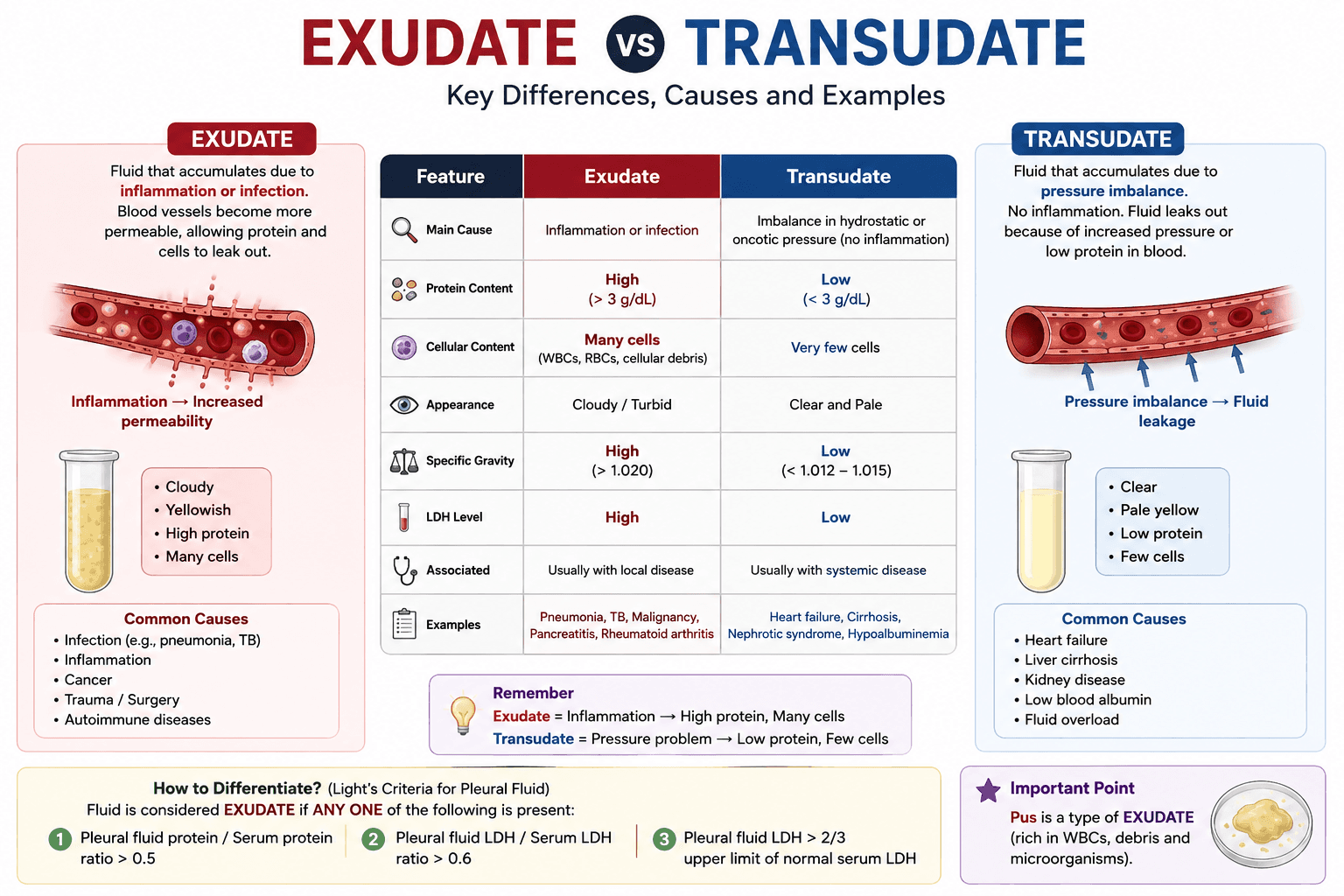
Transudate and exudate describe fluid characteristics, not separate diseases. A transudate generally reflects pressure or protein-balance disturbances, whereas an exudate reflects increased permeability or impaired clearance and is relatively protein-rich.
Do not apply laboratory cutoff everywhere. Pleural fluid classification uses validated criteria that should not be casually transferred to ascitic fluid or swollen ankles.
The most useful distinction is total fluid versus effective circulating volume. A patient with cirrhosis may have ascites and peripheral edema while the kidneys sense inadequate arterial perfusion; indiscriminate diuresis can therefore worsen hypotension or kidney injury despite visible swelling.
Consider two revision cases:
- Ankle swelling begins after an amlodipine increase, without breathlessness or rapid weight gain. A medicine-related capillary pressure change is plausible, but alternative causes still need assessment.
- Bilateral edema accompanies breathlessness, rapid weight gain, and difficulty lying flat. Systemic congestion becomes more concerning and requires timely clinical evaluation.
Same appearance, different physiology. Visible swelling alone cannot select treatment.
Quick Pharm D Notes
- Definition: Excess interstitial fluid accumulation.
- Classification: Localized or generalized; dependent, pitting, or non-pitting.
- Mechanisms: Increased hydrostatic pressure, reduced plasma pressure, increased permeability, impaired lymphatic drainage, and sodium retention.
- Examples: Heart failure, nephrotic syndrome, cirrhosis, venous obstruction, and medicine-related edema.
- Clinical significance: Impaired tissue function, skin complications, or life-threatening pulmonary and cerebral involvement.
- Exam point: Several mechanisms often coexist; cirrhosis and heart failure are not single-mechanism disorders.
- Pharmacy point: Establish the cause before recommending diuresis, compression, or fluid restriction.
Frequently Asked Questions
Is edema the same as swelling?
Not exactly. Edema is swelling caused by fluid accumulation, whereas a mass, enlarged organ, or tissue overgrowth can cause swelling without edema.
Does pitting edema always mean heart failure?
No. Venous insufficiency, renal disease, low albumin, medicines, and early lymphedema can also produce pitting. Associated symptoms and investigations establish the cause.
Can drinking more water cure edema?
Usually not. Extra water does not correct venous obstruction, protein loss, or lymphatic dysfunction and may worsen some fluid-retaining conditions. Follow an individualized hydration plan.
Should every patient with swollen ankles take a diuretic?
No. Diuretics are useful for selected volume-overloaded states, not every cause of swollen ankles. Unnecessary treatment can cause electrolyte disturbances, dehydration, and kidney injury.
Can edema occur without weight gain?
Yes. Localized or mild edema may not noticeably change body weight. Conversely, a patient can accumulate fluid before obvious ankle swelling appears, so weight and examination provide complementary information.
Last-Minute Revision
- Edema develops when filtration exceeds lymphatic clearance.
- Albumin loss reduces plasma pressure.
- Venous congestion increases hydrostatic pressure.
- Early lymphedema can pit; later fibrosis changes its texture.
- Pulmonary and cerebral edema can be emergencies.
- Amlodipine edema is not automatically systemic fluid overload.
- Monitor renal function and electrolytes when using diuretics.
- Treat the mechanism, not the indentation.
References
- Robbins & Cotran Pathologic Basis of Disease: Hemodynamic disorders and edema mechanisms.
- Guyton and Hall Textbook of Medical Physiology: Microcirculation, lymphatic function, and extracellular fluid regulation.
- MSD Manual Professional Edition: “Edema.”
- American Family Physician: “Peripheral Edema: Evaluation and Management in Primary Care” (2022).
Important Medical Disclaimer
This article is for general educational purposes and is not a substitute for advice from a qualified doctor or pharmacist. Always consult your doctor/pharmacist before using any medicine, changing a dose, or starting treatment.
Related reading
If this article on Define Edema in Detail: Mechanisms and Pharm-D Notes was helpful, explore these related guides for more practical information on similar topics.
- What is difference between exudate and transudate fluid. — Exudate and Transudate Exudate and transudate are two types of fluid that can accumulate in body tissues or body cavities. They are diffe…
- Define acute inflammation describe different morphological patterns of acute inflammation — Definition Acute inflammation is a rapid and short-duration inflammatory response of vascularized tissue to injury or infection. It is ch…
- Define Hemorrhage: Detailed Pharm-D Notes and Safety — Understand hemorrhage through classification, mechanisms, morphology, clinical signs, and medicine-related risks, with clear exam notes a…
- Define Hypoxia in Detail: A Pharm-D Study Notes Guide — Understand hypoxia through oxygen delivery, its four major types, diagnostic clues and treatment principles, with practical Pharm-D revis…
- Shock: Types, Causes, Pathophysiology and Stages Explained — Shock: Types, Causes, Pathophysiology and Stages Explained (Complete Pharm D Notes) Introduction Shock is of the most important topic…
- Chronic Inflammation: Symptoms, Causes, Related Diseases & Treatment — Chronic Inflammation — Notes (Based on the Document) What is Chronic Inflammation? Chronic inflammation is a prolonged inflammatory respo…