Purine Alkaloids: Caffeine, Theophylline & Theobromine
What are Purine Alkaloids? Purine alkaloids are nitrogen-containing natural products based on the purine/xanthine structural system . The most important naturally occurring members studied in pharmacognosy are the
By Dr. Amina Rahman, PharmD3 min read
What are Purine Alkaloids?
Purine alkaloids are nitrogen-containing natural products based on the purine/xanthine structural system. The most important naturally occurring members studied in pharmacognosy are the methylxanthines:
Examples
- Caffeine
- Theophylline
- Theobromine
Caffeine is chemically 1,3,7-trimethylxanthine, theophylline is 1,3-dimethylxanthine, and theobromine is 3,7-dimethylxanthine.
Simple relationship
                 PURINE ALKALOIDS
                       │
                       ↓
                 METHYLXANTHINES
                       │
          ┌────────────┼────────────┐
          ↓            ↓            ↓
      Caffeine    Theophylline   Theobromine
Major Sources of Purine Alkaloids
Purine alkaloids occur in several plants and commonly enter the human diet through beverages and foods.
| Purine alkaloid | Important natural sources |
| Caffeine | Coffee, tea, kola, cocoa and other plants |
| Theophylline | Tea, usually in smaller amounts |
| Theobromine | Cocoa and chocolate; also present in some other plants |
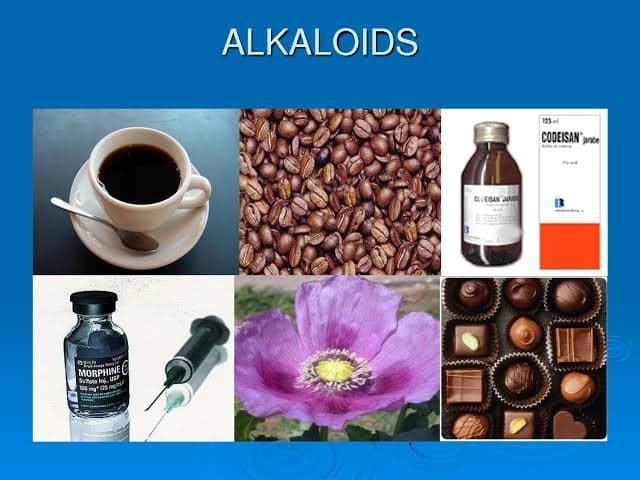
Coffee, tea, kola nuts, and cocoa are recognized important plant sources of methylxanthines.
Caffeine
Definition
Caffeine is a naturally occurring methylxanthine alkaloid and is the best-known purine alkaloid.
Chemical name
1,3,7-trimethylxanthine
Important sources
- Coffee
- Tea
- Kola
- Cocoa
- Several other caffeine-containing plants
Caffeine is a bitter, white crystalline compound in its purified form.
Pharmacological actions
The most important action of caffeine is central nervous system stimulation.
It mainly acts by blocking adenosine receptors. Adenosine normally contributes to neural inhibition and sleepiness; blocking its receptors promotes alertness and wakefulness. Caffeine also has other pharmacological actions, including phosphodiesterase inhibition at higher concentrations.
Main effects
- Increased alertness
- Reduced sensation of fatigue
- Increased wakefulness
- Mild CNS stimulation
- Effects on cardiovascular function
- Mild diuretic effects
- Effects on smooth muscle and respiratory function
Pharmaceutical and practical importance
Caffeine is used:
- As a CNS stimulant
- In some analgesic preparations as an adjunct
- In pharmaceutical preparations for selected indications
- In foods and beverages
Adverse effects of excessive intake
Excessive caffeine may cause:
- Restlessness
- Nervousness
- Irritability
- Tremor
- Insomnia
- Nausea/vomiting
- Tachycardia
- In severe toxicity, seizures
The severity depends on the amount consumed and individual susceptibility.
💡 REMEMBER
Caffeine = CNS stimulant → blocks adenosine receptors → increased alertness.
Theophylline
Theophylline is a naturally occurring methylxanthine and is chemically 1,3-dimethylxanthine.
It occurs naturally in tea in relatively small amounts.
Pharmacological actions
Theophylline has:
- Bronchodilator activity
- CNS stimulant activity
- Effects on cardiac function
- Diuretic activity
Clinical significance
Theophylline has historically been used as a bronchodilator in asthma and other obstructive airway diseases. Its clinical use has declined in many settings because of its relatively narrow therapeutic range and the availability of more targeted and safer alternatives.
Theobromine
Theobromine is chemically 3,7-dimethylxanthine.
Main source
Theobromine is particularly associated with cocoa and chocolate.
Actions
It has:
- Mild CNS stimulant activity
- Diuretic activity
- Smooth-muscle effects
Compared with caffeine, theobromine is generally a weaker CNS stimulant.
Comparison of Purine Alkaloids
| Feature | Caffeine | Theophylline | Theobromine |
| Chemical type | Methylxanthine | Methylxanthine | Methylxanthine |
| Chemical name | 1,3,7-trimethylxanthine | 1,3-dimethylxanthine | 3,7-dimethylxanthine |
| Important source | Coffee, tea, kola | Tea | Cocoa |
| CNS stimulation | Prominent | Present | Relatively mild |
| Bronchodilator action | Less important clinically | Important pharmacologically | Mild |
| Main importance | CNS stimulant | Bronchodilator classically | Cocoa constituent |
⚠️ IMPORTANT
Caffeine, theophylline and theobromine are methylxanthines, but they should not be treated as clinically interchangeable drugs. Their pharmacological profiles and therapeutic uses differ.
Purine Alkaloids — Quick Flowchart
                PURINE ALKALOIDS
                       │
                       ↓
                 METHYLXANTHINES
                       │
       ┌───────────────┼────────────────┐
       ↓               ↓                ↓
   CAFFEINE       THEOPHYLLINE      THEOBROMINE
       │               │                │
       ↓               ↓                ↓
  CNS stimulant    Bronchodilator    Cocoa constituent
  Wakefulness      Diuretic effect   Mild CNS activity
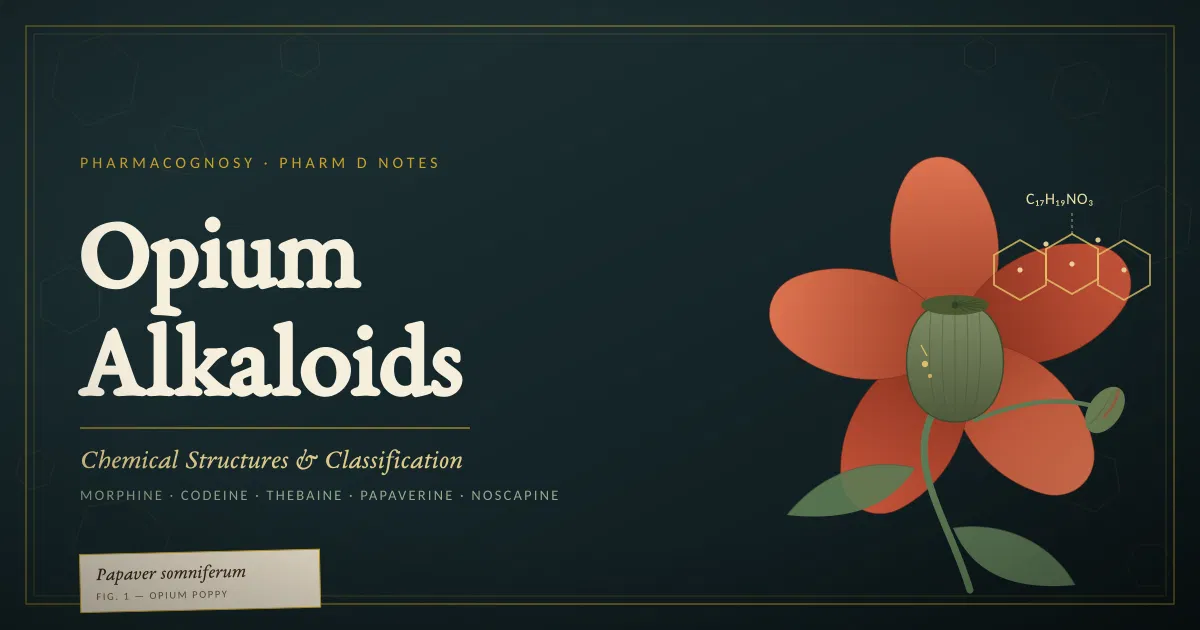
Opium Alkaloids and Their Chemical Structures: A Complete…
Purine Alkaloids: Caffeine, Theophylline & Theobromine
Related reading
If this article on Purine Alkaloids: Caffeine, Theophylline & Theobromine was helpful, explore these related guides for more practical information on similar topics.
- Extraction Methods of Alkaloids — Extraction Methods of Alkaloids: A Simple Pharm D Guide Introduction If you've studied pharmacognosy even a little, you already know alka…
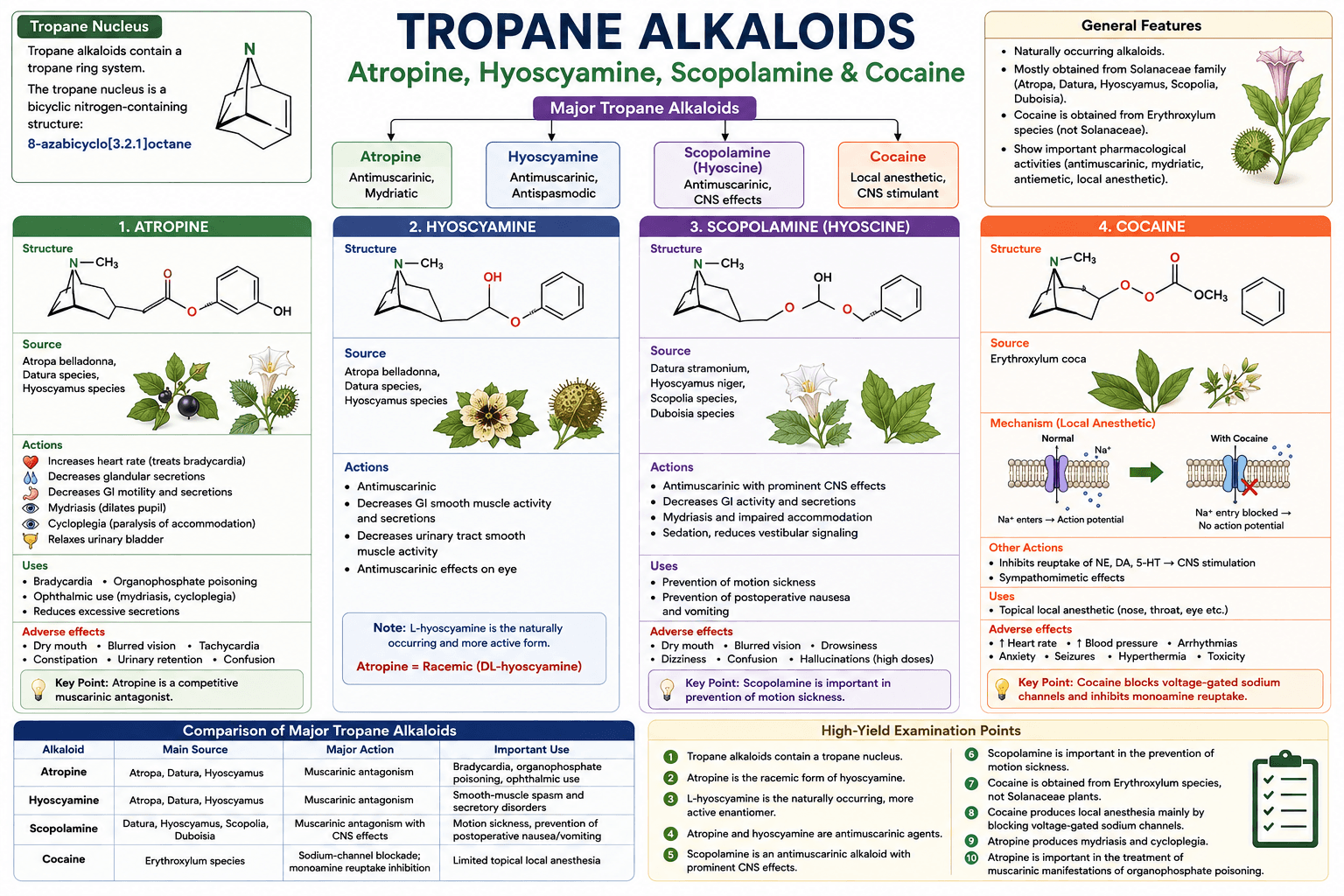
- Tropane Alkaloids: Atropine, Hyoscyamine, Scopolamine & Cocaine — Tropane alkaloids are a group of naturally occurring alkaloids that contain a characteristic tropane ring system in their chemical struct…
- Plant-Derived Alkaloids: Is Kratom Itself an Alkaloid? — From isolation to therapeutic application — a structured review for pharmacy curricula.
- Understanding Drug–Drug Interactions in Clinical Pharmacy Practice — A practical overview of clinically significant interactions.