Extraction Methods of Alkaloids
Extraction Methods of Alkaloids: A Simple Pharm D Guide Introduction If you've studied pharmacognosy even a little, you already know alkaloids are a big deal. Morphine, atropine, quinine, caffeine, vincristine — all of
By Dr. Amina Rahman, PharmD12 min read
Extraction Methods of Alkaloids: A Simple Pharm D Guide
Introduction
If you've studied pharmacognosy even a little, you already know alkaloids are a big deal. Morphine, atropine, quinine, caffeine, vincristine — all of these are alkaloids, and all of them had to be pulled out of a plant before anyone could turn them into a medicine. That "pulling out" process is what we call extraction, and it's actually a lot simpler than it sounds you understand the trick behind it.
This note walks you through how alkaloids are extracted, why the method works the way it does, and what you actually need to remember for exams.
Quick Answer / Overview
Here's the whole idea in line: alkaloids are basic compounds, and their solubility flips depending on the pH around them.
In a basic (alkaline) environment, an alkaloid stays as its "free" form — and this free form loves organic solvents like chloroform or ether, not water. But if you add acid, the alkaloid turns into a salt, and now it's the opposite — it dissolves in water, not in organic solvents.
Extraction basically means using this back-and-forth switch again and again: acid, then base, then acid, then base — each time washing away a bit more of the unwanted plant material, until you're left with just the alkaloid.
Key Definitions
Before going further, let's get a few terms straight:
- Alkaloid – A nitrogen-containing compound from plants that's basic in nature and usually has a strong effect on the body (that's why so many drugs come from alkaloids).
- Free alkaloid (free base) – The non-charged form of the alkaloid. Dissolves well in organic solvents, not so much in water.
- Alkaloidal salt – The charged, water-loving form. This is what you get after treating the alkaloid with acid.
- Marc – The leftover plant material you've squeezed everything useful out of it.
- Menstruum – Just a fancy word for "the solvent you're using to extract with."
- Defatting – Getting rid of fats and waxes from the plant material before you even start the real extraction, usually with something like petroleum ether.
📝 STICKY NOTE The whole method of alkaloid extraction basically comes down to this switch: alkaloid + acid → water-soluble salt, and salt + base → free alkaloid, soluble in organic solvent. If you understand just this line, the rest of the process makes sense on its own.
Main Explanation
Step 1: Getting the Plant Material Ready
You start by collecting the right plant part — leaf, root, bark, seed, whatever the drug needs — at the stage when it has the most alkaloid content. This gets dried carefully (too much heat can destroy some alkaloids) and ground into a powder, because a finer powder means more surface area for the solvent to work on.
Step 2: Defatting (Not Always Needed)
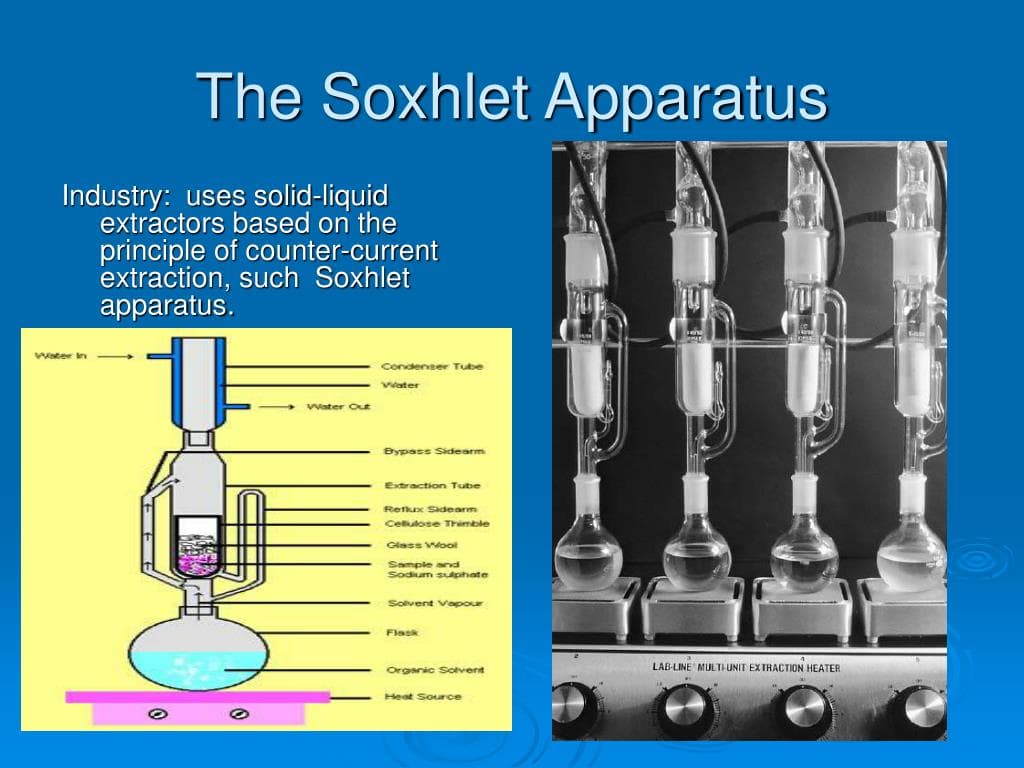
If you're working with something oily, like seeds, you'd first wash out the fats using a solvent like petroleum ether or hexane, often in a Soxhlet apparatus. If the plant isn't particularly fatty, you can skip this step altogether.
Step 3: The Core Idea — Acid-Base Extraction
There are really two ways to go about this, and honestly, both end up doing the same thing — they just start from opposite ends. This overall approach is often called the Stas-Otto method.
Way 1: Start with the Free Alkaloid
- Soak the powdered plant with a dilute alkali — ammonia solution, sodium carbonate, or lime water work well. This frees the alkaloid from any natural salts it might be stuck to inside the plant.
- Now extract with an organic solvent — chloroform, ether, or a chloroform-alcohol mix. The free alkaloid happily dissolves into this layer, while a lot of the water-loving plant junk (sugars, proteins, mucilage) stays behind.
- Shake this organic extract with dilute acid (dilute HCl or dilute sulfuric acid, usually). The alkaloid flips back into its salt form and moves into the acidic water layer. The organic layer now just has fats, resins, and chlorophyll — you throw that part away.
- Make the acidic solution alkaline again. The alkaloid switches back to its free form.
- Extract more time with a fresh, clean organic solvent. Evaporate it off, and what's left is your crude alkaloid.
Way 2: Start with the Salt Form
- Instead of alkalinizing first, you soak the powdered plant directly in a dilute acid (dilute acetic acid or dilute HCl, for example). This pulls the alkaloids out as water-soluble salts right away, while leaving behind a lot of the non-basic material.
- Filter this and concentrate it a bit if needed.
- Now make it alkaline — the alkaloid turns back into its free base and often separates out on its own since it's not very water-soluble anymore.
- Pull this free base into an organic solvent, dry it (anhydrous sodium sulfate is commonly used to soak up leftover water), and evaporate the solvent. What's left is your crude alkaloid.
💡 REMEMBER No matter which way you start, you're always cycling between acid and base, letting the alkaloid switch sides each time so impurities get left behind at every step. That's really all extraction is — repeated purification through pH switching.
Step 4: Cleaning It Up Further
What you get after all this is still a mixture — usually several related alkaloids from the same plant, not pure compound. So you'd purify it further using:
- Recrystallization – dissolve in a little hot solvent, then let pure crystals form as it cools.
- Chromatography – TLC, column chromatography, or HPLC, used to separate the individual alkaloids based on how polar they are.
- Fractional precipitation – using solubility differences between salts to precipitate alkaloid at a time.
- Making a specific salt – converting the alkaloid into something like a hydrochloride or tartrate salt, which crystallizes more cleanly and is easier to work with.
A Simple Flowchart
        [Dried, Powdered Plant Material]
                     │
                     ↓
        [Defat if needed, using non-polar solvent]
                     │
                     ↓
     ┌───────────────┴────────────────┐
     ↓                                 ↓
[Start alkaline]                [Start acidic]
Extract with organic solvent    Extract with dilute acid
     │                                 │
     ↓                                 ↓
[Shake with dilute acid]        [Make alkaline again]
Alkaloid moves to water layer;  Alkaloid moves to free base;
non-alkaloid junk discarded     extract into organic solvent
     │                                 │
     └───────────────┬────────────────┘
                      ↓
           [Make alkaline more]
                      │
                      ↓
     [Re-extract into fresh organic solvent]
                      │
                      ↓
          [Evaporate → Crude Alkaloid]
                      │
                      ↓
   [Purify — recrystallize or run chromatography]
                      │
                      ↓
                [Pure Alkaloid]
Newer Extraction Techniques
Besides the classical method above, a few other techniques come up, especially in research or industry:
- Soxhlet extraction – continuous extraction, good for pulling out as much alkaloid as possible using an organic solvent.
- Maceration and percolation – the old-school, simple methods. Soak the drug (maceration) or slowly pass solvent through it (percolation). Still used a lot, especially on a smaller scale.
- Ultrasound-assisted extraction – sound waves break open plant cells faster, so the solvent gets in quicker and extraction takes less time.
- Microwave-assisted extraction – microwaves heat things up fast, speeding up the whole process.
- Supercritical fluid extraction – usually with CO₂ under special pressure/temperature conditions. Great for alkaloids that break down with heat, and it's considered more eco-friendly since it avoids using a lot of organic solvent.
⚠️ IMPORTANT Not every alkaloid can just be run through the "standard" method without thinking. Some — like a few ergot alkaloids — are sensitive to heat, light, or strong acid/base and can break down if you're not careful. Always check what's known about the specific alkaloid before assuming the general steps apply exactly as-is.
📚 Quick Pharm D Notes
Definition: Extracting alkaloids means separating the basic, nitrogen-containing compounds from plant material by taking advantage of how their solubility changes with pH.
Key points to remember:
- Alkaloid can exist as free base (organic-solvent-soluble) or salt (water-soluble) — depends entirely on pH.
- The whole approach is called acid-base extraction, based on the old Stas-Otto process.
- Defatting is optional, not a mandatory step.
Two Approaches:
- Way 1: Alkaline first → organic solvent → acid → alkaline → re-extract
- Way 2: Acid first → aqueous extract → alkaline → organic solvent
How it actually works: You keep switching the alkaloid between water and organic solvent by changing pH, and each switch leaves a bit more of the impurity behind.
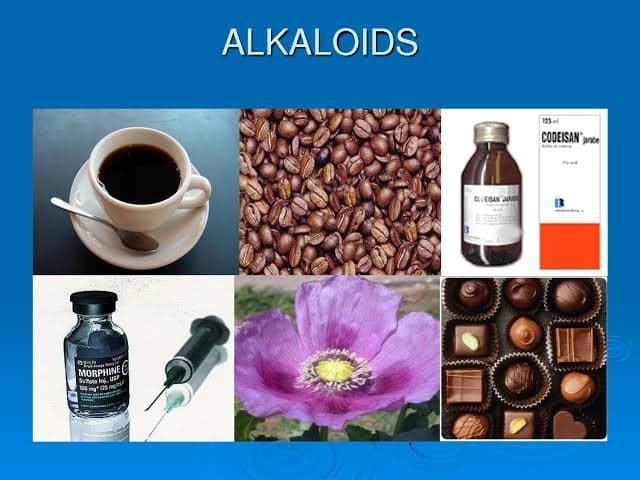
Common examples: Morphine (from opium poppy), atropine (from Atropa belladonna), quinine (from Cinchona bark), caffeine (tea/coffee), nicotine (tobacco).
Where this matters clinically: Same basic logic is used in industrial drug isolation, herbal product standardization, and even forensic toxicology when isolating alkaloidal poisons from blood or gastric samples.
Things exam papers love to ask:
- Difference between free alkaloid and alkaloidal salt.
- Draw/explain the acid-base extraction flowchart.
- Purification always comes after crude extraction — don't forget this step.
- Newer methods (ultrasound, microwave, supercritical CO2) exist as upgrades over old-school maceration/percolation.
Mnemonic
"A Basic Alkaloid Switches Sides" — just a reminder that being basic is exactly why the alkaloid keeps moving between layers as the pH changes at each step.
Clinical / Practical Relevance
- Industrial drug production — morphine from poppy, quinine from Cinchona bark, all made on a large scale using this same acid-base logic, just scaled up.
- Herbal quality control labs — making sure an herbal product has a consistent, reliable amount of the active alkaloid depends on doing extraction properly.
- Forensic/toxicology work — isolating alkaloidal poisons (like strychnine or atropine in a poisoning case) from blood or stomach contents uses the same basic principle before running confirmatory tests.
- Drug discovery research — pulling new, unstudied alkaloids out of plants to test their pharmacological activity.
Common Mistakes and Confusions
- Mixing up which form is water-soluble — students often forget it's the salt, not the free base, that dissolves in water.
- Assuming method fits every alkaloid — quaternary ammonium alkaloids, for instance, are permanently charged, so they don't follow this typical free base/salt switch at all.
- Thinking defatting is always required — it's not; it depends on whether the plant material is fatty in the first place.
- Memorizing the steps without knowing why — a lot of students can list the steps but can't explain which layer holds the alkaloid at each point, and that's usually what trips people up in exams.
Important Differences
| Feature | Free Alkaloid (Base Form) | Alkaloidal Salt (Ionized Form) |
|---|---|---|
| Formed in | Alkaline medium | Acidic medium |
| Solubility in water | Poor | Good |
| Solubility in organic solvents | Good | Poor |
| Ends up in which layer | Organic layer | Aqueous layer |
| Approach | Starts With | Usually Used When |
|---|---|---|
| Way 1 (alkaline first) | Free base extracted first | Plant material has fewer water-soluble impurities |
| Way 2 (acid first) | Salt extracted first | Bulkier plant material, exhaustive extraction needed |
FAQ
Q1: Why does pH matter so much in alkaloid extraction? Because alkaloids are basic compounds, and their solubility completely flips depending on whether they're in free form or salt form. Changing pH is just an easy, reversible way to move them where you want.
Q2: What exactly is the Stas-Otto process? It's the classic acid-base extraction method, originally worked out for toxicology testing, and it's the basic idea behind most alkaloid extraction protocols you'll see in pharmacognosy.
Q3: Do I always need to defat the plant material first? No — if it's fatty or waxy enough to interfere with the rest of the process. A lot of plant material doesn't need this step at all.
Q4: What solvents are usually used for the free alkaloid? Chloroform and ether are the go-to choices, sometimes a chloroform-alcohol mix, since the free base dissolves well in these.
Q5: Does every single alkaloid follow this exact pattern? Not quite — quaternary ammonium alkaloids carry a permanent charge, so they don't switch between free base and salt the normal way, and need a different approach.
Q6: What happens after you've got the crude alkaloid? You purify it further — recrystallization or chromatography (TLC, column, HPLC) — to separate out the individual, pure alkaloids from the mixture.
Q7: Are there greener options than the classic solvent method? Yes — supercritical CO2 extraction, ultrasound-assisted, and microwave-assisted extraction are all becoming more common, especially for heat-sensitive alkaloids or when you want to cut down on solvent use.
⚡ Last-Minute Revision
- Alkaloids are basic, nitrogen-containing plant compounds — solubility depends entirely on pH.
- Free base dissolves in organic solvents; salt form dissolves in water.
- The main method is acid-base extraction, based on the Stas-Otto idea.
- Two ways to do it — alkaline-first or acid-first — both end up cycling through pH changes to purify.
- Defatting is optional, needed for fatty plant material.
- Crude alkaloid still needs purifying — recrystallization or chromatography.
- Quaternary ammonium alkaloids don't play by the usual rules.
- Newer methods: Soxhlet, ultrasound-assisted, microwave-assisted, and supercritical fluid extraction.
References
- Trease and Evans' Pharmacognosy — standard textbook reference for alkaloid extraction principles.
- Kokate, C.K., Purohit, A.P., Gokhale, S.B. — Pharmacognosy — commonly used Pharm D/Pharmacy textbook covering these methods.
- World Health Organization (WHO) — Quality Control Methods for Medicinal Plant Materials.
This note is meant for educational use by Pharm D students and general readers. It's a summary of established pharmacognosy principles, not a replacement for reading the full textbook or following a specific lab protocol.
Related reading
If this article on Extraction Methods of Alkaloids was helpful, explore these related guides for more practical information on similar topics.
- Plant-Derived Alkaloids: Is Kratom Itself an Alkaloid? — From isolation to therapeutic application — a structured review for pharmacy curricula.
- Purine Alkaloids: Caffeine, Theophylline & Theobromine — What are Purine Alkaloids? Purine alkaloids are nitrogen-containing natural products based on the purine/xanthine structural system . The…
- Tropane Alkaloids: Atropine, Hyoscyamine, Scopolamine & Cocaine — Tropane alkaloids are a group of naturally occurring alkaloids that contain a characteristic tropane ring system in their chemical struct…
- Opium Alkaloids and Their Chemical Structures: A Complete Guide — Introduction Opium is of the oldest medicines known to humans, and it is also the starting point for of the most important drug c…
- Understanding Drug–Drug Interactions in Clinical Pharmacy Practice — A practical overview of clinically significant interactions.