Lipitor: Uses, Doses and Safety for Pharm-D Revision
Study Lipitor’s mechanism, dosing, interactions and monitoring, with practical ways to assess muscle symptoms and counsel patients taking atorvastatin.
By Maya Brooks, MPH12 min read
Reviewed by Medical Review Team ·
Lipitor is a brand of atorvastatin, an oral statin used to lower low-density lipoprotein cholesterol (LDL-C) and reduce cardiovascular events in appropriately selected patients. These Pharm-D notes explain its mechanism, dose intensity, interactions and safety, alongside counseling that makes treatment easier to use correctly.
This is independent education, not advertising for any company. Compare generic atorvastatin and alternatives such as rosuvastatin or pravastatin with a pharmacist; the appropriate choice depends on risk, interactions, tolerability and local availability.
Quick Answer / Overview
Atorvastatin inhibits hepatic cholesterol synthesis, prompting the liver to remove more LDL particles from blood. It supports long-term prevention; it does not relieve an acute heart attack or replace emergency treatment.
| Practical question | Answer |
|---|---|
| What is the active ingredient? | Atorvastatin, supplied as atorvastatin calcium |
| What is the medicine class? | HMG-CoA reductase inhibitor, commonly called a statin |
| How is it taken? | Usually daily, with or without food |
| Must it be taken at night? | No; choose a consistent, convenient time |
| What needs early review? | Significant muscle symptoms, interacting medicines, pregnancy or liver warning signs |
Benefits are usually invisible. Patients may feel unchanged even when LDL-C falls substantially, so follow-up testing and an explanation of prevention matter more than whether treatment “feels effective.”
Key Definitions
- LDL-C: Cholesterol carried in low-density lipoproteins; elevated levels contribute to atherosclerosis.
- Atherosclerotic cardiovascular disease (ASCVD): Artery disease caused by plaque, including many heart attacks, ischemic strokes and peripheral arterial disease.
- HMG-CoA reductase: The enzyme that controls a key step in cholesterol production.
- Statin intensity: The expected percentage reduction in LDL-C, not simply the tablet’s milligram strength.
- Myalgia: Muscle pain or aching, which can occur without elevated muscle enzymes.
- Rhabdomyolysis: Severe muscle breakdown that can injure the kidneys.
- Creatine kinase (CK): A muscle enzyme measured when clinically significant muscle injury is suspected.
Mechanism: Why Blocking Synthesis Increases LDL Clearance
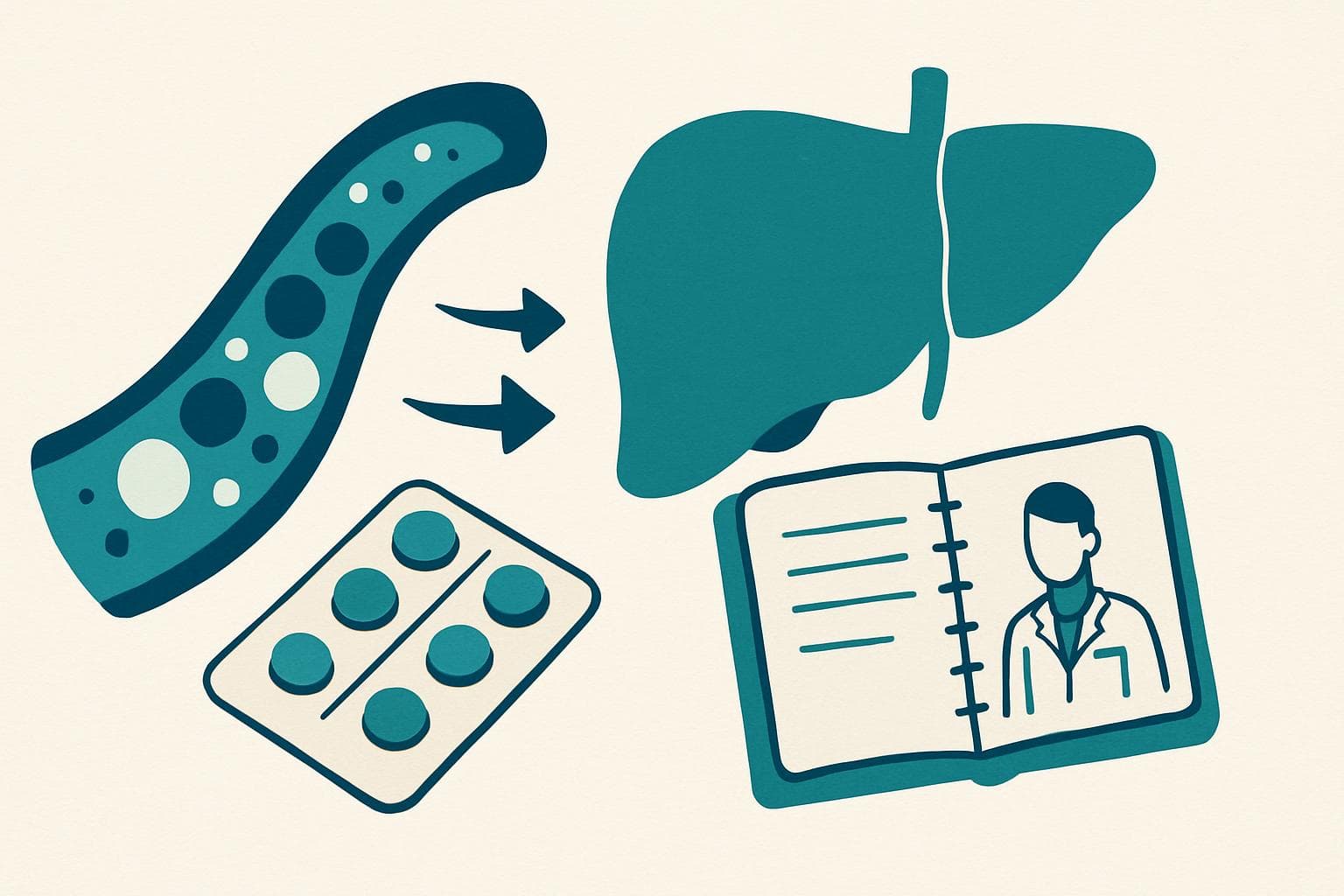
Atorvastatin competitively inhibits HMG-CoA reductase, reducing conversion of HMG-CoA to mevalonate. As hepatic cholesterol falls, liver cells increase LDL-receptor expression and pull more circulating LDL particles into the liver.
The receptor response matters. Describing the drug as a “cholesterol-production blocker” misses the major clearance mechanism that explains its effect on circulating LDL-C.
Simple mechanism flowchart:
Atorvastatin → HMG-CoA reductase inhibition → reduced hepatic cholesterol → increased hepatic LDL receptors → increased LDL clearance → lower LDL-C
Triglycerides generally decrease, while high-density lipoprotein cholesterol may rise modestly. Treatment decisions nevertheless focus on cardiovascular risk and reduction of atherogenic lipoproteins, not on using atorvastatin as an HDL-raising medicine.
STICKY NOTE — Exam point: Statins do not dissolve an existing arterial blockage. Their clinical value includes slowing atherosclerotic progression and reducing future cardiovascular events.
Pharmacokinetics and Pharmacodynamics
The liver is the principal target. Atorvastatin undergoes substantial first-pass handling and is metabolized through cytochrome P450 3A4, abbreviated CYP3A4; active metabolites also contribute to enzyme inhibition.
Its plasma elimination half-life is approximately 14 hours, while inhibitory activity lasts longer because of those metabolites. This helps explain why morning dosing is acceptable, unlike the bedtime preference for some shorter-acting statins.
Elimination is mainly through bile after metabolism. Renal impairment does not ordinarily require an atorvastatin dose adjustment, although kidney disease increases the consequences and risk considerations surrounding muscle toxicity.
Hepatic uptake transporters also matter. A drug can raise atorvastatin exposure through transporter inhibition, so interaction screening must extend beyond memorizing a list of CYP3A4 inhibitors.
Indications: Treat the Risk, Not Just the Number
Atorvastatin is used for primary hypercholesterolemia, mixed dyslipidemia and selected inherited lipid disorders, including familial hypercholesterolemia. It also reduces cardiovascular events in defined populations with established disease or sufficiently high cardiovascular risk.
Primary prevention means preventing a first event. Secondary prevention means preventing another event in someone with established ASCVD; these patients often need intensive LDL lowering unless contraindications or intolerance limit treatment.
Selection depends on the whole patient. Age, diabetes, smoking, blood pressure, kidney disease, baseline LDL-C and family history influence the recommendation, while formal risk calculators and treatment thresholds differ between countries and guidelines.
Lifestyle measures remain part of treatment. However, telling a high-risk patient to replace an indicated statin with garlic, vitamins or an unverified cholesterol supplement is not an equivalent prevention strategy.
Dosage and Administration: Learn Intensity Before Milligrams
The usual labeled adult atorvastatin dosage range is 10–80 mg daily. This is an educational range, not a recommendation to start or increase treatment independently.
| Atorvastatin daily dose | Common intensity classification | Expected LDL-C reduction |
|---|---|---|
| 10–20 mg | Moderate intensity | Approximately 30–49% |
| 40–80 mg | High intensity | Approximately 50% or more |
These are population expectations. Individual response varies with baseline biology, adherence, interacting medicines and secondary causes of dyslipidemia, so the follow-up lipid result matters more than the category alone.
Starting dose and titration depend on the required LDL reduction and clinical circumstances. Pediatric treatment requires age- and indication-specific labeling and specialist assessment; do not extrapolate an adult range to a child.
Take the prescribed tablet with or without food. For a missed dose, follow the local leaflet; if the next dose is approaching, skip the missed dose rather than doubling up.
Always confirm the dose, timing and any adjustment with the prescribing doctor or pharmacist.
REMEMBER — Intensity is not potency per milligram: Atorvastatin 20 mg and rosuvastatin 20 mg are not equivalent-intensity prescriptions.
Monitoring: Separate Response Checks From Toxicity Checks
Before treatment, document a lipid profile, medication history and relevant liver history. Obtain baseline liver enzymes, and assess pregnancy possibility where relevant; baseline CK is generally reserved for patients with muscle symptoms or increased muscle-risk concerns.
Recheck lipids after initiation or adjustment. A commonly used guideline interval is 4–12 weeks, followed by periodic checks according to response, adherence and local guidance.
Routine CK testing is not needed for every asymptomatic patient. Likewise, repeated liver-enzyme testing without a clinical reason is not routinely required by US labeling; symptoms and local protocols should guide subsequent assessment.
An unexpectedly small LDL reduction needs investigation. Before escalating treatment, check missed doses, dispensing changes, interacting drugs and possible secondary causes such as hypothyroidism, rather than assuming the prescribed dose has genuinely failed.
Side Effects: Distinguish Discomfort From Danger
Reported adverse effects include muscle or joint discomfort, diarrhea and other digestive symptoms. Mild symptoms deserve review, but timing alone does not prove that atorvastatin caused them.
Muscle symptoms and urgent warning signs
Ask about distribution, weakness, onset, dose changes, strenuous exercise and newly started medicines. Bilateral proximal aching is more suggestive of statin-associated symptoms than a single painful joint, although neither pattern establishes the diagnosis alone.
Stop taking atorvastatin and seek urgent assessment for severe unexplained muscle pain or weakness, particularly with dark urine, fever, marked malaise or reduced urine output. These features can indicate serious muscle injury.
For mild aches without warning signs, contact the prescriber or pharmacist promptly rather than abandoning treatment permanently. Clinical review may lead to a temporary interruption, correction of contributing factors, a different dose or another statin.
Rarely, persistent weakness and CK elevation after withdrawal suggest immune-mediated necrotizing myopathy. This needs specialist investigation rather than repeated routine statin rechallenges.
Liver symptoms, glucose and allergy
Stop treatment and obtain urgent medical advice for jaundice, dark urine with liver symptoms, or significant upper abdominal pain. Severe allergic symptoms, including facial swelling or breathing difficulty, require emergency care.
Statins can modestly increase glucose and diabetes risk in susceptible people. For appropriately selected patients, cardiovascular benefit usually outweighs that risk; monitor glucose when indicated rather than stopping automatically after elevated result.
Interactions: Check Every New Prescription
Exposure can change quickly. A patient stable for years may develop toxicity after an interacting antibiotic, antifungal or antiviral is added, even though the atorvastatin prescription itself has not changed.
| Medicine or product | Practical concern |
|---|---|
| Clarithromycin or itraconazole | Raises exposure; US labeling limits atorvastatin to 20 mg daily with either medicine |
| Cyclosporine or gemfibrozil | Concomitant atorvastatin use is not recommended in US labeling |
| Certain HIV or hepatitis C antivirals | Restrictions vary by exact regimen; use a current interaction reference |
| Colchicine or other fibrates | May increase muscle-injury risk; assess the combination individually |
| Rifampicin | Complex timing-dependent interaction; obtain regimen-specific advice |
| Large quantities of grapefruit juice | Can increase exposure; check local labeling and avoid excessive intake |
This table is not exhaustive. Do not independently hold medicine and restart it on an assumed schedule; the prescriber or pharmacist should determine whether substitution, temporary interruption or a dose restriction is appropriate.
Red yeast rice deserves attention because some products contain a lovastatin-like substance. Adding it can duplicate statin exposure without offering predictable strength or reliable safety monitoring.
IMPORTANT — Interaction counseling: Ask about recently completed medicines too. A short antibiotic course can explain new muscle symptoms that otherwise look unrelated.
Precautions, Pregnancy and Product Switching
US labeling contraindicates atorvastatin in acute liver failure and decompensated cirrhosis. Stable fatty liver is not automatically a contraindication, but active liver problems and substantial alcohol intake require individualized assessment.
Pregnancy advice needs precision. The FDA removed the blanket pregnancy contraindication for statins, yet most pregnant patients should discontinue statin treatment; exceptional, very-high-risk situations require specialist judgment.
If pregnancy occurs, contact the prescriber promptly. Accidental early exposure does not by itself establish fetal harm, and patients should receive balanced counseling rather than alarmist advice. Breastfeeding is not recommended during atorvastatin treatment under US labeling.
Check the actual pack. In Pakistan and other markets, strength, manufacturer and combination ingredients may differ; an atorvastatin-containing combination tablet is not interchangeable with an atorvastatin-only prescription.
Same INN does not establish identical bioavailability across every product worldwide. Regulator-approved generics must meet applicable equivalence standards, but discuss substitutions with a pharmacist or clinician, particularly when changing strength, formulation or combination ingredients.
Important Differences Between Statin Options
No statin is universally best. Selection should reflect required intensity, renal function, interactions and prior tolerability, not whether a brand name is familiar.
| Generic option | Useful distinction | Important limitation |
|---|---|---|
| Atorvastatin | Can provide moderate- or high-intensity treatment; usually needs no renal dose adjustment | CYP3A4 and transporter interactions |
| Rosuvastatin | Can provide high-intensity treatment; less dependent on CYP3A4 | Renal dosing and transporter interactions still matter |
| Pravastatin | Has little CYP3A4 metabolism | Usually cannot provide high-intensity LDL lowering |
Switching requires reassessment. Less CYP3A4 metabolism does not mean “interaction-free,” and equal milligram doses across statins should never be treated as equivalent prescriptions.
Clinical Relevance: Reconcile the Risk and the Exposure
A useful pharmacy exercise uses two columns: Why does this patient need LDL lowering? and What might increase harm today? The first records ASCVD history and prevention benefit; the second records new medicines, muscle symptoms, organ dysfunction and pregnancy considerations.
Consider a patient taking atorvastatin 40 mg who receives clarithromycin. The problem is not simply whether the cholesterol result looks satisfactory: the newly increased exposure requires a prescribing review before the combination is used.
This prevents two opposite errors. Continuing an unsafe interaction ignores immediate harm, while permanently abandoning cardiovascular prevention ignores the original reason for treatment; the aim is to preserve benefit through a safer plan.
Common Mistakes and Confusions
- Stopping when cholesterol normalizes: The improved result usually reflects treatment, not disappearance of the underlying tendency.
- Insisting on bedtime dosing: Consistent atorvastatin use matters more than a particular hour.
- Calling every ache an allergy: Document the symptom, severity, timing and evaluation instead of applying an inaccurate allergy label.
- Confusing CK with liver enzymes: They investigate different tissues and answer different clinical questions.
- Doubling tablets after missed doses: This does not restore protection and can increase exposure.
Quick Pharm D Notes
- Definition/classification: Atorvastatin is an oral HMG-CoA reductase inhibitor.
- Mechanism: Reduced hepatic cholesterol increases LDL-receptor-mediated clearance.
- Examples: Atorvastatin, rosuvastatin and pravastatin are statins, but their dose equivalence differs.
- Important pharmacokinetics: CYP3A4 metabolism, active metabolites and hepatic transporters influence exposure.
- Clinical significance: Treatment reduces cardiovascular events in appropriate populations.
- Exam point: A normal CK does not exclude statin-associated myalgia.
- Safety priority: Severe weakness or dark urine requires urgent assessment, not routine reassurance.
Frequently Asked Questions
Is Lipitor the same as atorvastatin?
Lipitor is a brand containing atorvastatin. Check the ingredient and strength, especially when switching manufacturers or receiving a combination product.
Should I take Lipitor in the morning or at night?
Either is generally acceptable. Take it consistently at the prescribed time; atorvastatin’s sustained activity means bedtime is not essential.
Can I stop my cholesterol is normal?
Not without review. LDL-C commonly rises again after stopping, and the cardiovascular indication may remain even when the treated laboratory result looks reassuring.
Can I drink alcohol while taking it?
Heavy drinking increases concern about liver health. Discuss your actual intake and liver history with the pharmacist or prescriber rather than assuming universal safe limit.
Does muscle pain mean I must avoid every statin?
No. Assess interactions and alternative causes first; a supervised change in dose or statin may be possible. Severe symptoms need urgent assessment before further doses.
How soon does it lower cholesterol?
An effect is generally apparent within about two weeks, with the maximum response usually reached within four weeks. Cardiovascular protection depends on sustained treatment rather than a single early test.
Last-Minute Revision
- Atorvastatin lowers LDL-C chiefly by increasing hepatic LDL-receptor activity.
- Adult 10–20 mg dosing is moderate intensity; 40–80 mg is high intensity.
- Review lipids after initiation or dose adjustment.
- Investigate muscle symptoms in context; do not order routine CK for everyone.
- Screen new prescriptions, supplements and combination packs.
- Most pregnant patients discontinue statins under medical guidance.
References
- DailyMed: Lipitor prescribing information — dosing, pharmacology, contraindications and interactions.
- FDA: Statin use during pregnancy and breastfeeding — regulatory safety communication.
- 2018 AHA/ACC multisociety cholesterol guideline — established intensity classifications and monitoring concepts; consult newer applicable guidance for treatment pathways.
Important Medical Disclaimer
This article is for general educational purposes and is not a substitute for advice from a qualified doctor or pharmacist. Always consult your doctor/pharmacist before using any medicine, changing a dose, or starting treatment.
Related reading
If this article on Lipitor: Uses, Doses and Safety for Pharm-D Revision was helpful, explore these related guides for more practical information on similar topics.
- Ascard Tablet Overview: Uses, Dosage and Safe Use Tips — Understand what Ascard contains, why doctors prescribe it, and how to avoid bleeding risks, missed-dose mistakes and unsafe tablet substi…
- Is Buspar an SNRI? Buspirone Explained for Anxiety Care — Buspirone is not an SNRI. Review its mechanism, delayed anxiety relief, dosing principles, interactions, and practical counseling points…
- Nims Tablet Uses: Pain Relief, Dose and Liver Safety — Learn what Nims tablets may treat, how to check the ingredient, and when to stop. Practical guidance on dosing, liver risks and safer pai…
- Celbex Tablet Uses: Check the Ingredient and Use Safely — Check Celbex’s active ingredient before use, then learn about celecoxib pain relief, stomach and heart risks, interactions, and when to s…
- Deltacortril Tablet Uses: Benefits, Risks and Safe Use — Learn why prednisolone is prescribed, which Deltacortril label details to check, and when side effects or stopping treatment need medical…
- Rigix Tablet Uses: Allergy Relief, Dose and Safety — Learn what Rigix treats, how to check its cetirizine strength, and when sleepiness, kidney problems or persistent itching need a pharmaci…