Forteo Injection: Bone Weakness, Uses, and Precautions
فورٹیو ہڈی ٹوٹنے کے زیادہ خطرے میں دیا جاتا ہے۔ انجیکشن لگانے، خوراک رہ جانے، چکر آنے اور پاکستانی گرمی میں قلم محفوظ رکھنے کی عملی رہنمائی پڑھیں۔
By Dr. Khalid Mehmood, MD12 min read
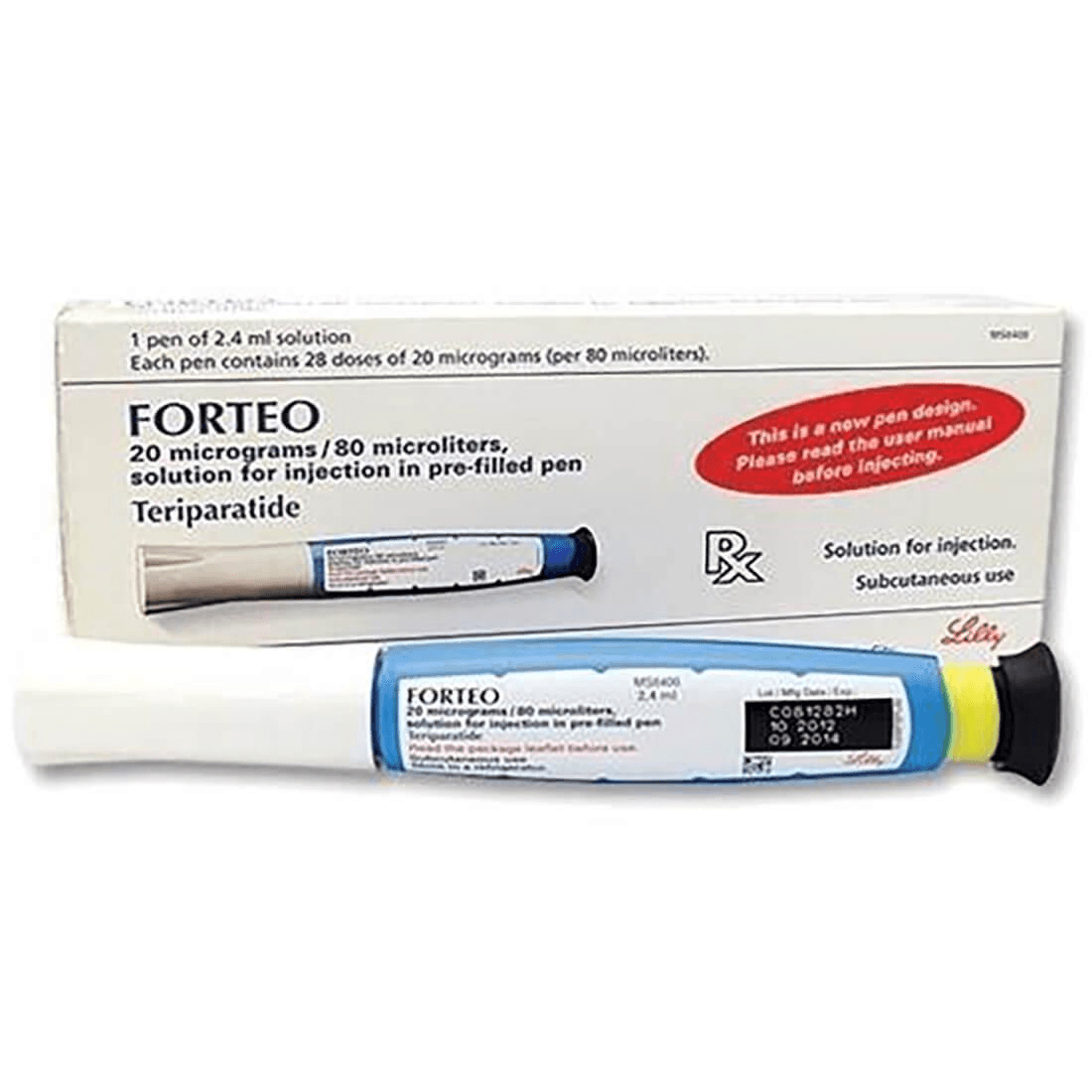
Forteo (Teriparatide Injection): Bone Density Support, Uses, and Precautions
Forteo contains the active ingredient teriparatide, a medication that promotes new bone formation in specific adult patients who have severe bone weakness (osteoporosis) and a high risk of bone fractures. This prescription subcutaneous (under-the-skin) injection is not a substitute for standard calcium supplements or ordinary pain relievers. If your blood calcium levels are elevated, inform your doctor before starting treatment.
This educational guide does not promote any single brand, nor does it endorse any company's products as the best. You may ask your pharmacist about available generic alternatives containing the same active ingredient, but never switch your medication or pen device on your own.
Quick Information
| Information | Details |
| Generic Name | Teriparatide |
| Brand Name & Alternatives | Forteo; verify other options using the generic name |
| Drug Category | Anabolic agent (Bone-forming agent) |
| Primary Uses | Severe osteoporosis with a high risk of bone fractures |
| Available Form | Pre-filled multi-dose injection pen |
| Common Strength | Famous Forteo pen contains 600 mcg teriparatide in 2.4 mL of solution; check local packaging |
| Route of Administration | Subcutaneous injection (under the skin of the thigh or abdomen) |
| Prescription Status | Strictly requires a doctor's prescription and medical supervision |
| Common Side Effects | Nausea, dizziness, leg cramps, and joint pain |
Introduction: What is Forteo?
In severe osteoporosis, a person's bones can break easily from a minor trip or a fall from standing height. A doctor does not base the decision to prescribe Forteo solely on a bone density scan; past fractures, age, fall risk, and other concurrent medications are also considered.
Not every patient with bone weakness requires Forteo. A specialist may consider this medication when the fracture risk is exceptionally high, when other standard bone medications are poorly tolerated, or when fractures continue to occur despite prior treatment.
How Does the Medication Work?
Teriparatide acts similarly to the active portion of human parathyroid hormone. When administered as a daily dose, it stimulates the activity of osteoblasts (bone-forming cells). This makes its biological mechanism distinct from antiresorptive medications, which primarily work by slowing down bone breakdown.
The benefits are not felt immediately. Changes in bone strength are evaluated over several months, and persistent back pain alone is not proof that the medication has failed, as back pain can have multiple underlying causes.
Indications: When Is It Used?
High Risk of Bone Fractures
In postmenopausal women and in men with severe osteoporosis who are at a high risk for fractures, a physician may prescribe teriparatide. In men, reduced sex hormone levels can sometimes be an underlying cause of bone fragility.
Glucocorticoid-Induced Osteoporosis
Forteo is also used in certain adult patients experiencing bone loss due to prolonged systemic corticosteroid use. However, not every person taking steroids requires this drug; the decision depends on steroid dose, duration, and individual fracture risk.
Caution: Do not use this medication on your own for routine joint pain or in an attempt to speed up the healing of every newly broken bone. These are not standard approved indications.
Dosage and Administration
In the official adult labelling for the well-known Forteo pen, the standard dosage is listed as 20 micrograms subcutaneously daily. Do not take this as a personal prescription. The precise dosage must be confirmed with your doctor or pharmacist based on age, condition, formulation, and medical history. Reducing an adult dose for children is unsafe and inappropriate.
Timing: It can be injected before or after meals. Choose a consistent time each day that fits your routine. Administer early doses in a setting where you can immediately sit or lie down if you experience dizziness.
Pen Technique: Have a nurse or pharmacist demonstrate the correct technique for your specific pen device. If verbal instructions feel insufficient, ask for a hands-on demonstration.
Preparation: Wash your hands, inspect the solution, and attach a new, proper pen needle for every injection. The solution inside must be clear and colorless.
Injection Sites: Inject into the skin of the abdomen or thigh, rotating the injection site with each dose. Avoid areas that are bruised, hardened, or inflamed.
Dosing Action: Hold the injection button down for the full duration specified in the pen manual before withdrawing the needle.
Post-Injection: Remove and safely dispose of the needle in a sharps container immediately after use. Never share your pen device with anyone else.
Do not attempt to withdraw solution from the pen using a separate syringe. If you are unsure whether a full dose was delivered, do not administer a second injection; have your pharmacist check the pen.
Side Effects and Warning Signs
Mild nausea, light dizziness, leg cramps, or joint pain may occur. Mild discomfort at the injection site is also possible; however, do not ignore worsening redness, heat, or pus at the injection site.
A drop in blood pressure upon standing (orthostatic hypotension) can occur after early doses. Sit or lie down immediately if you feel lightheaded, get up slowly, and avoid driving or climbing stairs until symptoms fully resolve. If this recurs frequently, seek medical advice before your next dose.
Safety Action Table
| Symptom | Practical Step |
| Difficulty breathing, swelling of the face or throat | Stop the drug and seek immediate emergency help |
| Fainting, severe chest pain, or marked irregular heartbeats | Obtain immediate medical evaluation |
| Persistent vomiting, severe constipation, unusual thirst, severe weakness, or confusion | Possible sign of elevated blood calcium (hypercalcemia); contact your doctor the same day |
| New, persistent bone pain or a localized bone lump | Promptly schedule an evaluation (do not assume it is cancerous, but it must be evaluated) |
Warnings and Precautions
Pre-existing Conditions: Inform your doctor if you have a history of kidney disease, kidney stones, elevated blood calcium levels, liver or heart problems, or prior drug allergies. Severe kidney impairment requires careful clinical evaluation regarding drug selection and underlying bone etiology.
Pregnancy & Breastfeeding: Forteo is not suitable during pregnancy. If pregnancy occurs, stop the medication and contact your doctor immediately. It should also be avoided during breastfeeding.
Children and Adolescents: Forteo is contraindicated in children and young adults whose bones are still actively growing (open epiphyses).
Elderly Patients: If an elderly patient is self-administering, assess their vision, hand grip strength, and risk of standing dizziness. Ensure a family member is trained in pen operation while keeping the patient's supplies separated from others.
Drug Interactions
Digoxin: Special caution is required in patients taking digoxin, as elevated blood calcium levels can increase the risk of digoxin toxicity. Seek immediate advice if you experience heart rhythm changes, severe nausea, or dizziness.
Calcium and Vitamin D: These supplements are frequently prescribed alongside bone treatments, but do not increase their doses on your own. Disclose all calcium tablets, multivitamin powders, and high-dose vitamin D injections you take.
Other Substances: Inform your care team about blood pressure medications, diuretics, and herbal supplements. Avoid alcohol, as it can worsen dizziness and increase the risk of falls.
Who Should Not Use Forteo?
Severe Allergies: Do not use if you have a known severe hypersensitivity to teriparatide or any component of the pen formulation.
Hypercalcemia: It is contraindicated in patients with baseline hypercalcemia or conditions that cause high calcium levels (such as primary hyperparathyroidism).
Bone Malignancies or Radiation: Inform your physician if you have a history of bone cancer, skeletal metastases, prior radiation therapy involving the skeleton, Paget's disease of bone, or an inherited risk of osteosarcoma. (An increased risk of osteosarcoma was observed in animal studies; while observational human studies have not proven a clear increase, strict precautions remain for high-risk groups).
Overdose and Missed Doses
Overdose
If an accidental extra dose is injected, do not administer any further injections and seek immediate medical guidance. Overdose can lead to severe nausea, vomiting, weakness, dizziness, low blood pressure, or hypercalcemia. Feeling fine initially does not mean the risk has passed.
Note the time and amount injected, and take the pen and packaging with you. Do not induce vomiting at home or attempt to neutralize the effect with other medications. In case of fainting or severe distress, go straight to the nearest emergency department.
Missed Dose
If you remember on the same day, you may administer the missed dose, provided you have not already injected that day. If the day has passed, take your routine single dose the following day at your usual time. Never inject a double dose on the same day.
If you frequently forget doses, mark a calendar. In households with multiple caregivers, keeping a written medication log prevents accidental duplicate dosing.
Duration of Treatment
Forteo is typically prescribed for a limited, planned period—most commonly up to 2 years over a patient's lifetime. Guidelines for exceeding 2 years vary by country and approved regional labeling; some regulatory labels permit extension in patients who remain at an exceptionally high risk for fractures.
Do not extend the duration of treatment on your own. Discontinuing Forteo does not produce addiction-like withdrawal symptoms, but because newly formed bone density can decline after stopping, doctors usually transition patients to an antiresorptive medication to maintain bone gains.
Plan ahead with your doctor before your final pen is finished. If a break in treatment is anticipated due to cost or availability, inform your physician in advance to avoid an unplanned interruption.
Storage, Handling, and Travel Precautions
Refrigeration: The Forteo pen must be stored in a refrigerator at 2°C to 8°C (36°F to 46°F). Do not freeze the device. Recapping the pen immediately after use helps protect it. Never leave the needle attached to the pen, as this can cause leakage, contamination, or air entry.
Discard Timeline: Write the date of first use on the pen or outer box. The famous Forteo pen must be discarded 28 days after its first use, even if some solution remains inside (always verify your local package insert). An unexpired print date on the box does not extend this 28-day in-use limit.
Travel and Heat Management: Hot weather, long travel, or power outages pose practical storage challenges. Transport the pen in an insulated cold bag, ensuring the pen does not directly touch ice or frozen gel packs. Never leave the pen inside a parked car.
Power Outages: If the refrigerator loses power, keep the door closed and note the interior temperature if possible. Provide the duration and temperature exposure details to your pharmacist. A solution remaining visually clear is not standalone proof that it remains potent after thermal exposure.
Understanding Formulations and Device Recognition
Forteo is not available as a tablet, liquid syrup, or pain cream; it is exclusively a specialized injection pen.
On the pen packaging, total content, concentration per milliliter, and single-dose delivery are distinct values. For example, the "600 mcg" printed on a pen represents the total contents of the entire pen, not a single daily dose. Different teriparatide devices may have varying operational steps, solution volumes, and preparation requirements; do not apply habits from an older device to a new one.
Neutral Brand Selection
Without confirming local brand availability in Pakistan, it is appropriate to refer to the generic name teriparatide. Compare approved options, device training requirements, price, and supply consistency with your doctor or pharmacist. Sharing the same active ingredient does not mean every pen device operates identically.
When purchasing, check the registration details, batch number, expiration date, intact packaging, and cold-chain delivery status. When offered a discounted price, always verify how the cold chain was maintained during transport.
Common Misconceptions
| Misconception | Correct Fact |
| "I take calcium, so I don't need injections." | Calcium meets baseline nutritional needs; severe fracture risk often requires targeted bone-building therapy. |
| "My pain stopped, so my bones are strong now." | Pain relief and bone strength are not measured the same way; doctors assess scans and fracture history. |
| "Injecting more will speed up my recovery." | Extra doses do not accelerate benefits and significantly increase the risk of severe side effects. |
| "If medication remains in the pen, I can keep using it." | Solution remaining after the 28-day in-use limit must be discarded regardless of volume. |
Frequently Asked Questions
Can Forteo be injected after meals?
Yes, it can be injected before or after meals. Focus on maintaining a consistent daily schedule, proper injection technique, and precautions against initial dizziness; taking it on an empty stomach is not required.
Does Forteo cause drowsiness, and is it safe to drive?
Drowsiness is not a primary effect, but lightheadedness or dizziness can occur. Monitor your response after early doses; if dizziness occurs, avoid driving, riding a motorcycle, or operating machinery.
Is Forteo addictive?
No, Forteo is not habit-forming or addictive. Daily administration is a structured medical regimen, not a sign of dependency. However, stopping without medical guidance can compromise your long-term bone protection plan.
When should blood calcium levels be tested?
Have lab tests done at the times scheduled by your physician, and inform the lab of your last injection time. Serum calcium can temporarily rise post-injection; to measure baseline levels, physicians typically prefer blood samples drawn at least 16 hours after the last dose.
Can it be used during pregnancy or breastfeeding?
No, it is not suitable for use during pregnancy or breastfeeding. Report a suspected or confirmed pregnancy to your doctor immediately. Alternative treatments for nursing mothers must be determined under medical supervision.
Can Forteo be given to a child with weak bones?
No, Forteo is not appropriate for children or adolescents with growing bones. The underlying cause of bone weakness must be evaluated first; conditions like severe Vitamin D deficiency require entirely different management.
If the pen was left out of the fridge, is putting it back enough?
Not necessarily. Cooling the pen back down does not reverse potential heat degradation. Note the approximate duration and room temperature, and contact your pharmacist to confirm if the pen remains safe to use.
What if a new fracture occurs during treatment?
Seek medical evaluation promptly, but do not increase your dose on your own. Your doctor will evaluate the injury, treatment adherence, concurrent conditions, and overall treatment timeline; a single fracture does not automatically mean complete treatment failure.
References
Eli Lilly and Company: Forteo US Prescribing Information, Patient Instructions for Use, and Medication Guide.
U.S. National Library of Medicine (MedlinePlus): Teriparatide Injection Patient Educational Information.
The Endocrine Society: Clinical Practice Guidelines for the Pharmacological Management of Osteoporosis.
Note: If local approved packaging instructions differ, consult your physician for clarification.
Important Medical Disclaimer
This content is for educational purposes and does not substitute for professional medical advice from a qualified doctor or pharmacist. Always consult your doctor or pharmacist before using any medication, dosage, or treatment.