Strattera and Attention Deficit: Uses, Effects, and Precautions
اسٹریٹیرا توجہ کی کمی اور غیر معمولی سرگرمی میں کیسے مدد کرتی ہے؟ اثر آنے کا وقت، بچوں کی نگرانی، رہ گئی خوراک اور خطرے کی علامات سمجھیں۔
By Dr. Khalid Mehmood, MD11 min read
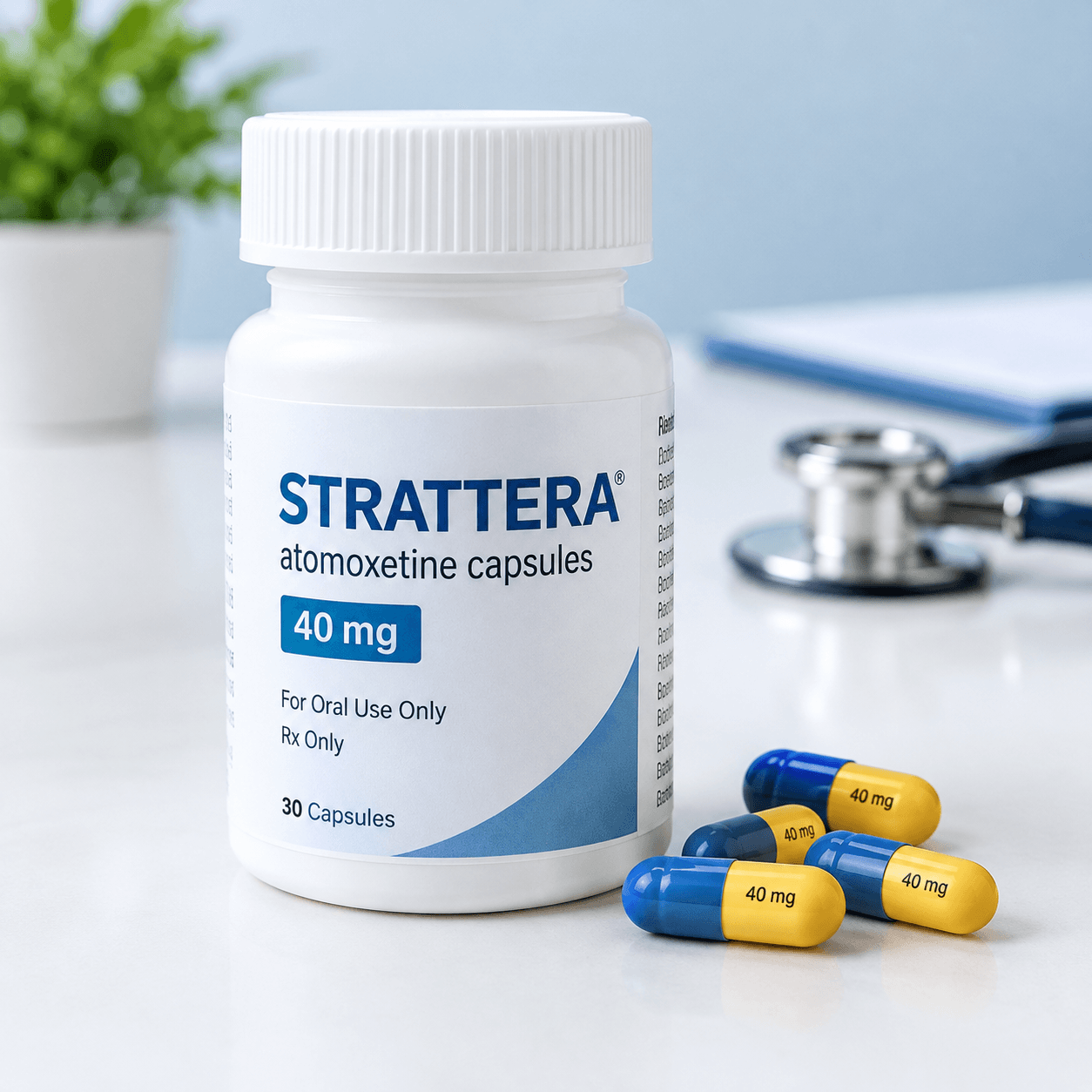
Strattera contains Atomoxetine; this prescription non-stimulant medication is given to improve attention, restlessness, and impulsivity in Attention Deficit Hyperactivity Disorder (ADHD). Its effects are not immediate, and prompt medical help is essential for any new thoughts of self-harm, especially in children or adolescents.
This is educational guidance, not a promotion of any single brand, nor does it endorse any company's products as the best. Ask your pharmacist for a suitable generic alternative with the same active ingredient; verify before changing your treatment.
Quick Information
| Information | Details |
| Generic Name | Atomoxetine |
| Brand Name & Alternatives | Strattera; verify local generic alternatives for other names |
| Drug Category | Non-stimulant medication; reduces the reuptake speed of norepinephrine in the brain |
| Primary Use | Attention Deficit Hyperactivity Disorder (ADHD) |
| Available Forms | Primarily capsules; oral solution available in some countries |
| Common Strengths | 10, 18, 25, 40, 60, 80, and 100 mg in approved labels; local availability may vary |
| Route of Administration | Oral |
| Prescription Requirement | Used under a doctor's prescription and supervision |
| Common Side Effects | Nausea, reduced appetite, stomach discomfort, fatigue, dry mouth |
Introduction: What is Strattera?
Atomoxetine is a brain-acting medication, but it belongs to a different class than stimulant drugs. It is not given simply to raise grades on tests, stay awake on the night of an exam, or quiet down every mischievous child.
Diagnosis is necessary first. Sleep deprivation, home stress, and hearing or learning difficulties can also impair concentration; a doctor evaluates the overall quality of home, academic, and daily life rather than making a decision based on a single complaint.
How Does the Medication Work?
A chemical messenger called norepinephrine in the brain plays a role in attention and impulse control. Atomoxetine reduces its reuptake, which helps some patients stay on task and curb impulsivity.
Patience is required. Some changes may be felt within the first couple of weeks, but evaluating clear benefits usually takes several weeks—often four to eight weeks or more. Initial low dosages, regularity, and tolerability also affect this timeline; self-adjusting the dose within a few days is incorrect.
Uses
Attention Deficit Hyperactivity Disorder (ADHD)
It can be used after diagnosis in adults and typically children aged six years or older; age approval depends on the country and relevant labeling. In some patients, a doctor chooses it when a stimulant is unsuitable, not tolerated, or does not provide sufficient benefit.
Home support is also essential. Clear routines, small tasks, school support, and behavioral training go hand in hand with the medication. Improvement does not just mean sitting quietly; look for the child's ability to understand instructions, complete tasks, and improve relationships.
Dosage and Administration
The correct dosage depends on age, weight, medical condition, drug formulation, liver function, and other medications; always confirm with your doctor or pharmacist. Weight is important in children, while the approach for adults may differ. Do not copy another patient's prescription.
Usually taken daily in the morning, or in two divided doses per doctor's instructions. Keep the timing of the second dose according to the prescription. It can be taken with or without food; taking it with food can help ease nausea.
Swallow the capsule whole. Opening it to mix with yogurt, taking half the powder, or chewing it is inappropriate because the contents can cause eye irritation. If it accidentally gets into your eyes, rinse immediately with clean water and seek medical advice; wash hands and contaminated surfaces as well.
Do not force it if there is difficulty swallowing. Ask your pharmacist for a suitable form; do not prepare a solution at home. The interval for increasing the dose is determined by the doctor; changing capsule strength on your own due to minor weight changes can be dangerous.
Do not cluster doses together due to Ramadan, school holidays, or sleeping in. Plan timing changes in advance. Assigning a responsible individual to administer the medication prevents double dosing, especially when multiple people care for the child.
Side Effects
Nausea, stomach pain, decreased appetite, constipation, fatigue, or drowsiness may occur. Some individuals complain of insomnia, dizziness, or dry mouth. Keep a brief log of timing, meals, and intensity for mild symptoms; contact your physician if discomfort worsens or weight drops.
Do not hide issues. Adults may experience difficulty initiating urination, changes in sexual desire, or sexual performance changes; seek private consultation rather than staying silent out of embarrassment.
Safety Action Table
| Symptom | Practical Step |
| Suicidal thoughts, talk of self-harm, or attempts | Do not leave alone; seek emergency help immediately |
| Chest pain, fainting, severe shortness of breath | Go to the emergency room immediately |
| Yellow eyes, dark urine, upper right abdominal pain | Stop the medication and seek immediate medical evaluation |
| Swelling of face or throat, breathing obstruction | Stop the medication and seek immediate emergency help |
| Prolonged or painful penile erection | Go to the hospital immediately; do not wait |
Warnings and Precautions
Closely monitor moods in children and adolescents after starting treatment and following dosage adjustments. Report new severe irritability, restlessness, unusual sadness, dangerous behavior, or unfamiliar statements to the doctor on the same day. Inform them beforehand if there is a history of bipolar disorder, severe mental illness, or seizures.
Pulse and blood pressure can increase. Monitoring is required before treatment, after dose changes, and during regular evaluations; report any history of fainting, sudden unexplained family deaths, or heart disease. An electrocardiogram (ECG) is not mandatory for every patient; the doctor determines the necessity.
Record the child's height and weight. Pregnancy, family planning, or breastfeeding require a separate assessment of benefits versus potential risks. Liver disease may require dosage adjustment; inform them of kidney disease as well. Evidence in the elderly is limited, so specialized evaluation is important.
Interactions with Other Medications
Bring your complete list of medications, including those for cough, cold, asthma, and mental health. Listing daily pills is not enough; occasional medications can also change decisions.
Fluoxetine, paroxetine, and quinidine can increase blood levels of atomoxetine; a dosage review may be necessary.
Monoamine oxidase inhibitors (MAOIs) can cause dangerous interactions; check the contraindications section carefully.
Certain cold decongestants and blood pressure-raising substances can exert extra effects on heart rate.
Salbutamol, especially via inhalation or injection, and medications affecting heart rhythm must be reported.
Mention vitamins, herbs, and energy drinks too. High caffeine intake can increase heart palpitations or insomnia. Avoid alcohol, especially if experiencing dizziness or drowsiness.
Who Should Not Take It?
Individuals with a known severe allergy to atomoxetine or any capsule component should not use it. Narrow-angle glaucoma, a history of or current pheochromocytoma (a rare tumor), and severe cardiovascular or arterial disease where increased pulse or blood pressure would be dangerous are key contraindications.
Do not time intervals on your own. If 14 days have not passed since stopping an MAOI, atomoxetine must not be taken; a minimum 14-day gap is also required when switching in the reverse direction. The physician must manage the switch.
Overdose
Accidentally taking an excessive amount can cause nausea, vomiting, drowsiness, anxiety, rapid heart rate, or elevated blood pressure; severe cases can involve seizures or heart rhythm disturbances. Do not wait for symptoms.
Contact the nearest emergency department immediately, especially if a child has ingested extra capsules. Keep the packaging, estimated quantity, timing of ingestion, and information on other medications handy. Do not induce vomiting on your own, and do not give anything by mouth to an unconscious person.
Missed Dose
Check the relevant label instructions when remembered. If the next dose is near, skip the missed dose; do not take two doses together or too close to make up for the shortfall, and do not exceed the prescribed total daily amount within 24 hours.
Keep forgetting? A pillbox or phone reminder can help. If several days are missed, ask your pharmacist how to restart safely.
How Long to Use?
This is not a short course like antibiotics. Treatment can continue long-term if benefits are sustained, but the need, side effects, and daily functioning must be periodically reviewed. Gradual tapering is usually unnecessary when stopping, but stopping arbitrarily can cause symptoms to return.
Create a simple measurement scale. Write down two goals initially, such as starting homework and waiting your turn during conversation; get brief feedback weekly from home and teachers. Do not equate silence or lethargy with success.
Storage
Store in the original packaging according to the temperature specified on the label; many capsule labels specify standard room temperature. Protect from moisture, direct sunlight, and extreme heat. Keep out of reach of children; a locked cabinet is best.
Do not leave in a car. In Pakistan's heat, a car, window sill, or hot kitchen area is unsuitable for storage. Do not refrigerate without instructions. If expired, damaged, or suspicious capsules are found, ask your pharmacist for disposal methods.
Different Forms and Strengths
Strattera's well-known prescription form is capsules; the tablet/capsule strengths listed do not guarantee availability at every Pakistani pharmacy. An oral solution of atomoxetine exists in some countries, but local approval and availability require separate verification.
Do not change the form yourself. If a solution is obtained, understand the strength per milliliter and the measuring device; do not mistake capsule numbers for liquid amounts. Household spoons are not accurate measuring tools.
Balanced Brand Comparison
The primary goal of both the original brand and approved generics is to deliver an active ingredient. Differences lie in price, availability, color, excipients, or packaging; a higher price does not guarantee greater benefit.
Read the ingredient and strength before the name when purchasing. Obtain a receipt from a reputable pharmacy, and check the expiration date, batch number, seal, and local registration details; do not accept open, unverified capsules. The same active ingredient does not guarantee identical tolerance or effect in every case, so changes should be made through a doctor or pharmacist. Save photos of both packages if a new complaint arises later.
Common Misconceptions
Misconception: Taking it on exam days is enough. Reality: Benefits are evaluated through regular use, not for immediate mental sharpness.
Misconception: A non-stimulant drug is completely harmless. Reality: Important precautions regarding the heart, liver, and mood still apply.
Misconception: If the child is quiet, the treatment is successful. Reality: It is crucial to differentiate between fatigue and improved focus.
Misconception: Decreased appetite should always be tolerated. Reality: Persistent weight loss or stunted growth is a reason to review treatment.
Frequently Asked Questions
Can Strattera be taken after meals?
Yes, it can be taken with or without food. If nausea occurs, taking it after food may be easier, but maintain a consistent daily time and do not reduce the dose on your own for persistent stomach discomfort.
Does it cause sleepiness or disrupt sleep?
Both are possible. If daytime drowsiness or nighttime insomnia occurs, note your dosage timing, sleep routine, and caffeine intake. Your physician can adjust the timing or split doses; do not add sleeping pills on your own.
Is Strattera habit-forming?
Abuse or dependence like stimulant medications is not its typical characteristic, but treating it as completely risk-free is incorrect. Long-term necessity may stem from the condition, not addiction. Never share your medication with others.
Should a child take the medication on school days?
Usually, the recommended daily routine is maintained. Do not make self-directed breaks during weekends or summers; symptoms can also appear at home, in relationships, and during daily tasks. If a break is needed, the physician should design a plan.
What should I do if pregnancy occurs or during breastfeeding?
Inform your physician promptly. Decisions are made by looking at available data, symptom severity, and alternative support; do not guarantee safety during pregnancy, nor alter treatment out of fear. Report unusual lethargy or poor feeding in a nursing infant.
Can I drive a car or motorcycle while taking the medication?
Until you know how you react, avoid driving cars, motorcycles, and machinery. If you experience dizziness, drowsiness, or impaired concentration, do not drive. Testing your tolerance by mixing it with alcohol can be dangerous.
Should I stop immediately if there is no benefit?
First, review regularity, an adequate trial period, the prescribed dose, and original goals. Do not double the dose on your own. Stopping abruptly usually does not cause physical withdrawal, but symptoms can return; plan discontinuation with your physician.
What should I do if a child's mood changes suddenly?
Contact your physician on the same day, especially after starting the medication or changing the dose. If there is talk of self-harm, severe unusual behavior, or immediate danger, do not leave the child alone and seek emergency help.
References
U.S. Food and Drug Administration (FDA): Approved prescribing information and patient medication guide for Strattera.
MedlinePlus: Patient information on Atomoxetine.
National Institute for Health and Care Excellence (NICE), UK: Guidelines on the diagnosis and management of ADHD.
Local package instructions and approvals may vary; match them with your prescription.
Important Medical Disclaimer
This content is for educational purposes and does not substitute for professional medical advice from a qualified doctor or pharmacist. Always consult your doctor or pharmacist before using any medication, dosage, or treatment.