What Is Anion Gap? Understanding Blood Test Results and Warning Signs
اینائن گیپ خون کے نمکیات سے نکالا گیا حساب ہے۔ نارمل حد، زیادہ یا کم نتیجے، البومن کے اثر اور فوری طبی مدد کی علامات کو آسان اردو میں سمجھیں۔
By Dr. Khalid Mehmood, MD12 min read
Anion Gap: What It Means, Normal Range, High and Low Levels, Causes, and Treatment
Anion gap refers to the calculated difference between positively and negatively charged electrolytes measured in the blood. It helps identify possible causes of acid buildup in the body. A high or low result alone does not diagnose any disease. It must be interpreted alongside bicarbonate, albumin, kidney function, and the patient's symptoms.
The name may sound complicated, but understanding your report does not require studying chemistry. The anion gap is not a medicine; it is a number calculated from blood test results. This educational guide does not promote any particular brand or claim that any company's products are superior.
Quick Information
Information | Details |
|---|---|
Common Name | Anion Gap, the calculated difference between measured electrolytes |
Type of Test | A calculation based on blood electrolyte levels |
Main Purpose | To understand disturbances in the body's acid-base balance |
Required Results | Usually sodium, chloride, and bicarbonate |
Sample | Blood usually collected from a vein in the arm |
Normal Reference Range | Approximately 8–12 mmol/L in some laboratories without potassium; the local laboratory range takes priority |
Medicine, Strength, or Brand | Not applicable; treatment depends on the underlying cause |
Common Effects of Blood Sampling | Needle prick, minor bruising, or temporary dizziness |
Why Is the Anion Gap Calculated in Blood?
The total positive and negative electrical charges in the blood remain balanced. However, routine blood tests do not measure every charged substance separately. The difference that remains when certain electrolytes are used in a calculation is called the anion gap.
There is no actual physical gap. Albumin, a protein found in the blood, phosphate, and other substances also contribute to this difference. When certain acidic substances increase, the anion gap may rise. However, low albumin levels can hide this increase.
That is why an abnormal number highlighted in bold on a laboratory report does not tell the whole story.
How Is the Anion Gap Calculated?
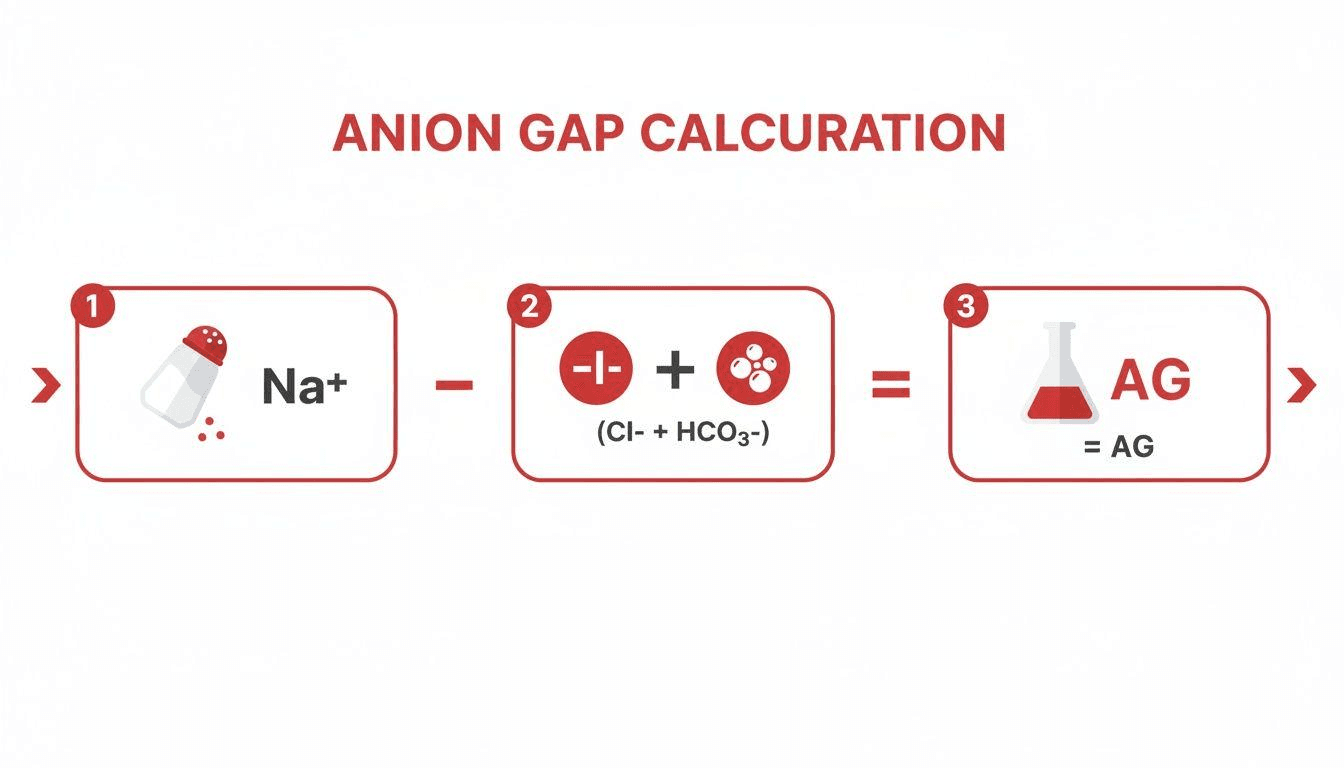
The most commonly used formula is:
Anion Gap = Sodium − (Chloride + Bicarbonate)
For example, if sodium is 140, chloride is 104, and bicarbonate is 24, the calculation becomes:
140 − (104 + 24) = 12
This calculation assumes that all three results come from the same blood sample and are expressed in compatible units.
Do not consider these example values your personal target range. Their purpose is simply to explain the calculation.
Some laboratories also include potassium in the formula. In that case, both the calculated value and the reference range change. Therefore, when comparing reports from two different laboratories, do not immediately assume that a disease has worsened.
In a blood chemistry report, the total carbon dioxide result is also commonly used as an estimate of bicarbonate.
What Is the Normal Anion Gap Range?
A range of approximately 8–12 mmol/L without potassium is a common educational example. However, some laboratory instruments and methods use different ranges, such as approximately 3–9 mmol/L.
Always check the reference range printed on your laboratory report. A single range found on the internet does not apply to everyone.
Report Result | Next Useful Question |
|---|---|
Anion gap within the reference range | Is bicarbonate also normal, and are there any symptoms? |
Anion gap above the reference range | Have acidic substances increased, or could albumin levels or sample-related factors be affecting the result? |
Low or negative anion gap | Does the result need to be repeated, albumin measured, or medications reviewed? |
Instead of worrying about a small difference, consider previous results, current symptoms, and other electrolyte levels together.
On the other hand, an anion gap within the reference range does not guarantee that a seriously ill patient is safe.
When Do Doctors Use the Anion Gap Test?
This calculation helps doctors investigate the causes of acid-base disturbances in situations such as diabetes accompanied by vomiting, kidney dysfunction, severe infection, unexplained drowsiness, or rapid and deep breathing.
Sometimes, the anion gap is automatically included in a routine electrolyte report.
Additional investigations may be required. Depending on the patient's condition, a doctor may check blood gases, blood glucose, ketones, lactate, creatinine, and albumin.
Not every patient needs all these tests.
The goal is not simply to make the number appear normal but to identify the underlying problem responsible for the abnormal result.
Important Causes of a High Anion Gap
When the anion gap is high and bicarbonate is low, it raises suspicion that acidic substances are accumulating in the body. This condition is known as metabolic acidosis.
However, the actual acidity of the blood and the presence of other acid-base disturbances cannot be determined from the anion gap alone.
Increased ketones in diabetes: When insulin is insufficient, the body breaks down fat and produces acidic substances. Symptoms may include excessive thirst, vomiting, abdominal pain, and deep breathing.
Increased lactic acid: This may occur due to severe infection, circulatory problems, or insufficient oxygen delivery to body tissues.
Severe kidney dysfunction: The kidneys may become unable to remove certain acidic substances effectively.
Toxic substances or medication overdose: Methanol, certain industrial solvents, and toxic amounts of aspirin are important examples.
Prolonged starvation or alcohol-related ketones: These may also cause an increased anion gap under certain circumstances. However, missing a meal or fasting does not automatically indicate a disease.
Identifying the cause is essential.
For example, in the heat of Karachi, weakness and thirst should not automatically be attributed to dehydration, especially when a person with diabetes is also experiencing vomiting or unusual breathing.
Can Acidosis Occur Even With a Normal Anion Gap?
Yes, it can.
Persistent diarrhea can cause the body to lose bicarbonate. Similarly, certain disorders of the kidney tubules can interfere with acid excretion or bicarbonate conservation.
In these conditions, chloride levels may increase, preventing the anion gap from becoming elevated.
Therefore, do not assume everything is normal simply because the anion gap falls within the reference range.
If bicarbonate is low, breathing patterns have changed, or the patient appears extremely weak, medical evaluation is necessary even when the anion gap is normal.
Two different acid-base disturbances may also occur at the same time.
Low Anion Gap and Its Relationship With Albumin
One common explanation for a low anion gap is a problem with the blood sample or laboratory measurement. Therefore, when an unexpected result appears, a doctor may recommend repeating the test.
Another important cause is low albumin, which may occur with liver disease, protein loss through urine, inflammation, or other medical conditions.
A low anion gap is not always better.
When albumin is low, the anion gap may appear normal even when acidic substances have accumulated. This is particularly important when interpreting laboratory results in seriously ill patients.
Doctors sometimes use an albumin-corrected calculation.
For every 1 g/dL decrease in albumin below 4 g/dL, approximately 2.5 is added to the anion gap.
For example, if the anion gap is 12 and albumin is 2 g/dL:
Corrected Anion Gap = 12 + [2.5 × (4 − 2)] = 17
Do not use this calculation to diagnose yourself. It is an estimate.
If the anion gap remains persistently low, lithium or certain abnormal blood proteins may also be considered as possible explanations.
What Should You Do Before the Test and After Receiving the Report?
Fasting is generally not required for the anion gap calculation alone. However, if blood glucose or other tests are being performed at the same time, the laboratory instructions may differ.
Ask beforehand.
Drinking unusually large amounts of water or stopping regular medications on your own is not an appropriate way to improve the test result.
When receiving your report, do not send a picture of the anion gap value to your doctor.
The complete laboratory report, the time the sample was collected, and your condition at that time provide more useful information.
Mention whether the blood sample was collected before or after an intravenous drip was started.
Report how long you have experienced vomiting, diarrhea, fever, reduced food intake, or decreased urination.
Bring a list of prescription medications, over-the-counter medicines, and supplements.
Take previous laboratory reports with you, while considering possible differences in units or calculation methods.
Delays in processing a blood sample or improper sample handling can affect certain results.
However, if severe symptoms are present, do not remain at home waiting for a repeat test.
Which Symptoms Require Immediate Hospital Care?
Do not wait for a particular anion gap number.
The following symptoms require urgent medical evaluation, particularly in patients with diabetes, kidney disease, or suspected poisoning:
Rapid, deep, or labored breathing.
Repeated vomiting, severe abdominal pain, or inability to keep fluids down.
Confusion, unusual drowsiness, unconsciousness, or seizures.
Very little urine, severe weakness, cold skin, or fainting.
Suspected ingestion of the wrong medication, excessive tablets, or a toxic chemical.
Go to the nearest emergency department.
If the patient is drowsy, do not give them anything to drink or allow them to drive.
If poisoning is suspected, safely bring the medication or chemical packaging to the hospital.
Do not induce vomiting.
Trying salt, lemon, or baking soda as home remedies may dangerously delay appropriate treatment.
How Are Treatment and Medication Dosages Determined?
There is no specific tablet that treats the anion gap itself.
In severe diabetic ketoacidosis, hospital treatment may involve insulin, fluids, and careful electrolyte monitoring.
Treatment for severe infection, kidney dysfunction, or poisoning is different and depends on the underlying condition.
A high anion gap alone does not determine whether dialysis is required.
Medications used for stomach acidity are not substitutes for treating acid-base disturbances in the blood.
Bicarbonate is also not given to every patient. Incorrect use can increase sodium or fluid levels and disturb potassium balance.
The correct medication dosage depends on factors such as age, medical condition, formulation, and medical history.
Always confirm treatment with a doctor or pharmacist.
Do not double your insulin dose or stop taking insulin simply because of an anion gap result.
The duration of treatment and timing of repeat blood tests also depend on the underlying cause and the patient's clinical condition.
Medications, Pregnancy, and Other Important Precautions
A complete medication list is important.
Certain diabetes medications that increase glucose excretion through urine may occasionally be associated with ketoacidosis even when blood glucose is not very high.
Therefore, vomiting and deep breathing should not be ignored simply because blood glucose appears acceptable.
In people taking metformin, severe illness or significant kidney dysfunction may raise concern about a rare but serious risk of lactic acidosis.
Aspirin overdose, lithium, and acetazolamide can also affect acid-base balance or the interpretation of anion gap results in different ways.
Instead of stopping medication on your own, inform the healthcare professional conducting your urgent evaluation about the medication name and the time of the last dose.
Extra caution is necessary during pregnancy and in children, older adults, and patients with heart or kidney disease.
During pregnancy, persistent vomiting or reduced food intake in someone with diabetes should not be considered a minor problem.
Similarly, patients with heart or kidney disease should not be forced to drink several liters of water.
The blood test itself is generally low-risk. If you take blood-thinning medication, inform the healthcare staff before the sample is collected.
Common Misconceptions
A high anion gap always means kidney failure: No. Increased ketones, lactate, and several other causes must also be considered.
A low anion gap is always safer: Not necessarily. Low albumin or laboratory measurement problems may need investigation.
Stomach acidity and blood acidity are the same: These are different conditions, and their treatments may also differ.
Every laboratory uses the same normal range: No. Instruments, calculation methods, and the inclusion of potassium can affect the result.
If the anion gap becomes normal, treatment is complete: Not necessarily. Other laboratory results, symptoms, and improvement in the underlying disease must also be considered.
Frequently Asked Questions
Is the anion gap measured directly in blood?
Usually, no.
It is calculated using sodium, chloride, and bicarbonate results.
If the anion gap is not listed on your report, first ask whether the necessary electrolytes have already been measured. A new blood sample may not be required.
Can you eat before an anion gap test?
Fasting is generally not necessary for this calculation alone.
However, instructions for other tests performed at the same time take priority, particularly if you use diabetes medication and have been instructed to fast.
Is an anion gap of 14 or 16 dangerous?
A single number cannot determine the level of danger.
The laboratory reference range, albumin, bicarbonate, and symptoms must all be considered.
Even with a small increase, a seriously ill patient may require immediate medical attention.
What anion gap level is considered an emergency?
There is no single absolute number that applies to every patient.
If deep breathing, drowsiness, persistent vomiting, or suspected poisoning occurs, seek emergency medical care even if the laboratory report is not yet available.
Can drinking water correct the anion gap?
Not in every situation.
Adequate fluid intake may help with mild dehydration, but ketone accumulation, severe infection, or kidney dysfunction cannot be treated with water alone.
In some patients, excessive water intake can be harmful.
Can ketoacidosis occur when blood sugar is normal?
Yes.
Particularly with certain diabetes medications, reduced food intake, or specific circumstances during pregnancy, ketones may increase without a marked rise in blood glucose.
If symptoms are present, seek medical evaluation.
When should the anion gap test be repeated?
The timing depends on the patient's condition.
In a hospital, severe disturbances may require frequent monitoring.
For an unexpectedly low result in a stable patient, a doctor will recommend an appropriate time for a confirmatory blood sample.
Are anion gap results interpreted the same way in children and pregnant women?
The basic calculation remains the same.
However, age, pregnancy, albumin levels, and relevant reference ranges must be considered.
Unusual lethargy in a child or persistent vomiting during pregnancy should not be assessed based on the anion gap alone.
References
MedlinePlus, U.S. National Library of Medicine: Patient information on the anion gap blood test.
Merck Manual, Professional Edition: Metabolic acidosis and acid-base disorders.
Cleveland Clinic Journal of Medicine, 2023: Practical guidance on evaluating a low anion gap.
Important Medical Disclaimer
This article is intended for general educational purposes and is not a substitute for professional medical advice from a qualified doctor or pharmacist.
Always consult your doctor or pharmacist before using any medication, determining a dosage, or starting any treatment