Milk Thistle Benefits: Liver, Evidence, and Precautions
سینٹ میری تھِسل جگر کے لیے کتنی مفید ہے؟ تحقیق کی حدود، سلیمارین والے پیک کی پہچان، دواؤں کے ساتھ احتیاط اور استعمال روکنے کی علامات جانیں۔
By Dr. Khalid Mehmood, MD12 min read
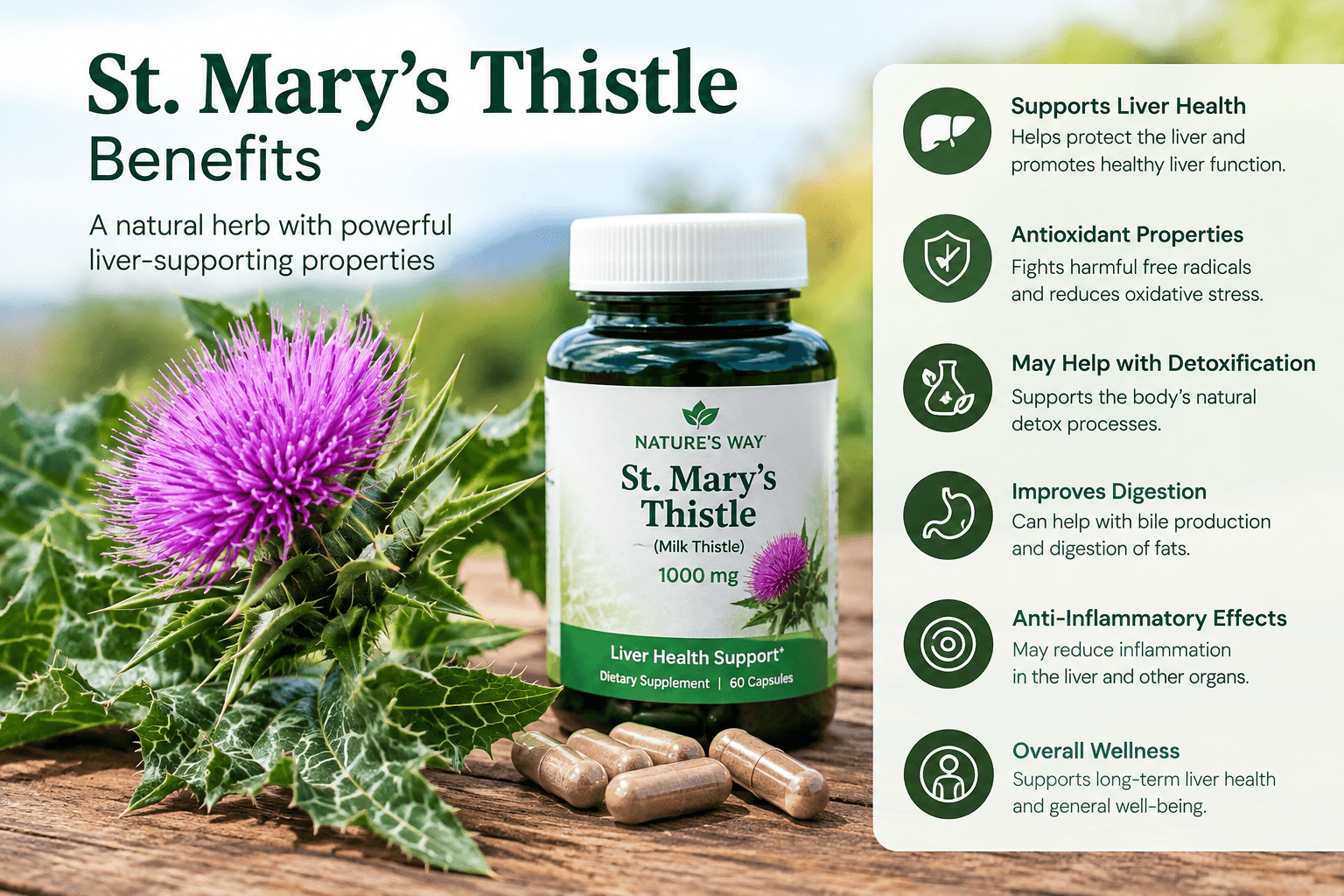
Milk thistle, also known as St. Mary's thistle, is a botanical supplement; its potential benefits for certain liver diseases have been researched, but reliable evidence proving it to be an effective treatment is still insufficient. Do not use it as a substitute for prescribed medications for fatty liver, hepatitis, or jaundice, as delaying actual treatment in the hope of a benefit can be harmful.
This educational guidance does not promote any single brand, nor does it endorse any company's products as the best. Ask your pharmacist for an alternative; simply looking for a similar name is not enough.
Quick Information
| Information | Details |
| Generic Name | Milk thistle, St. Mary's thistle; botanical name Silybum marianum |
| Brand Name & Alternatives | Guidance on the active ingredient; ask your pharmacist for local alternatives |
| Drug Category | Herbal supplement; not a proven primary treatment for liver disease |
| Primary Uses | Supportive use for liver health, but results are uncertain |
| Available Forms | Capsules, tablets, liquid extracts, and dried herbal material |
| Common Strengths | Not uniform; check the amounts of extract and silymarin separately |
| Route of Administration | Common products are taken orally |
| Prescription Status | Verify with local packaging, registration, and pharmacy |
| Common Side Effects | Nausea, bloating, gas, and diarrhea |
Introduction: What is the Active Constituent Behind the Name?
The extract obtained from the fruit of this plant, commonly referred to as seeds, contains a complex of compounds called silymarin. Many commercial products are formulated based on this complex, while some packages contain ground herbal material. Do not treat the two as the same.
Silibinin is among the key components of silymarin. If either name is prominent on the package, read the rest of the composition as well, because despite a similar front-of-box name, the internal quantity, other ingredients, and absorption characteristics in the body can vary.
How Does It Work in the Body?
In laboratory settings, silymarin has demonstrated effects that can reduce certain chemical processes and inflammation that damage cells. However, a laboratory result does not constitute proof of curing liver disease in a human. It is essential to understand this distinction.
Absorption when taken orally is also not uniform. Therefore, the benefits of research conducted on a specific extract cannot be assumed for every tea, powder, or capsule, even if they all share the same plant name on the label.
A reliable timeframe for the of effects has not been established. Feeling physically lighter within a few days is not a reliable measure of improved liver health.
Potential Benefits and Limits of Research
What to Expect in Fatty Liver?
In some studies, a decrease in liver enzyme levels was observed, but overall evidence is inconsistent and products vary. A drop in enzymes alone does not prove that liver scarring has stopped or that future complications are reduced. The full report must be reviewed.
In cases of fatty liver, appropriate management of weight, diet, physical activity, diabetes, and blood lipids is far more important. A doctor may sometimes discuss supportive use, but supplements do not replace these measures.
In Hepatitis and Chronic Liver Disease
Milk thistle does not eliminate the hepatitis virus. There is no strong evidence of benefit in viral illness or liver cirrhosis, so prescribed treatments and medical monitoring must continue.
In Pakistan, jaundice is often treated as a single disease, whereas the cause could be a viral infection, a bile duct blockage, or drug-induced liver injury. Determine the cause first.
Diabetes and Other Popular Claims
Small studies have observed a potential effect on blood sugar, but turning it into a diabetes medication is incorrect. Reliable evidence is also insufficient for claims regarding skin cleansing, weight loss, cancer treatment, or full-body detoxification.
Dosage and Administration
A fixed amount or a uniform daily frequency cannot be prescribed for every adult. Due to variations in extract type, silymarin ratio, and manufacturing, the stated amounts on two different products are not directly comparable. A higher dose does not necessarily yield greater benefit.
The correct dosage depends on age, condition, formulation shape, concurrent medications, and medical history; confirm with your doctor or pharmacist before starting. Halving an adult dose for a child is not a safe rule of thumb.
If the packaging instructions permit, it can be taken with food to reduce stomach discomfort.
Confirm before opening capsules or crushing tablets; not every preparation is suitable for this purpose.
Measure liquid extracts using the provided measuring device rather than a household spoon.
Show the ingredients of any liver syrups or powders already in use to avoid duplication.
Note down the start date. Also decide how benefits will be measured—by which symptom or test; simply finishing a bottle is not a standard of successful treatment.
Side Effects and Signs to Stop Use
Nausea, gas, bloating, abdominal discomfort, and diarrhea may occur. Do not tolerate even minor discomfort repeatedly by assuming it is a sign of liver cleansing; stop use and speak to a pharmacist or doctor.
Allergies are a more significant risk. If you experience hives, swelling of the lips or tongue, difficulty breathing, or fainting, take no further doses and seek emergency help immediately.
New jaundice, very dark urine, persistent vomiting, unusual abdominal swelling, or mental confusion also require immediate medical evaluation. The supplement may not necessarily be the cause; underlying liver disease or harm from another ingredient could be at play.
When Is Extra Caution Necessary?
Evidence of safety during pregnancy and breastfeeding is insufficient. Do not start on your own. Even upon hearing claims of increased milk production, use without evaluating both mother and child is inappropriate, especially if the infant's weight gain is poor.
Routine use and safe dosages in children have not been established. In elderly patients, the primary issue is often polypharmacy (the concurrent use of multiple drugs); bring a complete list of all medications, drops, powders, and vitamins.
Inform your physician before adding a new substance if you have severe kidney, heart, or liver disease. Do not attribute leg swelling, fluid in the abdomen, or shortness of breath merely to indigestion and start herbal treatment.
Exercise caution if you have an allergy to daisies, chamomile, or plants in the same botanical family. Individuals with a history of hormone-sensitive conditions should also consult their doctor before use; the clinical significance of this aspect is not fully clear.
Interactions with Other Medications
Herbs can also interfere with drug efficacy. Some interactions with silymarin have been suggested based on laboratory data, while their severity in humans is not always clear; therefore, labeling every potential interaction as a proven hazard is also incorrect.
| Concurrent Substance | Practical Precaution |
| Diabetes medications or insulin | Risk of low blood sugar; determine monitoring methods with your physician |
| Warfarin | Ask about the need for blood coagulation tests and monitoring |
| Transplant or cancer medications | Do not add without approval from the relevant specialist |
| Mixed herbal products | Show the complete formula; risks may stem from an additional ingredient |
A simple two-hour interval does not eliminate every interaction. Do not rely on it to prevent alcohol-related damage either; taking a supplement does not make alcohol safe for the liver.
Who Should Not Take It?
If you have previously experienced an allergic reaction to the plant, silymarin, or any component in the package, do not use that product. Re-trying a smaller dose after a severe reaction can be dangerous.
Do not use packages with unknown compositions, broken seals, or erased labels. Pregnancy, breastfeeding, and young age do not constitute absolute contraindications in every case, but self-directed use should be avoided due to insufficient information.
What to Do in Case of Overdose
Nausea, vomiting, or diarrhea may occur, but the absence of symptoms is not a guarantee of complete safety. Seek immediate medical guidance, especially if a child has ingested an unknown amount or if the product contains multiple ingredients.
Do not induce vomiting on your own. Take the packaging, ingestion time, and estimated quantity to the nearest hospital; do not wait if there is respiratory distress, drowsiness, unconsciousness, or severe weakness.
What to Do About a Missed Dose
Do not take a double dose. Check specific package instructions; if the next dose is near, the missed dose is generally skipped, but confirm your prescribed method.
The liver does not suddenly become unprotected if a single dose is missed. Taking extra capsules based on this assumption is unnecessary.
How Long Is Continued Use Appropriate?
There is no proven general duration of several weeks or months that applies to every individual. Before long-term use, the purpose, cost, tolerance, and disease monitoring should be re-evaluated; if no clear benefit is observed, question the justification for continuous purchasing.
There is no evidence of addiction or specific withdrawal symptoms upon stopping pure milk thistle. However, do not stop your primary prescribed medication under any circumstances while stopping this, and evaluate other ingredients in combination packages separately.
How to Store Safely?
Store in the original sealed package, at the temperature specified on the label, away from moisture and direct sunlight. Leaving a box inside a car in Karachi's heat does not constitute proper storage, regardless of the expiration date.
Avoid damp bathrooms and areas close to stoves. Check the label for the usable duration of liquid extracts after opening, keep out of reach of children, and do not use if expired, if the smell changes, or if capsules are compromised.
Forms and Strengths: A Significant Package Difference
Ingredient amounts and absorption can vary between tablets, capsules, liquid extracts, and herbal teas. You cannot assume a household tea yields the same benefit as the extract used in clinical studies. Changing the form is not a minor adjustment.
Large numbers on the front of a package often refer to the total extract weight, not necessarily the silymarin content. Look at the back to see whether the quantity applies to a single capsule or the combined dosage of multiple capsules; buyers frequently overlook this distinction.
In some countries, a specific intravenous preparation of silibinin is used in hospitals for specific poisonous mushroom poisonings. Commercial market capsules are not a substitute for this emergency treatment.
How to Compare Two Packages Instead of Brands?
Have your pharmacist place both packages side by side to examine the complete ingredients, extract type, stated amount of silymarin, excipients, expiration date, and local registration details. Being imported is not proof of higher efficacy in itself.
A general extract and an extract with a clearly stated amount of silymarin can differ in informational value, but a clear label does not guarantee treatment success either. More expensive does not necessarily mean better.
When purchasing a new package, do not continue the previous quantity on your own. The same active ingredient does not always yield an identical effect; manage any changes through a doctor or pharmacist, and prioritize verifiable information over unclear formulations.
Common Misconceptions
Natural things cannot cause harm: Allergies, stomach discomfort, and drug interactions are possible.
If enzymes are normal, the liver is completely fine: In some major diseases, enzymes can remain close to normal; a comprehensive medical evaluation is necessary.
Take a capsule after eating a fatty meal: Supplements do not cancel out the harm caused by diet, weight, or alcohol.
Every case of jaundice will benefit: Using it without identifying the cause of jaundice can delay proper diagnosis.
The term "body detox" may sound appealing on a package, but it is not a clinical standard for measuring benefit in a patient. Look at the evidence rather than the marketing claims.
Frequently Asked Questions
Can fatty liver be cured?
There is no reliable evidence that fatty liver can be cured with this supplement alone. Weight management and the control of metabolic diseases are of primary importance; ask your physician which tests are genuinely necessary for monitoring.
Can it be taken after meals?
If the package permits, taking it with meals may be relatively easier on the stomach. However, instructions vary across products; confirm the method and daily frequency according to your specific preparation.
Does it cause sleepiness or is driving prohibited?
Inducing sleep is not a recognized primary effect. Avoid driving if you experience dizziness, weakness, or low blood sugar; in combination products, checking the effects of other ingredients is also necessary.
Is it habit-forming?
There is no evidence of habit formation, and pure milk thistle generally does not require tapering. However, the habit of taking it in place of treating an underlying illness can mask the real problem; maintain your medical supervision.
Can I use it during pregnancy or breastfeeding?
Do not use it on your own, as safety information is insufficient. To increase milk supply, evaluating infant feeding, latch techniques, and weight gain is a more useful first step.
Should children be given this for liver weakness?
No, do not use it for this vague diagnosis. Have the cause of a child's jaundice, persistent loss of appetite, or failure to gain weight investigated; opening an adult capsule and giving a guessed portion is not a safe method.
Can it be taken alongside hepatitis medication?
Show the full names of your medication and supplement to your physician; not every combination yields the same answer. Continue viral treatment, as silymarin does not cure the virus and is not a reason to stop treatment.
What should I do if diarrhea or stomach pain occurs?
Stop use and seek advice if discomfort is persistent or worsening. Do not wait at home treating bloody stools, severe pain, dehydration, or breathing difficulty as minor side effects.
References
U.S. National Center for Complementary and Integrative Health (NCCIH): Information on milk thistle evidence and safety.
U.S. National Library of Medicine LiverTox Database: Review on milk thistle and the liver.
Mayo Clinic: Guidance on milk thistle, potential benefits, safety, and drug interactions.
Important Medical Disclaimer
This content is for educational purposes and does not substitute for professional medical advice from a qualified doctor or pharmacist. Always consult your doctor or pharmacist before using any medication, dosage, or treatment.