Ozempic Doses Chart: Weekly Schedule and Safe Pen Use
Understand Ozempic’s weekly dose steps, missed-dose rules, pen labels and warning signs, with practical advice for patients and caregivers in Pakistan.
By Dr. Amina Rahman, PharmD12 min read
Reviewed by Medical Review Team ·
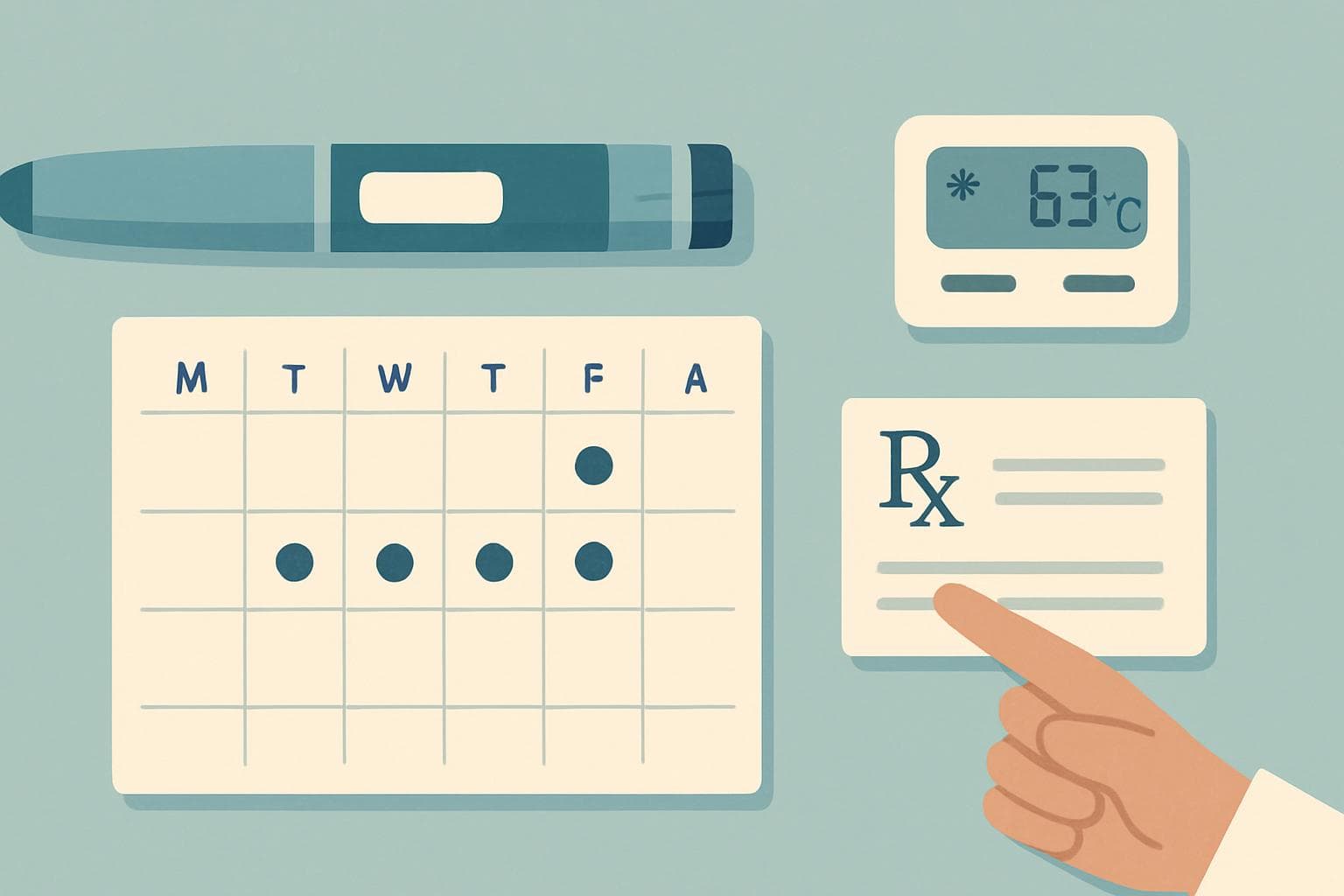
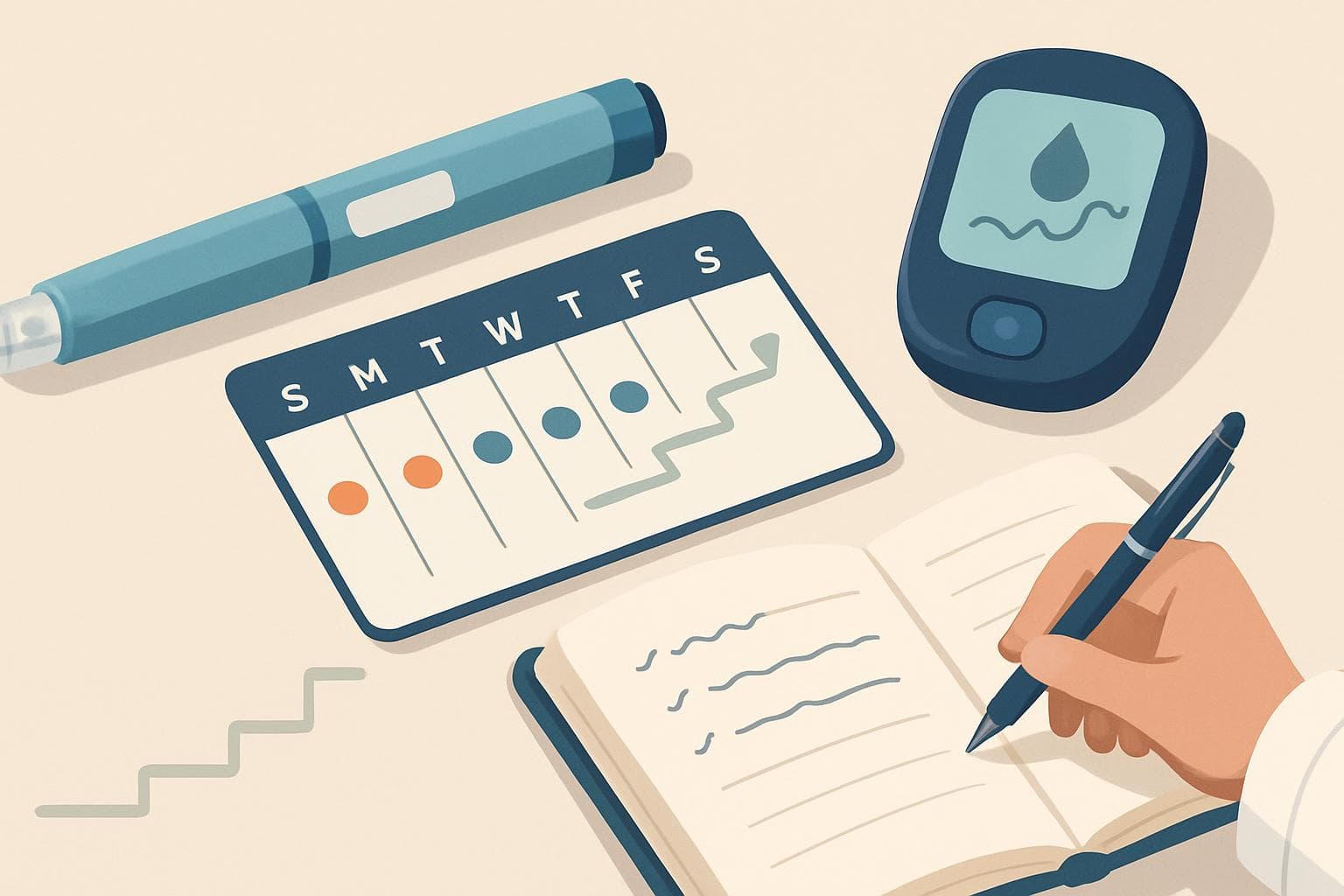
Ozempic’s usual adult schedule starts at 0.25 mg weekly for four weeks, then increases to 0.5 mg weekly; a prescriber may later increase it to 1 mg and then 2 mg, allowing at least four weeks at each preceding dose. Ozempic contains semaglutide, a glucagon-like peptide-1 (GLP-1) receptor agonist injection used primarily for type 2 diabetes, and this doses chart explains the schedule—not a personal prescription.
This guide is educational, not advertising for any company. Compare treatment options with a pharmacist; availability and approved doses in Pakistan may differ from the US labeling described below.
Quick Information
| Information | Details |
|---|---|
| Generic name | Semaglutide |
| Brand names | Ozempic, Wegovy and Rybelsus; indications and formulations differ |
| Drug class | GLP-1 receptor agonist |
| Main uses | Type 2 diabetes; certain cardiovascular and kidney risk-reduction uses depend on local approval |
| Available forms | Ozempic: prefilled injection pen; other semaglutide products include tablets |
| Common strengths | Ozempic delivers 0.25, 0.5, 1 or 2 mg per injection, depending on the pen and market |
| Route | Subcutaneous: injected under the skin |
| Prescription / OTC | Prescription medicine, not an OTC self-treatment |
| Common side effects | Nausea, vomiting, diarrhoea, constipation and abdominal pain |
What is Ozempic?
Semaglutide helps manage blood glucose in adults with type 2 diabetes alongside nutrition, activity and other prescribed treatment. It is not insulin. It also does not treat diabetic ketoacidosis, a dangerous build-up of acids requiring urgent care.
Weekly dosing sounds straightforward, but pen selection matters: the amount printed on the carton may describe the whole pen rather than your injection. A prescription should identify both the weekly dose and the appropriate device.
How it works and when changes appear
Semaglutide mimics a gut hormone that helps the pancreas release insulin when blood glucose is elevated. It also reduces glucagon, a hormone that raises glucose, and slows stomach emptying. Appetite often falls.
Glucose readings may improve before the full benefit becomes clear. Semaglutide reaches a steady level after roughly four to five weeks at a consistent dose, while HbA1c—the longer-term glucose marker—is usually assessed over months. Do not increase early because appetite or weight seems unchanged.
What doctors prescribe it for
Type 2 diabetes
Doctors may recommend semaglutide when glucose needs better control or when its broader benefits suit someone’s medical history. Selection depends on existing medicines, tolerability, cost and treatment goals—not simply body weight.
Cardiovascular and kidney risk reduction
US Ozempic labeling includes reducing major cardiovascular events in adults with type 2 diabetes and established cardiovascular disease. It also includes reducing specified kidney outcomes and cardiovascular death in adults with type 2 diabetes and chronic kidney disease. Confirm locally approved indications in Pakistan.
Weight management: a different prescribing pathway
Weight loss can occur during diabetes treatment. However, Ozempic’s diabetes schedule should not be mistaken for an approved weight-management schedule; other semaglutide products have different indications, eligibility criteria and doses.
Ozempic doses chart and how to inject
The exact dose depends on age, condition, formulation and medical history. Confirm it with your doctor or pharmacist. The following reflects US adult labeling; check your own product’s approved leaflet.
| Treatment stage | Once-weekly dose | What the step means |
|---|---|---|
| Weeks 1–4 | 0.25 mg | Starting dose to improve tolerability; not a maintenance dose |
| Week 5 onward | 0.5 mg | First maintenance dose |
| After at least 4 weeks at 0.5 mg | 1 mg, if prescribed | Increase if additional glucose control is needed |
| After at least 4 weeks at 1 mg | 2 mg, if prescribed and locally approved | Maximum recommended weekly dose in US labeling |
An increase is not automatic. Some patients remain on 0.5 mg or 1 mg; the highest dose is not the goal for everyone. Persistent vomiting, poor intake or worsening constipation should trigger a review before the next increase.
Inject weekly on the same day, at any time, with or without food. Use the abdomen, thigh or upper arm, rotating the injection spot. Never inject into a vein or muscle. Children do not have an established Ozempic dosing schedule under US labeling.
Ask the pharmacist to demonstrate your exact pen. Attach a new needle each time, perform the flow check when its instructions require it, select the prescribed dose, and follow the device’s injection-hold instructions. Never share a pen, even after changing its needle. Dispose of needles in a puncture-resistant sharps container.
The three-number check that prevents pen errors
Before injecting, match the prescribed dose in mg, the dose displayed by the pen, and the pen’s total contents/concentration. These numbers serve different purposes. A carton showing several milligrams does not mean you should inject that amount.
Do not use internet “click charts,” convert milligrams into insulin-syringe units, or extract leftover medicine with a syringe. If your pen cannot display the prescribed dose, stop and ask the pharmacist.
Side effects: what to manage and what not to ignore
Nausea, diarrhoea, vomiting, constipation and abdominal discomfort are common, especially during dose increases. Smaller meals, stopping when comfortably full, and avoiding very fatty meals may help. Sip fluids regularly unless you have a fluid restriction.
Belching, reflux, bloating and reduced appetite can also occur. Tell the prescriber if these prevent normal eating or drinking rather than trying to push through another increase.
Seek urgent help for:
- Severe, persistent abdominal pain, especially spreading to the back: stop using Ozempic and seek urgent assessment for possible pancreatitis.
- Facial or throat swelling, breathing difficulty or collapse: possible serious allergy; emergency treatment is needed.
- Repeated vomiting, very little urine or marked dizziness: possible dehydration and kidney injury; contact the treating team before another dose.
- A swollen, painful abdomen with vomiting or inability to pass stool or gas: possible bowel obstruction.
- Sudden vision loss or rapidly worsening eyesight: urgent eye assessment is needed.
Upper-right abdominal pain, fever or jaundice also requires prompt assessment for gallbladder disease.
Warnings for pregnancy, existing illness and procedures
Pregnancy needs advance planning. US labeling advises stopping semaglutide at least two months before a planned pregnancy. If pregnancy occurs, contact your clinician promptly to arrange appropriate diabetes treatment; uncontrolled glucose also carries risks.
Human breastfeeding evidence remains limited, and advice differs by formulation. Discuss the infant’s age, feeding pattern and alternatives rather than assuming all semaglutide products have identical recommendations.
Older adults may be more vulnerable to dehydration, poor nutrition and muscle loss when appetite falls. Kidney or liver impairment does not automatically require a dose adjustment under US labeling, but acute illness and poor intake still require review.
Tell your clinician about diabetic retinopathy, previous pancreatitis, gallstones, severe constipation or gastroparesis—markedly delayed stomach emptying. Ozempic is not recommended for severe gastroparesis.
Before surgery, endoscopy or sedation, tell the procedural team you use semaglutide. Delayed stomach emptying can increase aspiration risk. Do not choose your own stopping interval; procedure-specific plans depend on symptoms, dose escalation and individual risk.
Interactions with medicines, supplements and alcohol
Insulin and sulfonylureas, such as gliclazide or glimepiride, increase the risk of hypoglycaemia—low blood glucose—when combined with semaglutide. Their doses may need adjustment. Sweating, shaking, confusion and unusual hunger warrant a glucose check and your agreed hypo treatment.
Do not combine Ozempic with another semaglutide product or another GLP-1 medicine without explicit specialist direction. Slower stomach emptying can affect oral medicine absorption, so provide a complete list of prescriptions, OTC products, vitamins and herbal remedies.
Alcohol may worsen nausea, dehydration and glucose instability. During Ramadan, arrange a pre-fasting review, especially if you also use insulin or a sulfonylurea; do not improvise a new schedule.
Who should not use it?
Under US labeling, Ozempic is contraindicated in people with a personal or family history of medullary thyroid carcinoma, or multiple endocrine neoplasia syndrome type 2, known as MEN2. It is also contraindicated after a serious allergic reaction to semaglutide or its ingredients.
The thyroid warning concerns a specific cancer syndrome, not every thyroid disorder. Report a neck lump, persistent hoarseness or swallowing difficulty. Ozempic is not a substitute for insulin in type 1 diabetes.
What to do after an overdose
An extra injection or wrong-strength dose can cause prolonged nausea, vomiting and dehydration. Low glucose is particularly concerning with insulin or sulfonylureas. Do not wait for symptoms: contact urgent medical services or a poison-information service and take the pen and carton with you.
Semaglutide remains in the body for a long time, so observation or treatment may be prolonged. Do not induce vomiting.
Missed dose and changing injection day
If five days or less have passed since the missed dose, take it when remembered. If more than five days have passed, skip it and take the next dose on your regular day. Never double the dose.
US instructions allow changing the weekly injection day when more than 48 hours separate injections. After several missed weeks, ask about restarting; returning straight to a previously tolerated high dose may cause substantial stomach symptoms.
How long is treatment continued?
Ozempic is generally long-term treatment, not a short course. Reviews should consider glucose results, adverse effects, nutrition, affordability and whether the original treatment goals remain appropriate.
It does not cause addiction or require tapering to prevent withdrawal. Nevertheless, stopping can raise glucose and allow appetite or weight to return. Arrange a replacement plan when needed, and never stop prescribed insulin simply because you are using semaglutide.
Storage in Pakistan’s heat
Before first use, US Ozempic instructions specify refrigeration at 2–8°C. Do not freeze it or place it against a refrigerator’s cooling element. A frozen pen must not be used, even after thawing.
Under US labeling, an opened pen may be kept for 56 days refrigerated or at 15–30°C. Other markets may specify a different in-use period; follow the leaflet supplied with your pen. Record the first-use date.
A Karachi bedroom, parked car or delivery bag may exceed 30°C. Keep the cap on, protect the pen from light, and remove the needle after use. For uncertain heat exposure or power-cut storage, ask the pharmacist or manufacturer about that specific pen. Keep medicines away from children and return expired stock for appropriate disposal.
Forms and strengths: read the device, not its colour
US Ozempic presentations include pens containing 2 mg/3 mL, 4 mg/3 mL, or 8 mg/3 mL. These deliver different selectable doses; other markets may have different presentations. Colour alone is not a reliable identifier.
Ozempic is an injection, so crushing or chewing does not apply. Semaglutide tablets belong to a different formulation with separate administration instructions. They cannot be substituted milligram-for-milligram for the weekly injection, and a tablet schedule should never be calculated from this chart.
Comparing semaglutide brands without treating them as interchangeable
| Product | Main distinction | Practical limitation |
|---|---|---|
| Ozempic | Weekly semaglutide injection used for type 2 diabetes and certain approved risk-reduction indications | Not interchangeable with weight-management schedules |
| Wegovy | Semaglutide product approved for weight management and other indications in some countries | Doses, devices and eligibility differ by market |
| Rybelsus | Oral semaglutide used for type 2 diabetes | Requires specific fasting administration; not a direct injection replacement |
The same ingredient does not guarantee identical absorption, dosing or suitability. Switching requires clinician advice. In Pakistan, use a licensed pharmacy and verify the registration/import status, intact packaging and cold-chain handling. A social-media seller’s photograph is not proof of authenticity.
Common dose misconceptions
- Myth: Everyone should reach 2 mg. Truth: maintenance depends on response, tolerability and local approval.
- Myth: More nausea means better results. Truth: nausea is an adverse effect, not a treatment target.
- Myth: Every pen contains four identical doses. Truth: pen contents and selectable doses vary; read the supplied instructions.
- Myth: A missed dose can be replaced with two injections. Truth: follow the five-day rule, not a catch-up double dose.
Patient FAQ
Is Ozempic taken daily or weekly?
Once weekly. Daily semaglutide tablet instructions belong to a different product. Check the medicine name, formulation and frequency together.
Can I stay on 0.25 mg?
It is a starting dose, not the labeled maintenance dose. If you cannot tolerate an increase, contact the prescriber before changing the plan.
Can I take the injection after dinner or before bed?
Yes. Ozempic can be injected at any time, with or without food. Choose a day and reminder that you can maintain consistently.
Should I repeat the injection if I vomit?
No. Vomiting does not remove an injected dose. Repeated vomiting needs medical advice, especially if you cannot keep fluids down.
What if medicine leaks my skin?
Do not inject an estimated replacement. You cannot reliably know how much entered. Ask a pharmacist to review your technique and pen instructions.
Can I drive after taking it?
Avoid driving if dizzy, unwell or hypoglycaemic. People also using insulin or sulfonylureas need particular care and an agreed glucose-monitoring plan.
Does it interfere with sleep?
Sleep disturbance is not a leading common labeled effect. Night-time reflux, nausea or low glucose may disturb sleep and deserve assessment.
Can children use the same chart?
No. Ozempic’s safety and effectiveness have not been established in children under US labeling. Other products’ age approvals cannot be transferred to it.
What is the current price in Pakistan?
Prices vary by presentation and supply. Ask licensed pharmacies for the exact strength, pack contents and cold-chain arrangements; this guide does not provide unverified prices.
What if I cannot afford the next pen?
Contact the prescribing team before supplies run out. Discuss affordable alternatives and glucose monitoring rather than stretching doses with click-counting or sharing pens.
Sources
- Novo Nordisk: Ozempic US Prescribing Information and Instructions for Use.
- Novo Nordisk: Wegovy US Prescribing Information.
- Novo Nordisk: Rybelsus US Prescribing Information.
These are US references. Your Pakistan-approved leaflet and treating clinician should resolve differences in indications, presentations and storage instructions.
Important Medical Disclaimer
This article is for general educational purposes and is not a substitute for advice from a qualified doctor or pharmacist. Always consult your doctor/pharmacist before using any medicine, changing a dose, or starting treatment.