How to Track Macros When Eating Out Without Ruining Your Fitness Goals
Eating healthy at home is relatively straightforward. You measure your portions, control your ingredients, and know exactly what goes into every meal. But the moment you step into a restaurant or order takeout, things
By Dr. Khalid Mehmood, MD4 min read
Eating healthy at home is relatively straightforward. You measure your portions, control your ingredients, and know exactly what goes into every meal.
But the moment you step into a restaurant or order takeout, things get tricky.
Hidden oils, generous portion sizes, and unlisted ingredients can quickly throw off your daily numbers especially if you're tracking macros for weight loss, muscle gain, or general wellness.
Does this mean you have to give up eating out entirely? Not at all. With a strategic approach to food selection and the right tools, you can enjoy dining out while keeping your health goals on track.
The Challenge of Dining Out on a Fitness Journey
The main issue with restaurant meals isn't just the calories; it's the lack of transparency. A dish that looks like a clean mix of protein and veggies might be cooked in tablespoons of butter or topped with high-calorie sauces.
When you're trying to stay consistent with your nutrition, guessing your intake can lead to two main problems:
Underestimating calories: This slows down weight loss progress without you realizing why.
Overestimating calories: This creates unnecessary anxiety around food and can lead to under-fueling your workouts.
To navigate this, smart meal planning and flexible dieting (often called If It Fits Your Macros) become essential strategies.
Smart Strategies for Ordering at Popular Chains
Fast-casual restaurants have actually made this process much easier in recent years. Many major chains now offer customizable options where you build your own bowl, salad, or plate. This format gives you direct control over your macronutrient distribution.
Here are a few actionable rules to follow when ordering:
Prioritize Lean Protein First: Protein keeps you full and protects lean muscle tissue. Opt for grilled chicken, steak, or tofu over fried alternatives.
Watch the Hidden Fats: Dressings, sour cream, cheese, and heavy sauces carry the highest caloric density per gram. Ask for these on the side so you can measure them yourself.
Choose Fiber-Rich Carbs: Brown rice, beans, and fresh greens provide sustained energy compared to refined white flour options.
Utilizing Tools for Precise Tracking
While general estimation works in a pinch, leveraging accurate digital tools makes a massive difference when you want exact numbers.
Many fast-casual spots provide detailed nutritional tables, but calculating custom combinations manually can still be tedious.
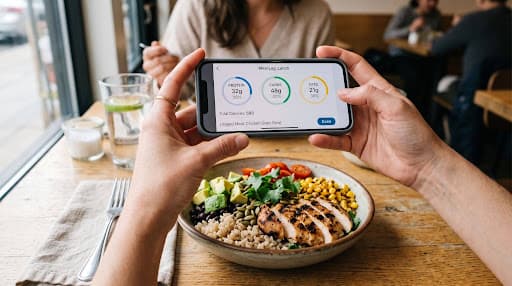
Using dedicated tools; such as a specialized chipotle calorie calculator, allows you to break down custom bowls, burritos, and tacos ingredient by ingredient before you even place your order.
By checking the exact caloric and macro split beforehand, you can adjust your meal on the fly (for example, swapping regular cheese for extra salsa) to match your daily targets seamlessly.
Finding the Right Balance
Fitness is a long-term lifestyle, not a short-term restriction. Learning how to accurately log restaurant meals removes the guilt and uncertainty from social dining.
By focusing on smart menu choices and using calculation tools to double-check your numbers, you maintain full control over your body composition goals without sacrificing your social life.
Frequently Asked Questions
How accurate are calorie estimates provided by fast-casual restaurants?
While most chains provide official nutritional charts, actual portions can vary by 10% to 20% depending on the server’s scoop size. To stay consistent, treat official numbers as a reliable baseline rather than a 100% exact science, and adjust your intake if you notice your progress stalling over time.
Is it better to track calories before or after eating out?
Tracking your meal before you order is always the smarter approach. Looking up the menu and calculating your macros in advance prevents impulse ordering, helps you make intentional swaps (like opting for salsa instead of heavy dressing), and keeps your total intake within your daily goals.
How do I handle unlisted ingredients like cooking oil when dining out?
Most kitchens use oil or butter to cook meats and veggies, which adds untracked calories. A good thumb rule is to add a buffer of roughly 1 to 1.5 teaspoons of olive oil (about 40–60 extra calories) to your log, or simply request your food to be prepared with minimal added oil.
Related reading
If this article on How to Track Macros When Eating Out Without Ruining Your Fitness Goals was helpful, explore these related guides for more practical information on similar topics.
- Immunization Updates for Pharmacy Practice — Seasonal recommendations and workflow tips for pharmacy-based vaccination services.