I Am a Gen Z Woman. How Does CeraVe Compare to The Ordinary in Terms of Skincare Effectiveness?
I Am a Gen Z Woman. How Does CeraVe Compare to The Ordinary in Terms of Skincare Effectiveness? Okay, real talk — if you've spent any time on skincare TikTok, you already know these two names. CeraVe is the one in the
By Dr. Khalid Mehmood, MD9 min read
I Am a Gen Z Woman. How Does CeraVe Compare to The Ordinary in Terms of Skincare Effectiveness?
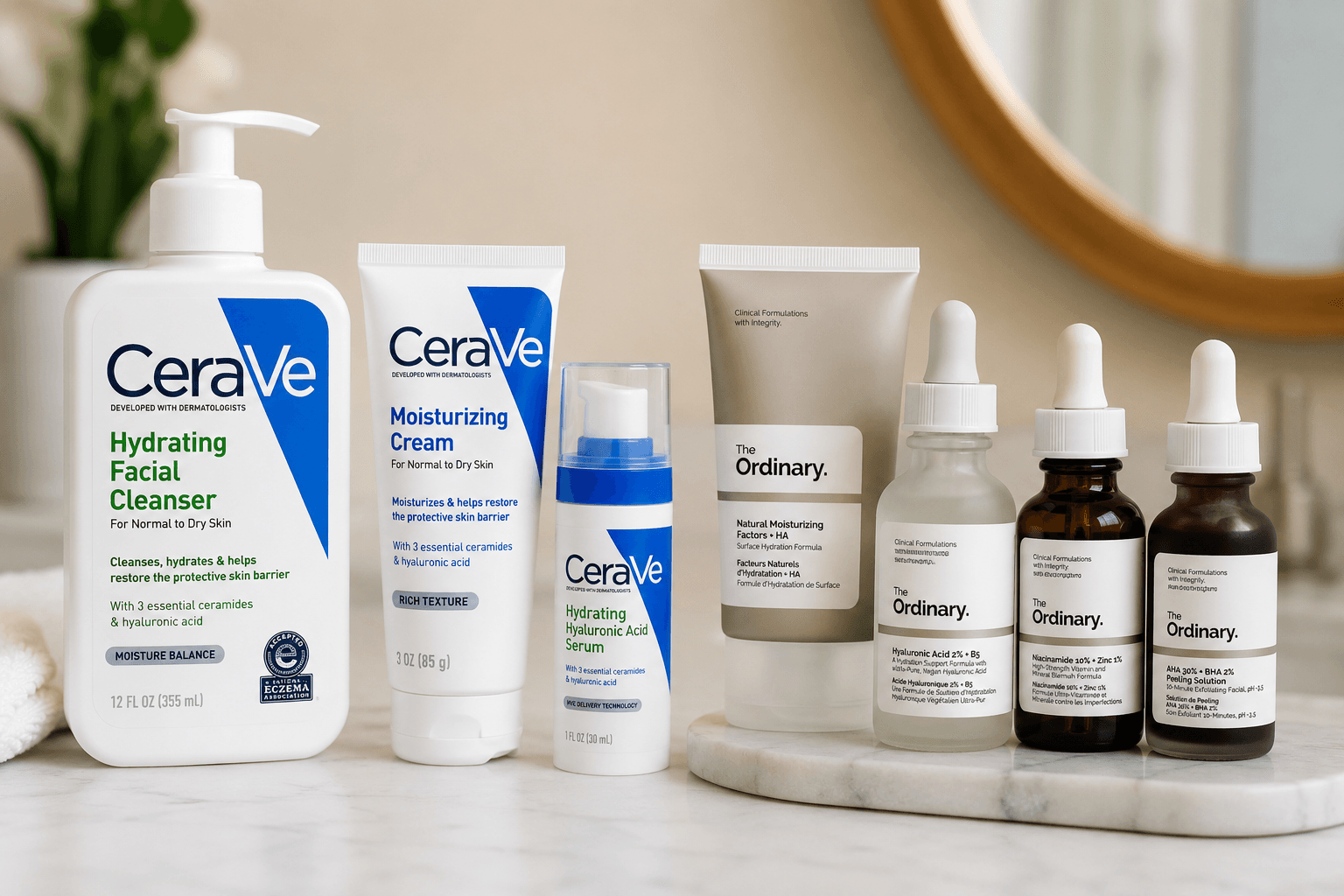
Okay, real talk — if you've spent any time on skincare TikTok, you already know these two names. CeraVe is the in the tub with the ceramide branding all over it. The Ordinary is the with the plain, almost lab-looking bottles that make you feel like a chemist just for owning one. People argue about which is "better" constantly, and honestly, I think that's the wrong question to even be asking. It's a bit like arguing whether a hammer beats a screwdriver — they're not doing the same job in the first place.
One thing before I get into it: I'm not a dermatologist, this is just a straightforward look at what each brand actually does. If you've got something — real cystic acne, eczema, rosacea — go see an actual dermatologist. No brand comparison replaces that.
If you just want the short version
CeraVe's whole thing is protecting your skin — cleansing, moisturizing, keeping your barrier intact. The Ordinary's whole thing is treating something specific — acne, dark spots, dullness, texture — using strong, single active ingredients. Neither wins outright. It genuinely depends on what you're trying to fix.
Quick vocab, so the rest makes sense
Your skin barrier is basically the outer layer that keeps moisture in and keeps irritants and bacteria out. When someone says a product is "barrier-friendly," they mean it supports that layer instead of stripping it. Ceramides are natural fats in your skin that hold that barrier together, and yeah, that's exactly what CeraVe is named after. An active ingredient is anything included specifically to change your skin somehow, rather than just moisturize it — niacinamide, salicylic acid, retinol, that category. And a single-ingredient formula means a product built around main active at a stated percentage instead of a blend of a dozen things, which is basically The Ordinary's entire personality as a brand.
CeraVe: it's not exciting, and honestly that's the appeal
CeraVe was developed with dermatologist input, and you can tell. Almost everything in the range — cleansers, moisturizers, sunscreens — is built around three ceramides plus stuff like hyaluronic acid and niacinamide, all aimed at keeping your barrier calm and hydrated instead of aggressively changing anything.
That's exactly why it's the go-to recommendation for sensitive skin or anyone just starting out. Fragrance-free, generally non-comedogenic (meaning it's designed not to clog pores), and genuinely hard to mess up. Cleanse, moisturize, sunscreen — that's basically the entire philosophy in three steps.
What it won't do: actually treat acne, fade dark marks, or fix texture in any real way. It keeps healthy skin healthy. It doesn't fix problem skin.
The Ordinary: built for people who actually read ingredient lists
The Ordinary, made by DECIEM, does the opposite thing. Instead of blending a bunch of ingredients into bottle, most products are built around a single active at a clearly labeled strength — Niacinamide 10% + Zinc 1% for oil control, Salicylic Acid 2% for clogged pores, Hyaluronic Acid 2% + B5 for hydration, a vitamin C suspension for brightening.
That gives you a lot more control. You're basically assembling your own routine ingredient by ingredient, targeting exactly what's bothering you. Which is also why it tends to actually work better if you're dealing with something specific — acne marks, uneven texture — rather than just trying to keep generally healthy skin healthy.
The catch is it takes more knowledge to use well. Some of these actives are genuinely strong, and stacking the wrong combinations — certain acids with retinol, for example — can irritate your skin instead of helping it. This isn't a slap-it-on-and-forget-it lineup like CeraVe's.
Side by side
| CeraVe | The Ordinary | |
|---|---|---|
| What it's for | Barrier repair, hydration, protection | Targeting a specific concern with actives |
| Formula style | Gentle, multi-ingredient | Concentrated, single-active |
| Best fit | Sensitive skin, beginners, daily upkeep | Acne, dark spots, texture — anyone treating something specific |
| Ease of use | Hard to mess up | Needs some knowledge to combine safely |
| How fast you'll notice something | Comfort and hydration within days | Usually 4 to 12 weeks of consistent use |
| Price | Drugstore-affordable | Drugstore-affordable |
Where each falls short is really just the other side of what it's good at. CeraVe won't touch acne marks or dullness because it was never meant to. The Ordinary can actually make things worse if you overdo it with strong actives or stack too many at — more isn't automatically better here.
Worth remembering: a higher percentage of an active ingredient doesn't mean better or faster results for everyone. It just means a stronger effect, and that can go either way depending on how your skin actually handles it.
And a real caution here — if you're new to actives like retinol or exfoliating acids, don't grab the strongest bottle on the shelf first. Start low, use it a couple times a week, see how your skin reacts before you go daily with it.
Why a lot of people just use both
You don't really have to pick a team here. A pretty common setup — and that lines up with how a lot of dermatologists actually talk about building a routine — is using CeraVe as the foundation (cleanser, moisturizer, sunscreen) and layering in or two Ordinary products to hit a specific concern. Something like: cleanse with CeraVe, apply an Ordinary serum for whatever your main issue is, seal it in with a CeraVe moisturizer, sunscreen in the morning. Barrier support doing the quiet background work while the targeted active handles the actual problem.
Why this matters beyond just these two
Zooming out for a second — this is a pretty good example of a bigger pattern in skincare generally. Products split into "maintenance" and "treatment," and a lot of people end up buying the wrong category for what's actually wrong with their skin. If your skin's dry and reactive, piling on actives from The Ordinary isn't going to fix that — you need barrier support first. If you've got something stubborn like hyperpigmentation, a basic moisturizer alone was never going to touch that no matter how religiously you used it.
Mistakes people actually make with these two
Assuming The Ordinary automatically wins because the ingredients sound stronger and more "science-y" — strength isn't the same thing as suitability for your skin. Layering a bunch of Ordinary actives at without knowing how they interact, which is a fast way to end up irritated instead of improved. Expecting CeraVe to handle acne or dark spots when it was literally never designed for that. And expecting overnight results from The Ordinary's actives, when most of them genuinely take weeks before you notice a real change.
The questions people always ask
Is The Ordinary just better than CeraVe? Not really, they're built for different jobs. The Ordinary generally wins for targeting a specific concern. CeraVe generally wins for daily maintenance and keeping your barrier happy.
Can CeraVe handle acne? It can support acne-prone skin gently by keeping the barrier calm, but it's not aggressive enough to actually treat acne on its own.
Can I use both at the same time? Yeah, honestly this is of the more common setups — CeraVe for cleansing and moisturizing, The Ordinary for the targeted serums.
Which one's safer if I'm just starting out? CeraVe, no contest. Way harder to mess up than The Ordinary's concentrated actives.
Which works faster? CeraVe's hydration and comfort show up within days. The Ordinary's actives — retinol, niacinamide, acids — usually need several weeks of consistent use before you actually see something.
Can The Ordinary irritate your skin? Definitely, especially the stronger actives like high-percentage acids or retinol, particularly if you introduce them too fast or mix them carelessly.
Is of these more "dermatologist recommended"? Both get referenced a lot, just for different reasons — CeraVe for barrier support and sensitive skin, The Ordinary for accessible, targeted actives. It really comes down to the person's actual skin and what they're dealing with.
Bottom line
CeraVe protects and maintains. The Ordinary treats and targets. Neither is the universal winner — it comes down to whether your skin needs steady upkeep or a specific problem solved. A lot of people just end up using both, and honestly that's a perfectly reasonable way to build a routine instead of picking a side. If something's been bothering your skin for a while and won't quit, that's the point where a dermatologist beats either brand on its own.
Ingredient and product details come from what CeraVe and The Ordinary list on their own sites and packaging. General points about skin barrier function, ceramides, and active ingredients reflect standard, widely accepted dermatology basics. Formulations change over time, so check each brand's current site before buying anything.
Related reading
If this article on I Am a Gen Z Woman. How Does CeraVe Compare to The Ordinary in Terms of Skincare Effectiveness? was helpful, explore these related guides for more practical information on similar topics.
- i am a genz man. how does the nivea men line stack up against bulldog or lumin? — Nivea Men vs Bulldog vs Lumin: What I'd Actually Tell You Before You Buy Any of Them Okay so you've probably seen all three of these some…
- i’m a 30-year-old working mom. how do olay moisturizers perform compared to l’oréal’s skincare line? — Olay vs L'Oréal: Which Actually Wins for Busy 30-Somethings? Okay so picture this. It's 7 AM. Coffee's already gone cold because some…
- i'm a skincare beginner. is nivea a good starting brand compared to garnier? — Nivea focuses on hydration and skin barrier protection, while Garnier targets brightness and uneven skin tone. Here is how a beginner sho…
- Define neoplasia. Discuss in detail the features of malignant tumors. — Neoplasia — Definition Neoplasia is an abnormal, uncontrolled and excessive proliferation of cells that continues even after the original…
- The "7 Minutes After Death" Claim — What's Actually True? — The "7 Minutes After Death" Claim — What's Actually True? A few weeks ago a classmate sent me a video that had been going around — the on…
- How to Track Macros When Eating Out Without Ruining Your Fitness Goals — Eating healthy at home is relatively straightforward. You measure your portions, control your ingredients, and know exactly what goes int…