Fitness Guide Thespoonathletic
Build a safer fitness plan with Pharm-D notes on exercise targets, medicine interactions, supplements, glucose monitoring, and urgent warning signs.
By Dr. Amina Rahman, PharmD12 min read
Reviewed by Medical Review Team ·
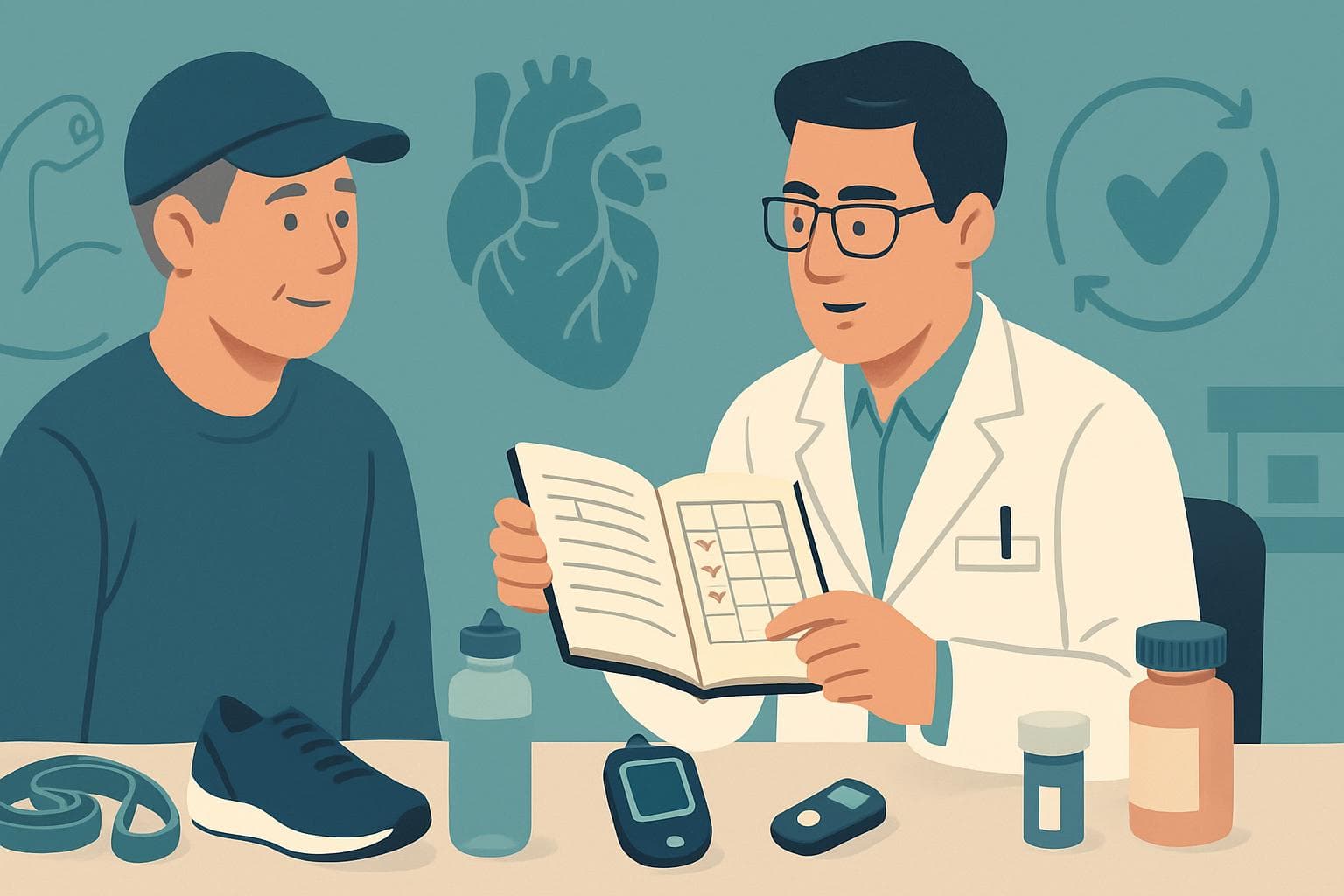
For readers searching “fitness guide thespoonathletic,” a safe fitness plan combines progressive aerobic activity, strength training, recovery, and a medication review when relevant. These Pharm-D study notes explain the physiology, practical exercise targets, supplement limitations, and warning signs that matter before increasing activity.
This is an independent educational guide, not a review or reproduction of a TheSpoonAthletic program. It does not verify claims from any website using that name. The content is educational and does not advertise any company’s product; compare medicine and supplement options with a pharmacist.
The central pharmacy question is simple: What changes when this person starts exercising? Glucose, blood pressure, fluid balance, and symptom interpretation may all need attention—not just the workout schedule.
Quick Answer / Overview
For most adults, World Health Organization guidance recommends 150–300 minutes of moderate-intensity aerobic activity weekly, or 75–150 minutes of vigorous activity, or an equivalent combination. Include muscle-strengthening activity involving major muscle groups on at least two days weekly.
Start below these targets if necessary. Some activity is better than none, and short sessions count. These are population recommendations, not a prescription for someone with unstable symptoms, recent surgery, or a condition requiring rehabilitation.
A useful plan answers four questions:
- What activity is realistic and enjoyable?
- How hard should it feel?
- Which medicines or conditions change the precautions?
- What symptoms mean stopping rather than pushing through?
Fitness does not require a supplement. Consistency, adequate food, sleep, and a manageable progression usually deserve attention first.
Key Definitions for Pharm-D Revision
- Physical activity: Any body movement that uses energy, including walking, household work, and sport.
- Exercise: Planned, structured physical activity intended to improve or maintain fitness.
- Aerobic activity: Sustained movement, such as brisk walking or cycling, that challenges the heart and lungs.
- Resistance training: Muscles working against a load, including body weight, bands, or weights.
- FITT: Frequency, intensity, time, and type—the main components of an exercise plan.
- Pharmacokinetics, or PK: How the body absorbs, distributes, metabolizes, and eliminates a medicine.
- Pharmacodynamics, or PD: What a medicine does to the body, including effects that overlap with exercise.
- Hypoglycemia: Blood glucose below the normal range; clinically significant episodes can impair thinking or cause unconsciousness.
Keep activity and exercise separate. A person may complete gym sessions yet remain sedentary for most waking hours; reducing prolonged sitting addresses a different part of the assessment.
How Exercise Works: Mechanism and PK/PD Links
Muscle, glucose, and cardiovascular adaptation
During exercise, contracting skeletal muscle increases glucose uptake through pathways that partly operate independently of insulin. Insulin sensitivity can remain improved afterward, which explains both a therapeutic benefit and the possibility of delayed hypoglycemia in susceptible people.
Repeated aerobic training improves cardiorespiratory capacity. Resistance training supports strength and physical function, while weight-bearing and appropriately loaded activity help maintain bone health. Responses vary with baseline fitness, disease, recovery, and training consistency.
Weight loss is not guaranteed. Appetite, food intake, medicines, and compensatory reductions in other movement influence the result; better walking tolerance or strength may be meaningful progress without a large weight change.
Why pharmacodynamics often matters more than theoretical PK
Exercise changes circulation, temperature, and fluid balance. These can influence drug handling in particular circumstances, but there is no universal exercise-based formula for changing medicine doses.
The clearer counseling issue is often an overlapping effect: exercise and antihypertensives may both lower blood pressure, while insulin and muscle activity can both lower glucose. Sweating, dehydration, and kidney vulnerability create another clinically important combination.
STICKY NOTE — Important point: Do not turn a physiological possibility into a dose recommendation. A plausible PK mechanism is not proof that every exercising patient needs an adjustment.
Turn FITT Into a Usable Weekly Plan
Keep the first plan modest. For an inactive adult without limiting symptoms or a contraindication, walking and basic resistance movements often offer a practical starting point without equipment or performance products.
| FITT component | Practical starting discussion | Progression safeguard |
|---|---|---|
| Frequency | Choose repeatable activity days and include strength work | Allow recovery between demanding sessions |
| Intensity | Use the talk test or perceived effort | Do not chase another person’s pace |
| Time | Begin with manageable sessions, even if brief | Increase duration before making every session harder |
| Type | Combine aerobic movement and muscle strengthening | Adapt for joint pain, disability, and preference |
At moderate intensity, a person can usually talk but not sing. At vigorous intensity, a few words are comfortable before pausing for breath. These descriptions are useful when a watch is unavailable or heart-rate interpretation is complicated by medication.
An introductory week might combine comfortable walks on several days with two nonconsecutive sessions of controlled body-weight or band exercises. Select movements the person can perform safely, such as a chair sit-to-stand, wall push-up, or supported row. Avoid prescribing heavy loads remotely.
Change variable at a time. Increasing session length, weight, frequency, and intensity together makes it harder to identify why pain or exhaustion developed.
Warm up gradually and finish with easier movement rather than stopping abruptly after strenuous work. Flexibility work can support comfortable movement, but stretching alone does not replace aerobic or resistance training.
Track function as well as numbers: stair tolerance, movement confidence, recovery, and consistent attendance. A useful diary also records symptoms and relevant medication timing.
Medication Review: What Changes Exercise Safety?
Use international nonproprietary names, or INNs, when documenting medicines. Examples below are generic names, not endorsements. Ask about prescribed treatment, nonprescription painkillers, inhalers, supplements, and energy drinks.
| Medicine or class | Exercise-related concern | Practical pharmacy action |
|---|---|---|
| Insulin; gliclazide, a sulfonylurea | Hypoglycemia during or after activity | Check the glucose-monitoring and hypoglycemia action plan |
| Metoprolol, a beta-blocker | Blunted heart-rate rise; reduced awareness of some hypoglycemia symptoms | Use perceived effort and assess symptoms, not pulse targets alone |
| Furosemide, a loop diuretic | Fluid depletion, electrolyte disturbances, dizziness | Review heat exposure, fluid restrictions, and postural symptoms |
| Empagliflozin, an SGLT2 inhibitor | Volume depletion; ketoacidosis risk during illness, prolonged fasting, or other triggers | Review sick-day guidance and concerning symptoms |
| Ibuprofen, an NSAID | Kidney and gastrointestinal harm, particularly with dehydration or interacting treatment | Discourage routine preventive use before workouts |
| Atorvastatin, a statin | Muscle symptoms that may overlap with training soreness | Investigate unusual weakness, severe pain, or dark urine |
Diabetes requires a plan beyond the workout
People using insulin or insulin-releasing medicines may need glucose checks before, during, and after activity, depending on their regimen and exercise pattern. Carry fast-acting carbohydrate and know the agreed treatment steps. Delayed episodes can occur overnight.
Sweating is not diagnostic. Shaking, hunger, confusion, or unexpected weakness should prompt assessment rather than an assumption that the session was simply difficult. Never give food or drink to someone unable to swallow safely; follow emergency instructions and use prescribed rescue treatment when available.
Sodium–glucose cotransporter 2 inhibitors, or SGLT2 inhibitors, need separate counseling. Nausea, vomiting, abdominal pain, deep breathing, and marked fatigue warrant urgent assessment for ketoacidosis, even when glucose is not markedly elevated.
Cardiovascular medicines change interpretation
A beta-blocker can make standard age-predicted heart-rate targets misleading. Dizziness after exercise may reflect low blood pressure, dehydration, or another problem; recurrent symptoms deserve assessment rather than simply more salt or an energy drink.
Confirm every medicine dose, timing change, or exercise-related adjustment with the treating doctor or pharmacist. Do not skip cardiovascular or diabetes treatment to improve workout performance.
Supplements and “Pre-Workout” Products: Check the Label
Marketing is not a mechanism. Protein powders offer convenience when ordinary food does not meet nutritional needs, but they are not mandatory for strength training. Kidney disease and other clinical restrictions require individualized nutritional advice.
Creatine monohydrate has evidence for improving performance in repeated high-intensity efforts and supporting resistance-training adaptations in some settings. It is not a fat burner, and it does not replace training. Supplement use can also complicate interpretation of serum creatinine, a kidney-function marker, so disclose it before testing.
Caffeine may improve alertness and some exercise performance, but it can cause insomnia, tremor, anxiety, or palpitations. Combining coffee, energy drinks, stimulant medicines, and pre-workout powders can unintentionally increase exposure.
Check the serving size carefully. scoop is not automatically labeled serving. Review ingredient amounts, proprietary blends, warnings, expiry dates, and independent quality testing where available; testing reduces uncertainty but does not guarantee safety or effectiveness.
REMEMBER — A supplement label is not a prescription. Avoid products promising drug-like muscle gain or rapid fat loss, particularly when ingredients or stimulant quantities are unclear.
Side Effects, Precautions, and When to Stop
Mild delayed-onset muscle soreness can follow unfamiliar exercise, often becoming noticeable the next day. It should improve, not progress into severe weakness, marked swelling, or loss of normal function. Sharp joint pain is not a training target.
Stop exercise and seek emergency help for chest pressure, collapse, severe unexplained breathlessness, stroke-like symptoms, or confusion associated with heat exposure. Severe muscle pain with dark urine warrants urgent assessment for possible rhabdomyolysis, which involves muscle breakdown and can damage the kidneys.
Arrange clinical review before increasing exercise when there is exertional fainting, unexplained palpitations, unstable heart or lung disease, or recurrent hypoglycemia. Avoid strenuous exercise during fever or significant dehydration. People with diabetes complications may need activity-specific restrictions; pregnancy and postpartum plans also require context-specific guidance.
Heat changes the calculation. During a Karachi heatwave—or any hot, humid conditions—reduce intensity, choose cooler hours, and arrange access to shade and fluids. People with heart failure or prescribed fluid restrictions should not follow generic advice to drink unlimited water.
Hydration must be individualized. Excessive water intake during prolonged exercise can also cause dangerous low blood sodium; headache, vomiting, or confusion should not automatically be treated by drinking more.
A Pharmacy Workflow That Separates the Causes
Use a baseline–activity–recovery timeline rather than asking whether exercise caused symptoms. This helps distinguish a training problem from a medication effect or an acute illness.
Baseline symptoms + medicines + usual food/fluid intake
 ↓
Activity type, duration, intensity, and environmental heat
 ↓
Symptoms during activity, immediately afterward, or overnight
 ↓
Check available glucose/BP data and identify red flags
 ↓
Emergency escalation OR documented review and safer progression
Consider a teaching example: a person taking gliclazide reports evening shakiness after adding long afternoon walks. The useful next questions concern glucose readings, meal timing, activity duration, and recurrence—not which protein powder to buy. An individualized treatment review may be needed, but the symptom alone does not establish the diagnosis.
Document what actually changed. A new workout, missed lunch, hot weather, and an unchanged medicine dose can together explain risk better than any single factor in isolation.
STICKY NOTE — Exam point: Timing is clinical evidence. Symptoms several hours after exercise can still be exercise-related, especially when glucose-lowering treatment is involved.
Common Mistakes and Important Differences
Do not equate soreness with success. Increasing pain is not evidence that a session is working, and taking an NSAID beforehand can conceal symptoms while adding avoidable risk.
Other common confusions include treating sweat loss as fat loss, assuming all fatigue reflects low fitness, and using a smartwatch calorie estimate to justify restrictive eating. None provides a reliable clinical assessment alone.
A normal pulse does not exclude a problem. Medicines can alter the expected heart-rate response, while chest symptoms, faintness, or disproportionate breathlessness still require attention.
Also separate adaptation from overreaching: manageable tiredness that resolves differs from persistent sleep disturbance, declining performance, irritability, or recurrent injury. Review recovery, nutrition, illness, and training load before adding another product.
Quick Pharm D Notes
- Definition: Exercise is structured activity intended to maintain or improve fitness.
- Classification: Aerobic, resistance, flexibility, and balance activities serve overlapping but distinct purposes.
- Mechanism: Muscle contraction increases glucose uptake; repeated training improves functional capacity and metabolic regulation.
- Examples: Brisk walking supports aerobic conditioning; sit-to-stand exercises develop functional strength.
- Clinical significance: Exercise can complement treatment for several chronic conditions, but it does not automatically replace medicines.
- Important safety point: Insulin and sulfonylureas require attention to exercise-associated hypoglycemia.
- PK/PD distinction: Overlapping physiological effects often provide more actionable counseling than speculative changes in drug clearance.
- Exam point: Beta-blockers complicate heart-rate-based intensity targets; perceived effort remains useful.
Frequently Asked Questions
Is this the official TheSpoonAthletic fitness guide?
No. This is an independent educational article for people searching that phrase. It does not authenticate, endorse, or reproduce a particular website’s program. Check authorship, sources, and individual suitability before following an plan.
Do I need medical clearance before starting to walk?
Many asymptomatic adults can begin light activity gradually without routine testing. Known unstable disease, exertional symptoms, recent major illness, or a proposed jump into vigorous training changes that assessment.
Can I exercise while taking blood pressure medicine?
Often, yes. Exercise commonly complements blood pressure management. Watch for dizziness, especially in heat or after abrupt stopping, and ask whether your medicine affects heart-rate targets or fluid balance. Do not omit doses independently.
Should I take painkillers before a workout?
Routine preventive use is not advisable. NSAIDs can increase gastrointestinal and kidney risks, particularly during dehydration. Pain that repeatedly requires medication to complete exercise deserves assessment and a training review.
Are pre-workout supplements necessary for progress?
No. Training consistency, adequate nutrition, and recovery matter more. Products containing stimulants can worsen palpitations or sleep, and unclear ingredient quantities make counseling difficult. Discuss the full label and your medicines with a pharmacist.
Last-Minute Revision
- Some activity is better than none.
- Progress gradually; change training variable at a time.
- Check medicine effects, meals, fluids, and environmental heat together.
- Hypoglycemia may appear after the session ends.
- Do not diagnose muscle injury from soreness alone.
- Red flags override the training plan.
- Confirm medication changes with the doctor or pharmacist.
References
- World Health Organization: Physical activity.
- Centers for Disease Control and Prevention: Physical activity basics.
- National Institute of Diabetes and Digestive and Kidney Diseases: Low blood glucose (hypoglycemia).
- NIH Office of Dietary Supplements: Dietary supplements for exercise and athletic performance—health professional fact sheet.
Important Medical Disclaimer
This article is for general educational purposes and is not a substitute for advice from a qualified doctor or pharmacist. Always consult your doctor/pharmacist before using any medicine, changing a dose, or starting treatment.