Pharmacist Day 25 September
Learn why World Pharmacists Day falls on 25 September, with exam-ready history, professional roles, and a practical medication-safety activity plan.
By Dr. Amina Rahman, PharmD12 min read
Reviewed by Medical Review Team ·
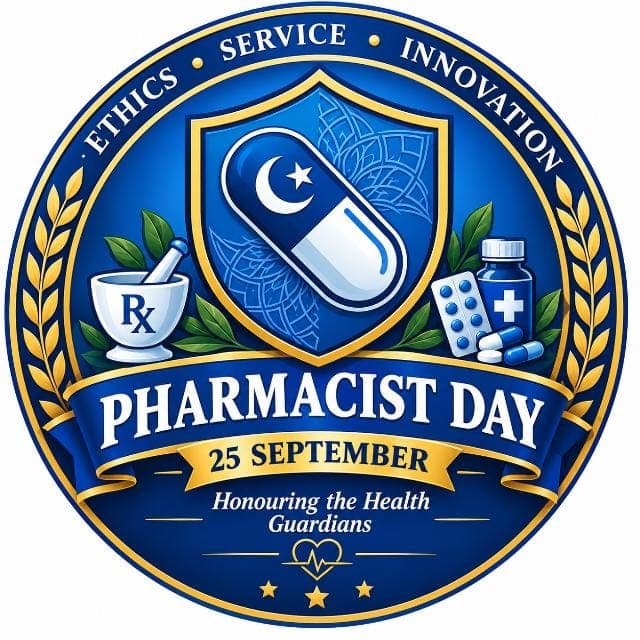
World Pharmacists Day is observed on 25 September every year to recognize pharmacists’ contributions to health and strengthen understanding of their work. The date marks the founding of the International Pharmaceutical Federation (FIP) on 25 September 1912; FIP’s Council established the observance in 2009.
For Pharm-D students, the useful lesson goes beyond remembering a date. It connects professional identity with accountable patient care: checking prescriptions, explaining medicines, preventing harm, and recognizing when referral matters more than supplying another product.
This guide is educational, not advertising for any company’s product. Patients should compare medicine options with a pharmacist rather than choose by promotional claims.
Quick Answer / Overview
| Question | High-yield answer |
|---|---|
| What is the official name? | World Pharmacists Day. |
| When is it observed? | 25 September annually. |
| Why was this date selected? | FIP was founded on that date in 1912. |
| Who established the observance? | The FIP Council, in 2009. |
| What is its purpose? | To highlight pharmacists’ contributions to health and advocate for the profession’s role. |
| Does the theme stay the same? | No. FIP announces annual campaign themes. |
| Is it a public holiday? | The observance does not itself create a public holiday; local arrangements vary. |
The date stays fixed. Campaign messages change.
Before preparing a presentation, check the year attached to any theme, poster, or social-media graphic. An authentic FIP poster from a previous campaign can still be the wrong material for this year.
Key Definitions: Understand the Professional Language
- FIP: The International Pharmaceutical Federation, a global organization representing pharmacy, pharmaceutical sciences, and pharmaceutical education.
- Pharmacist: A qualified, authorized medicines professional whose permitted activities depend on local registration requirements and law.
- Pharm-D: Doctor of Pharmacy, a professional pharmacy degree. The qualification does not automatically confer unrestricted prescribing rights or authorization to practise everywhere.
- Pharmaceutical care: Responsible medicine-related care intended to achieve outcomes that improve a person’s quality of life.
- Scope of practice: The activities a professional may perform within the law, their competence, and workplace authorization.
- Medication error: A preventable event that may lead to inappropriate medicine use or patient harm.
- Adverse drug reaction: A harmful, unintended response to a medicine; it can occur even when treatment is used correctly.
These distinctions affect decisions. A student who understands a medicine’s mechanism still needs supervision, patient information, and appropriate authority before participating in treatment decisions.
History: Separate the Founding Date from the Campaign
FIP was founded in The Hague, Netherlands, on 25 September 1912. Its work brings together professional practice, pharmaceutical science, and education rather than representing only one pharmacy setting.
The observance came much later. At the FIP Congress in Istanbul in 2009, the FIP Council established World Pharmacists Day, choosing the federation’s founding date as the annual occasion.
That creates a common examination trap: 1912 is the founding year of FIP, not the year World Pharmacists Day was established. Remember the events separately instead of memorizing two unexplained numbers.
The official annual theme provides a shared international message, but local activities should respond to actual needs. A rural service might emphasize access to reliable medicine information; a teaching hospital might focus on safe discharge instructions.
STICKY NOTE — Date versus origin: Link 25 September to FIP’s founding in 1912, and link the establishment of the observance to 2009.
Do not label an old theme as current. Check FIP’s official campaign page and use the corresponding year whenever quoting a theme in an assignment or event announcement.
What Pharmacists Contribute Across the Medicine Pathway
The public often sees the handover. Much of the safety work happens before and after it.
A pharmacist may identify an unsuitable formulation, clarify an ambiguous instruction, investigate a supply problem, or help a patient use a device correctly, depending on the setting and professional authority.
| Setting | Examples of pharmacist contributions | Safety question behind the work |
|---|---|---|
| Community pharmacy | Prescription assessment, counseling, symptom triage, appropriate referral | Can this person use the supplied medicine safely? |
| Hospital pharmacy | Clinical review, medicine reconciliation, preparation and supply systems | Is treatment appropriate for this patient and care transition? |
| Manufacturing and quality | Production oversight, quality assurance, stability and regulatory work | Does the medicine consistently meet required quality standards? |
| Regulation and public health | Safety surveillance, policy, inspection, access planning | Are medicines and services protecting the population? |
| Research and education | Evidence generation, teaching, assessment, practice development | Are decisions based on reliable knowledge and competent practice? |
Not every pharmacist performs every function. Additional training, facilities, credentialing, or legal authorization may be necessary.
This is the day’s strongest educational message: pharmacists contribute across the medicine lifecycle, not only at the dispensing counter. Recognizing that breadth should not obscure the responsibility attached to each task.
How Pharmacy Knowledge Becomes a Clinical Decision
A celebration has no pharmacological mechanism. The relevant process is how a pharmacist converts medicine knowledge into a safer action.
Pharmacokinetics describes what the body does to a medicine, including absorption, distribution, metabolism, and elimination. Pharmacodynamics describes what the medicine does to the body. Both inform practice, but neither replaces a patient assessment.
For example, knowing that kidney function affects the clearance of some medicines should prompt a check for relevant clinical information, not an unsupported dose change at an awareness stall.
A simple practice flowchart helps:
Identify the person and their concern
 ↓
Check medicines, allergies, instructions, and relevant risks
 ↓
Identify an information gap or possible safety problem
 ↓
Clarify, counsel, or refer within professional scope
 ↓
Document the action and confirm the next step
Close the loop. A recommendation that nobody receives or understands has limited practical value.
Students can demonstrate this process through a simulated prescription or label exercise, explaining what they would check and which findings require escalation rather than pretending to manage a real patient independently.
Quick Pharm D Notes
- Definition: World Pharmacists Day is the annual international observance held on 25 September.
- Origin: The date commemorates FIP’s founding in 1912; the Council established the observance in 2009.
- Classification: This is a professional health observance, not a disease-awareness diagnosis or treatment protocol.
- Core process: Apply evidence, assess medicine-related risks, communicate clearly, and follow up appropriately.
- Practice domains: Community, hospital, industry, regulation, research, public health, and education.
- Examples: Clarifying unclear directions, teaching device technique, identifying duplicate ingredients, and referring urgent symptoms.
- Clinical significance: Safe use depends on correct selection, supply, understanding, monitoring, and access—not simply possession of a medicine.
- Ethical priorities: Consent, confidentiality, competence, impartial advice, and appropriate referral.
- Exam distinction: A professional degree, registration, and authority to prescribe are separate matters.
- Campaign check: Verify the annual theme from FIP before putting it on slides.
REMEMBER — Professional recognition: A strong answer explains how pharmacists protect patients. A list of workplaces alone does not demonstrate clinical understanding.
Patient Counseling That Makes an Awareness Event Useful
Start with the label. Ask the person to identify the active ingredient, strength, dosage form, and instructions on a medicine they already use, preferably in a private consultation area.
Brand names alone are insufficient. Two differently named products may contain the same ingredient, while similar-looking packs may contain different strengths or formulations.
For a practical example, paracetamol, an analgesic and antipyretic, may appear in both a pain medicine and a combination cold remedy. The counseling task is to identify possible duplication, not to recommend an additional product because the packaging looks different.
Dose and formulation checks
Confirm the prescribed dose, frequency, duration, and any measuring device against the prescription and product label. Always confirm medicine doses with a doctor or pharmacist; this observance guide does not provide individualized dosing.
Do not assume tablets can be split or crushed. Modified-release and enteric-coated products may need special handling, and suitability must be checked for the particular formulation.
Side effects and urgent referral
A suspected side effect needs context: the medicine, timing, severity, other treatments, and the patient’s condition. Mild symptoms do not automatically justify stopping essential treatment, but severe symptoms must not be dismissed as routine.
Breathing difficulty, collapse, or swelling of the lips or tongue after taking a medicine requires emergency care. Do not give another dose of a medicine suspected of causing a severe allergic reaction while urgent assessment is being arranged.
For a suspected overdose, seek urgent poison-service or emergency advice even if the person feels well. Do not wait for symptoms.
IMPORTANT — Safe boundaries: An awareness conversation must not become an unsupervised prescription change. Identify the concern, explain the urgency, and direct the person to an appropriate service.
Plan a Student Activity Around One Observable Skill
Choose a narrow objective. “Improve awareness” is difficult to assess; “help visitors identify their medicine’s active ingredient” gives the team a concrete teaching task.
A useful station can follow five steps:
- Prepare neutral materials. Use fictional labels or approved teaching packs without commercial promotion.
- Obtain permission. Explain the activity, who is supervising it, and whether any information will be recorded.
- Teach one skill. Demonstrate how to distinguish the ingredient name from the brand name.
- Use teach-back. Ask the visitor to explain the key instruction in their own words, without making it feel like an examination.
- Arrange the next step. Escalate unresolved questions to the supervising pharmacist and record only necessary information.
Measure understanding, not applause. Attendance figures show reach, but they do not establish that participants can use medicines more safely.
A more informative educational measure is whether visitors can correctly locate the ingredient after teaching. Record anonymous totals when appropriate; do not claim that this proves fewer hospital admissions or better clinical outcomes.
In Pakistan, activities can acknowledge familiar problems such as medicine sharing, nonprescription purchasing, and heat exposure during transport. Storage advice must remain product-specific: Karachi’s heat is a reason to check label requirements, not a reason to refrigerate every medicine.
Important Differences: Qualification, Role, and Authority
Similar words can conceal different responsibilities. Explain them accurately in speeches and viva answers.
| Term | What it means | What it does not establish |
|---|---|---|
| Pharm-D graduate | Someone who has completed the specified degree | Automatic registration or permission to prescribe |
| Registered pharmacist | A professional authorized under the relevant jurisdiction’s requirements | Identical scope of practice in every country |
| Pharmacy student | A learner undertaking pharmacy education and supervised training | Authority to provide independent clinical services |
| Pharmacy technician or support worker | A team member with defined responsibilities under local rules | Interchangeability with a pharmacist |
The degree title does not remove boundaries. Where pharmacists can prescribe, the authority may depend on additional qualifications, approved services, collaborative arrangements, or specific legislation.
For international study notes, write “where legally authorized” rather than presenting a country-specific service as a universal pharmacist entitlement.
Common Mistakes in Posters, Speeches, and Viva Answers
Confusing recognition with promotion: A day intended to explain professional contributions should not become an endorsement of one manufacturer. Keep educational examples generic and disclose relevant sponsorship.
Claiming the profession began in 1912: That year refers to FIP’s founding. Pharmacy practice has a much longer history.
Calling every medicine problem an allergy: An allergy is not interchangeable with intolerance, an expected side effect, or a medication error. Record the actual reaction and seek appropriate assessment.
Offering automatic substitution: The same active ingredient does not make all products freely interchangeable. Formulation, delivery device, regulatory interchangeability, and clinical context matter; some switches require clinician oversight.
Sharing patient stories without permission: A photograph can expose a prescription label even when the patient’s face is hidden. Inspect the background before publishing event images.
Accuracy is part of advocacy. Exaggerated claims about pharmacists can damage the trust an awareness campaign is meant to build.
Frequently Asked Questions
Why is Pharmacist Day celebrated on 25 September?
The date commemorates the founding of FIP on 25 September 1912. The FIP Council established World Pharmacists Day in 2009 to highlight pharmacists’ contributions to health.
Is World Pharmacists Day the same as a national pharmacy day?
Not necessarily. World Pharmacists Day has a fixed international date, while national observances and pharmacy weeks may follow different calendars. Check the relevant national professional organization before advertising an event.
What is the theme for this year?
Use the theme published for the relevant year on FIP’s official World Pharmacists Day page. Do not infer it from an undated poster, a search snippet, or a previous year’s campaign.
Can Pharm-D students counsel patients during an event?
They can participate within approved training arrangements and appropriate supervision. Introduce students as students, obtain consent, and ensure a qualified professional handles clinical concerns beyond their competence or authorization.
What should patients bring to a pharmacist consultation?
Bring current prescription medicines, nonprescription products, supplements, and available treatment instructions, or an accurate list. Include known allergies and what happened during each reaction. Mention pregnancy, breastfeeding, and relevant health conditions when applicable.
What is a meaningful way to celebrate the day?
Teach a practical skill, such as recognizing duplicate ingredients or understanding a medicine label. Pair the activity with a clear referral route and an honest check of what participants understood.
Last-Minute Revision
- World Pharmacists Day falls on 25 September.
- FIP was founded in 1912; the observance was established in 2009.
- Verify the annual theme before quoting it.
- Pharmacists work across practice, science, education, quality, and public health.
- Registration and prescribing authority depend on local requirements.
- Explain the safety action, not merely the job title.
- Supervision, confidentiality, and neutral counseling apply during celebrations too.
- Measure a useful learning outcome without claiming unproven health benefits.
References and Further Reading
- International Pharmaceutical Federation: World Pharmacists Day. Primary source for the observance’s history and annual campaign information.
- World Health Organization: Medication Without Harm. Global patient-safety initiative addressing medication-related harm.
- WHO and FIP: Joint guidelines on good pharmacy practice: standards for quality of pharmacy services, Annex 8 of WHO Technical Report Series 961. Framework for professional responsibilities and service quality.
Important Medical Disclaimer
This article is for general educational purposes only and is not a substitute for advice from a qualified doctor or pharmacist. Always consult your doctor/pharmacist before using any medicine, changing a dose, or starting treatment.
Related reading
If this article on Pharmacist Day 25 September: Pharm-D Revision Guide was helpful, explore these related guides for more practical information on similar topics.
- Immunization Updates for Pharmacy Practice — Seasonal recommendations and workflow tips for pharmacy-based vaccination services.
- Adverse Drug Reaction Reporting Systems — Pharmacovigilance fundamentals for students and practicing pharmacists.
- Medication Therapy Management in Community Practice — How structured MTM visits improve outcomes and expand the pharmacist's clinical role.
- Understanding Drug–Drug Interactions in Clinical Pharmacy Practice — A practical overview of clinically significant interactions.
- Ascard Tablet Overview: Uses, Dosage and Safe Use Tips — Understand what Ascard contains, why doctors prescribe it, and how to avoid bleeding risks, missed-dose mistakes and unsafe tablet substi…
- Plant-Derived Alkaloids: Is Kratom Itself an Alkaloid? — From isolation to therapeutic application — a structured review for pharmacy curricula.