How to Help Nausea: Relief Steps and Warning Signs
Learn practical ways to ease nausea, keep fluids down, choose medicines safely, and spot dehydration or other symptoms that need urgent medical care.
By Dr. Khalid Mehmood, MD9 min read
Reviewed by Medical Review Team ·
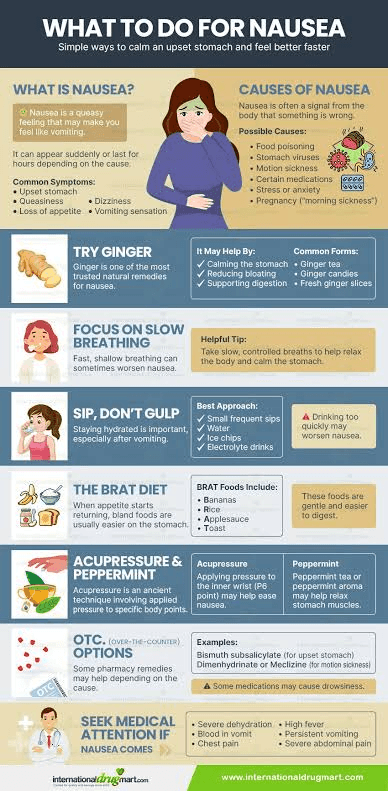
To help nausea, sit upright, move away from strong smells, and take frequent small sips of cool water; if vomiting or diarrhoea is causing fluid loss, use oral rehydration solution (ORS). Seek urgent care if you cannot keep fluids down, pass very little urine, or develop severe pain, blood in vomit, confusion, or chest discomfort.
This guide is educational, not advertising any company's product. Compare medicine options with a pharmacist rather than choosing by brand or packaging.
Quick Information
| Information | Details |
|---|---|
| Generic name | No single medicine treats every cause; options include ondansetron, metoclopramide, and dimenhydrinate |
| Brand name(s) / class | Generic classes discussed; no brand endorsed |
| Drug class | Antiemetics: medicines that reduce nausea and vomiting |
| Main uses | Selected cases of travel sickness, migraine-associated nausea, and treatment-related vomiting |
| Available forms | Tablets, dissolving tablets, oral liquids, and clinician-administered injections |
| Common strengths | Product-specific; check the active ingredient and strength on the label |
| Route | Usually oral; injectable medicines require professional care |
| Prescription / OTC | Depends on medicine and Pakistani regulations; confirm locally |
| Common side effects | Depending on medicine: sleepiness, constipation, headache, or diarrhoea |
What is nausea, and why does it happen?
Nausea is the feeling that you might vomit. Vomiting may never follow. Common triggers include stomach infections, motion sickness, pregnancy, migraine, acid reflux, anxiety, and medicines such as antibiotics or iron.
The pattern matters. Nausea after a new prescription needs a different response from nausea during a bus journey, while sudden nausea with severe abdominal pain needs assessment rather than another tablet.
What helps during the next hour?
Start gently. Large drinks and heavy meals can make an unsettled stomach feel worse.
- Sit upright and loosen tight clothing around your waist. Avoid lying flat immediately after eating.
- Try small, frequent sips instead of finishing a glass at once. If you vomit, pause briefly and restart more slowly.
- Use ORS when vomiting or diarrhoea causes fluid loss. Mix the whole sachet with exactly the amount of safe water printed on its label.
- Avoid cooking smells, greasy meals, alcohol, and large amounts of caffeine.
- When you feel ready, try small portions of crackers, toast, rice, or plain khichri. Do not force food.
Do not split an ORS sachet by eye, add extra salt or sugar, or assume every sachet makes litre. Incorrect mixing can be harmful, especially for children.
In Pakistan's hot weather, use a reliably safe water source and keep prepared drinks covered. Fizzy drinks and sports drinks are not equivalent to ORS.
How nausea relief works
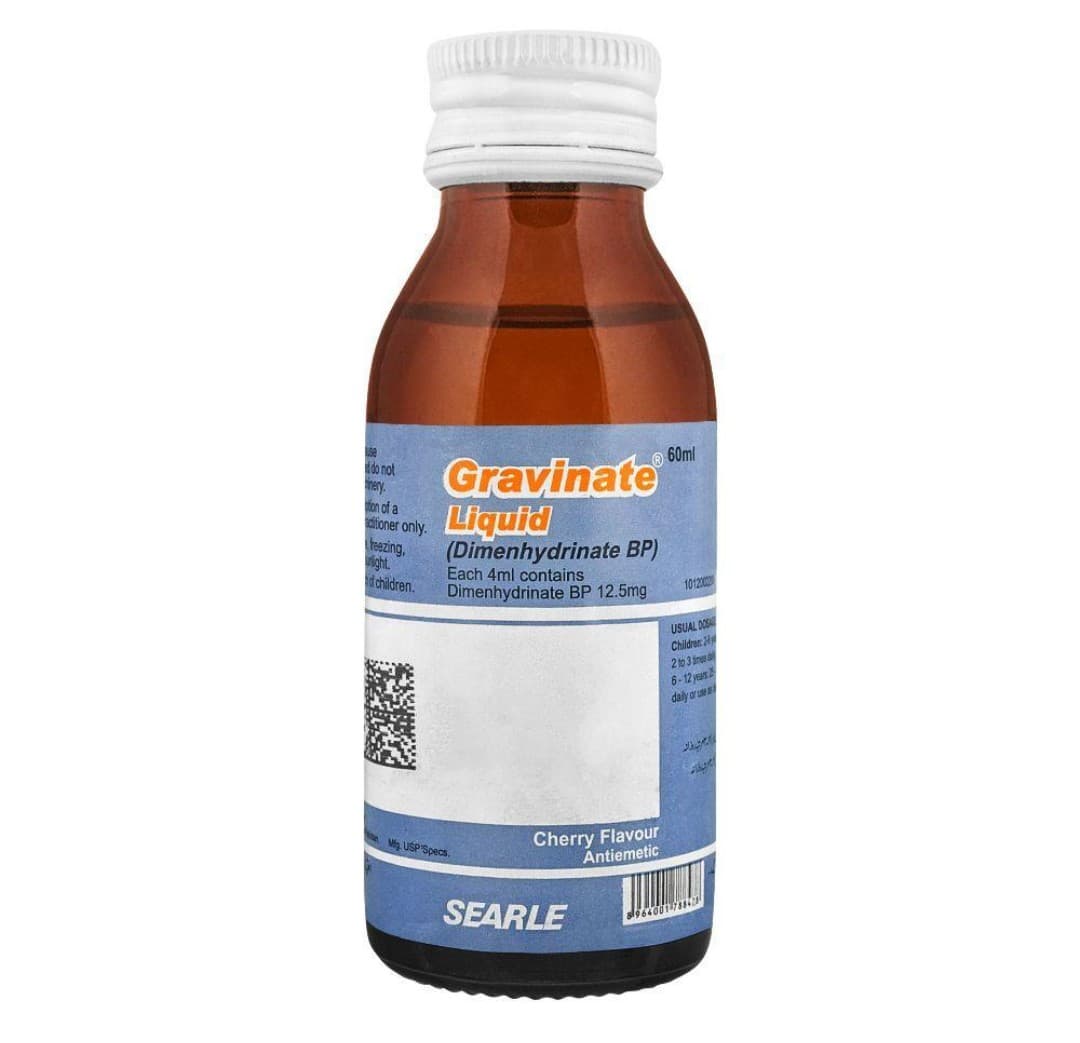
Different treatments act on different signals. Dimenhydrinate, an antihistamine, reduces motion-related signals from the inner ear; blocks serotonin signals involved in vomiting, while metoclopramide blocks dopamine signals and can help the stomach empty.
There is no universal nausea tablet. An oral medicine may start helping within roughly an hour, but timing depends on the product, cause, and whether it stays down; check its leaflet rather than repeating a dose early.
When different treatments are useful
Stomach infection or suspected food poisoning
Fluids come first. ORS replaces water and salts but does not directly switch off nausea. Antibiotics are not routine treatment, and fever, bloody diarrhoea, or worsening pain needs assessment.
Travel sickness and migraine
Motion-sickness medicines work best when timed according to their labels, often before travel. For migraine, a clinician may combine an antiemetic with headache treatment; a new, unusually severe headache requires urgent review.
Pregnancy or medicine-related nausea
Small, frequent meals may help pregnancy sickness, but persistent vomiting needs assessment. If nausea began after a medicine change, ask whether food, timing, or an alternative could help; do not independently stop essential treatment.
Dose and how to take nausea medicines
The exact dose depends on age, condition, formulation, medical history, and other medicines; confirm it with your doctor or pharmacist. There is no safe shared schedule for all antiemetics.
Follow the prescription for frequency and whether to take it with food. Children's doses may depend on weight, and some products are unsuitable for young children. Never scale down an adult tablet by guesswork.
Check before crushing, chewing, or splitting tablets. Use an oral syringe for liquids, not a kitchen spoon. A dissolving tablet still has a prescribed dose and is not necessarily absorbed entirely through the mouth.
Vomited after a dose? Do not automatically repeat it: some medicine may already have been absorbed. Tell the pharmacist the product, dose time, and vomiting time.
Side effects: what to watch for
Side effects differ by ingredient:
- Dimenhydrinate and other sedating antihistamines: sleepiness, dry mouth, blurred vision, and sometimes difficulty passing urine.
- Ondansetron: headache and constipation; rarely, a dangerous abnormal heart rhythm.
- Metoclopramide: diarrhoea, sleepiness, or restlessness; abnormal movements can occur, occasionally after a few doses.
Do not drive when sleepy. Stop the suspected medicine and seek urgent help for neck or jaw spasms, eyes rolling upward, fainting, or palpitations. Facial swelling or breathing difficulty requires emergency care.
Warnings and precautions
Pregnant or breastfeeding patients should have the exact ingredient checked, even when it is sold without a prescription. Older adults are more vulnerable to sedation, falls, and confusion from some antiemetics.
Extra caution is needed with heart-rhythm disorders, low potassium from vomiting, kidney or liver disease, Parkinson's disease, glaucoma, urinary retention, or previous drug allergies. These conditions can change which medicine is suitable and whether its dose needs adjusting.
Children dehydrate faster. Continue breastfeeding; do not dilute infant formula. Seek early medical advice for infants, children with fewer wet nappies, or anyone unusually sleepy or difficult to wake.
Drug interactions to check at the pharmacy
Bring your medicine list. Include prescriptions, cold remedies, vitamins, herbal preparations, and supplements.
Sedating antiemetics can increase impairment from alcohol, sleeping tablets, opioids, or other antihistamines. and domperidone need particular review alongside medicines that affect heart rhythm; metoclopramide can interact with antipsychotics and Parkinson's treatments.
Avoid combining two nausea medicines without advice. Different brand names can hide the same ingredient, and different ingredients can still share important risks.
Who should not self-treat?
Do not take a medicine that previously caused an allergic reaction. Metoclopramide is unsuitable in suspected bowel blockage, gastrointestinal bleeding, or perforation; other products have their own contraindications.
Get emergency help for:
- Blood or coffee-ground material in vomit, or green vomit.
- Severe or worsening abdominal pain, a swollen abdomen, or inability to pass stool or gas.
- Chest pressure, breathlessness, cold sweating, or fainting.
- Sudden severe headache, stiff neck, confusion, or vomiting after a significant head injury.
- Suspected poisoning or overdose.
Seek same-day care if repeated vomiting prevents drinking, urine becomes very scant, or standing causes marked dizziness. Persistent vomiting beyond about two days in an adult also needs review; seek help sooner in pregnancy, children, older adults, or people with diabetes.
Overdose: do not wait for symptoms
Taking too much anti-nausea medicine may cause severe sleepiness, agitation, abnormal movements, seizures, or heart-rhythm problems. Seek emergency care after a suspected overdose, especially involving a child, even if the person initially seems well.
Take the packaging with you. Do not induce vomiting or give another medicine to counteract it.
Missed dose
For scheduled treatment, follow the leaflet: usually, take the missed dose when remembered unless the next dose is nearly due. Never double without medical advice. An as-needed medicine does not require a catch-up dose when symptoms have settled.
How long should treatment continue?
Most sudden nausea needs short-term support, not an prescription. Stop as-needed treatment when no longer required, within the prescribed limits; metoclopramide in particular has strict duration restrictions in many guidelines because of movement-related risks.
Do not extend a course yourself. Repeated nausea, weight loss, or needing tablets most days warrants investigation.
Judge recovery by drinking and urination, not vomiting alone. A tablet may stop vomiting while dehydration continues; track what stays down, urine output, and dizziness over the next several hours.
Storage, forms, and strengths
Keep medicines in their original packaging, away from children, moisture, and direct sunlight. Avoid leaving them in a hot car. Follow product-specific temperature instructions and do not use expired supplies.
Tablet strengths and liquid concentrations vary. Check milligrams per tablet or per millilitre before switching products, and confirm the discard time for prepared ORS on its sachet.
Comparing options without choosing a “best brand”
Choose for the cause. Dimenhydrinate may suit motion sickness but can impair driving; is useful for selected vomiting conditions but is not a standard motion-sickness treatment. Metoclopramide has specific uses and movement-related limitations.
For Pakistani pharmacy purchases, compare the ingredient, strength, formulation, expiry date, and intact packaging. Matching ingredient names alone does not establish identical release or absorption; ask before switching a prescribed formulation.
Common misconceptions
- “More water at means faster recovery.” Small, frequent sips are often easier to retain.
- “An injection is always stronger or better.” The route depends on clinical need, not perceived strength.
- “No vomiting means no dehydration.” Poor intake and diarrhoea can still cause substantial fluid loss.
Patient FAQ
What can I eat when I feel nauseated?
Try small, plain meals. Return to your usual balanced diet as tolerated rather than restricting food for days.
Does ginger help nausea?
It may help some people, particularly with pregnancy-related nausea. Check concentrated supplements with a pharmacist, especially during pregnancy or with other medicines.
Should I make myself vomit?
No. Forced vomiting can cause choking or injury and is particularly dangerous after swallowing chemicals.
Can I sleep after taking a nausea tablet?
Check whether it causes sedation. Unusual difficulty waking is not a normal effect to ignore.
Can nausea medicines become habit-forming?
Most commonly prescribed antiemetics are not addictive, but repeated unsupervised use can cause harm and conceal the underlying problem.
Can I take them during pregnancy?
Some options are used in pregnancy, but selection depends on your symptoms and history. Inability to drink needs prompt assessment.
What about breastfeeding?
Suitability differs by ingredient and the baby's age and health. Have the specific product checked before taking it.
Can children use adult nausea syrup?
Not automatically. The ingredient, concentration, age restrictions, and weight-based instructions all matter.
Is nausea without vomiting serious?
Usually not, but persistent symptoms, weight loss, chest discomfort, or severe pain need medical assessment.
How do I check the price?
Ask a licensed pharmacy for the current price of the prescribed ingredient, strength, and pack size; prices vary.
Sources
- NHS: Feeling sick (nausea).
- NHS: Diarrhoea and vomiting.
- NHS: Metoclopramide.
Important Medical Disclaimer
This article is for general educational purposes and is not a substitute for advice from a qualified doctor or pharmacist. Always consult your doctor/pharmacist before using any medicine, changing a dose, or starting treatment.