Hugger Mugger Sattva Jute Yoga Mat: Grip and Safety
Considering a Hugger Mugger Sattva jute yoga mat? Check its materials, grip, cushioning and care needs, with practical safety advice for home practice.
By Dr. Amina Rahman, PharmD11 min read
Reviewed by Medical Review Team ·
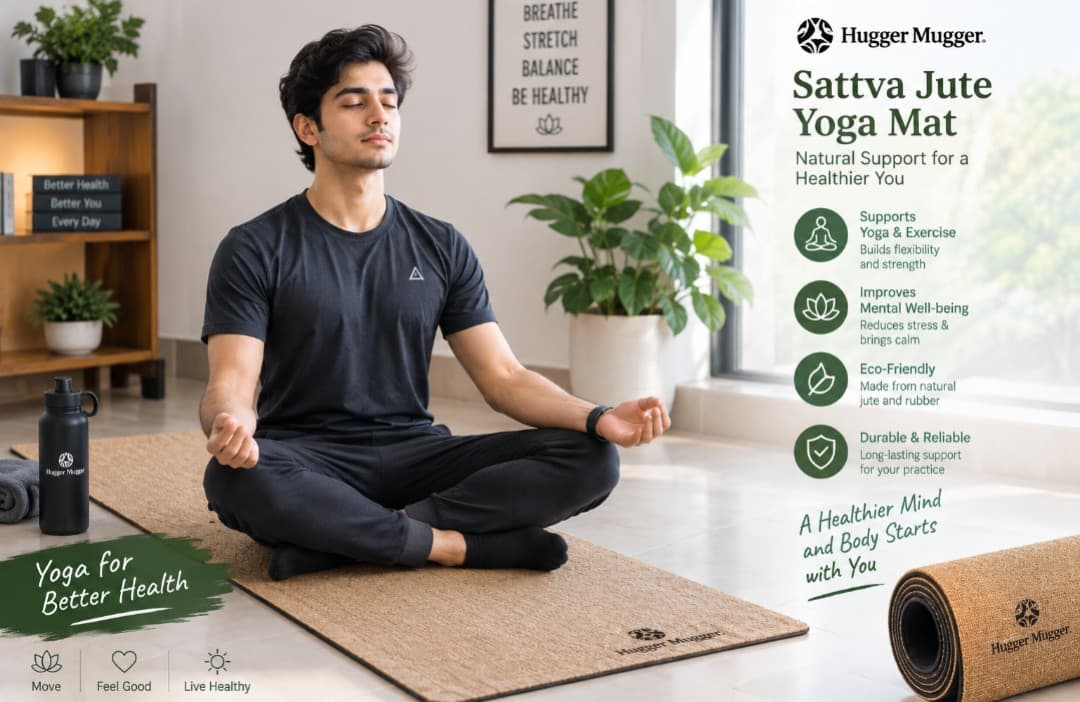
The Hugger Mugger Sattva jute yoga mat is exercise equipment for yoga practice, not a medicine or a treatment for joint disease. Before choosing it, confirm the exact product materials and care instructions, then assess whether its grip, cushioning and surface texture suit your body and floor.
This guide is educational, not advertising for any company. Compare generic mat types rather than relying on branding; a pharmacist can advise on medicine-related dizziness or skin sensitivity, while a physiotherapist can help assess movement limitations. Current specifications, availability and prices for this exact model are not independently verified here.
So let's DiscussionWhat is a jute yoga mat?
Jute is a plant fibre. In yoga mats, it may provide a woven or textured component, but the word “jute” does not establish what the entire mat contains. A backing, binder or cushioning layer may use other materials.
Check the whole composition. Do not assume this particular model is entirely plant-based, latex-free, biodegradable or suitable for a known contact allergy without a reliable manufacturer statement covering the exact version.
A medicine-style label is irrelevant here: there is no active pharmaceutical ingredient, dose or prescription status. The useful specifications are dimensions, weight, thickness, material layers and cleaning instructions. Seller photographs alone cannot establish these details.
How grip and cushioning work
A mat creates two contact surfaces: your body against the mat, and the mat against the floor. Either can slip. A textured upper surface may feel secure when dry yet behave differently with sweat, while a dusty underside may slide across smooth tiles.
Thickness is not the whole story. A soft mat may relieve pressure during kneeling but feel unstable when standing on leg; a firmer mat may improve footing while leaving sensitive knees uncomfortable.
These effects are immediate mechanical properties, not a medical of action. Any benefits from yoga develop through appropriate practice, not because jute releases a therapeutic substance or treats inflammation.
What can it reasonably be used for?
General yoga and stretching
A suitable mat can support gentle yoga, seated mobility work and floor stretching. Its boundaries help you organise your practice area, but they do not prevent falls. Clear nearby furniture and leave enough room to extend your arms without hitting anything.
Adapted exercise for stiffness or pain
Yoga may help some people manage symptoms such as persistent low-back pain when the programme is appropriate. The mat itself does not treat the cause. With painful knees, a recent injury or reduced balance, a physiotherapist may recommend chair-based exercise or supported positions instead of floor poses.
Start with comfortable movements. Pain that increases as you continue is a reason to stop and reassess, not evidence that a stretch is working.
Check these details before buying in Pakistan
Imported listings deserve a careful read. A familiar brand name does not prove that a seller has the exact model, a current version or stock stored in good condition.
Ask for:
- Photographs of the actual label, packaging and care instructions.
- Dimensions and thickness stated in consistent units.
- The complete material description, including backing or binders where disclosed.
- Written clarification of any latex-free or environmental claim.
- A receipt, seller contact details and the return policy for defects.
- The total delivered cost, including applicable import or delivery charges.
Check your available floor space before ordering. If the listing and label disagree, ask for clarification rather than choosing whichever description sounds better. There is no verified current Pakistan price or availability claim in this guide.
How to start using it safely
There is no medication dose. For any medicines you take, the exact dose depends on age, condition, formulation and medical history; confirm it with your doctor or pharmacist rather than changing it to accommodate exercise.
For the mat, begin with a supported safety check:
- Place it on a clean, dry, level floor and flatten any curled edges.
- With a stable support nearby, apply gentle pressure through your hands and feet.
- Check whether your skin slides over the surface or the entire mat moves.
- Try a comfortable seated position before progressing to standing poses.
- Stop if it bunches, sheds loose material or produces uncomfortable pressure.
Do not make the first test a demanding balance pose. On polished tiles common in Pakistani homes, underside movement can matter more than how grippy the upper texture feels.
Exercise duration should match your fitness, symptoms and any rehabilitation plan. Start conservatively and increase gradually. Avoid exercising immediately after a meal if bending makes you nauseated or worsens reflux.
Possible unwanted effects and when to stop
A mat has no drug side effects, but its surface and your movements can cause problems. Mild friction discomfort, pressure on knees or wrists, and an itchy contact rash are possible. Sweating may make irritation or slipping more noticeable.
Stop using it if symptoms develop. Wash irritated skin gently, let it dry and avoid further contact while you identify whether the trigger was the mat, cleaning residue or another product.
Arrange medical assessment for persistent pain, recurrent rash, spreading redness or broken skin that is not healing. Sudden joint swelling, inability to bear weight or new numbness needs prompt attention.
Seek emergency care for chest pain, fainting, severe breathlessness, or swelling of the lips or tongue. Do not dismiss these symptoms as an ordinary response to stretching.
Who needs extra precautions?
Pregnancy and breastfeeding
Pregnancy does not automatically rule out yoga, but suitable movements change with symptoms and pregnancy-related risks. Seek advice from your maternity clinician and a suitably trained instructor. Avoid hot yoga and positions that cause discomfort or create a fall risk.
Breastfeeding creates no medicine exposure through a mat. Postpartum recovery is the more relevant issue, especially after a caesarean birth or with pelvic-floor symptoms.
Children, older adults and reduced sensation
Children need supervision, not an adult routine copied at full intensity. Older adults may benefit from chair support and help getting up from the floor.
People with diabetic neuropathy, meaning nerve damage that reduces sensation, may not notice friction or pressure injury promptly. Inspect feet and other contact areas after practice, and seek an individual exercise plan if balance or sensation is impaired.
Heart, kidney, liver and musculoskeletal conditions
These conditions do not create a specific interaction with jute. However, symptoms such as dizziness, swelling, weakness or reduced exercise tolerance can change what activity is safe. Recent surgery, osteoporosis or significant spinal problems also warrant movement-specific advice.
A comfortable mat cannot make an unsuitable pose safe.
Medicines, alcohol and exercise safety
There are no established medicine–mat interactions. The practical concern is how medicines affect alertness, balance, blood pressure, sweating or blood glucose during exercise.
Sedating medicines can impair coordination. Some blood-pressure medicines contribute to light-headedness when standing, and insulin or certain diabetes tablets can increase the risk of low blood glucose around activity. Ask your pharmacist about your own medicines; do not skip them yourself.
Avoid alcohol before practice. If you have applied an oily cream to your hands or feet, check for slipperiness before stepping the mat. Vitamins, supplements and special drinks are not required simply because you use a jute mat.
When not to use it
Do not practise on a mat that slides, curls into your path, has separating layers or shows visible mould. Stop contact if a known material allergy is relevant or if the surface repeatedly triggers a rash.
Pause unsupervised floor exercise during acute injury, unexplained dizziness or illness that affects balance. Covering a defective mat with a towel is not a reliable repair; the added layer may slide as well.
The equipment and activity need separate decisions. You may need a different mat, a different exercise, or both.
Overdoing practice, missed sessions and long-term use
There is no overdose or missed dose for a yoga mat. Nevertheless, increasing exercise too quickly can aggravate pain or cause injury. Do not compensate for a missed session by doubling the next one.
You can stop using the mat without withdrawal. If yoga forms part of a prescribed rehabilitation programme, discuss persistent barriers with the treating professional so the programme can be adapted.
There is no fixed treatment course or universal replacement date. Continue while the activity remains suitable and the mat stays clean, intact and stable. More practice is not automatically better practice.
Cleaning and storage in heat and humidity
Follow the exact product care label. Jute-containing mats can include layers that respond differently to water, detergents and heat, so generic advice to soak or machine-wash them may be inappropriate.
Unless the manufacturer permits it, avoid immersion, steam cleaning, bleach and aggressive scrubbing. Use an approved cleaning method, remove residue as directed and allow the mat to dry fully before rolling it.
Humidity matters in coastal areas such as Karachi. Storing a damp mat in a closed bag encourages persistent odour and may allow mould growth. Use a ventilated storage space away from direct heat and sunlight where the label advises this.
Keep carrying straps away from small children. A musty smell, visible growth or deteriorating backing calls for reassessment, not perfume or essential oils to mask the problem.
- “Natural means allergy-free.
- Plant fibres, backing materials and cleaning residues can still cause irritation or sensitivity.
- “Thicker always means safer.” Extra softness may reduce pressure but make balance less steady.
- “Non-slip means it cannot move.” Grip changes with dust, moisture, floor finish and wear.
- “A yoga mat treats arthritis.” Appropriate exercise may help symptoms; the mat is equipment, not disease treatment.
- “A strong smell proves toxicity.” Smell alone cannot establish safety or danger. Check materials and stop exposure if symptoms occur.
Patient FAQ
Is the Hugger Mugger Sattva jute yoga mat latex-free?
Do not infer this from “jute.” Ask for a manufacturer statement covering the exact model and all relevant layers. With a serious latex allergy, an unclear seller description is not enough reassurance.
What are its thickness and dimensions?
Current specifications are not verified here. Check the exact label or manufacturer documentation rather than borrowing measurements from another Hugger Mugger mat or a similar-looking product.
Is it suitable for hot yoga?
Suitability depends on verified product guidance and how grip changes with sweat. Do not assume a textured mat is secure when wet. Heat also adds risks that the mat cannot prevent.
Can I use it if my knees hurt?
Possibly, but avoid direct pressure that worsens pain. Supported or chair-based exercises may be more suitable. Persistent swelling, locking or difficulty walking deserves assessment rather than simply adding cushioning.
Which side should face upwards?
Follow the label or manufacturer instructions. Do not guess from colour alone. If guidance is missing, ask the seller or manufacturer before using it for balance-dependent movements.
Can children use an adult yoga mat?
A child may use a suitable mat under supervision if it lies flat and provides adequate space. Keep straps out of reach, discourage chewing, and use age-appropriate movements rather than demanding adult poses.
Can I put it over carpet or prayer rugs?
A soft or loose base can make the mat unstable or allow layers to slide. Test gently with support nearby. A firm, level floor is generally easier to assess for standing balance work.
Can I share it with family members?
Sharing requires appropriate cleaning and complete drying between users. Avoid sharing during a suspected contagious skin infection. A personal mat is simpler when someone has recurring skin problems or open wounds.
Where can I check the price in Pakistan?
Compare identifiable retailers and request a written total, including delivery and any import costs. Confirm the exact model, condition and return terms. An unusually low price alone proves neither authenticity nor fraud.
When should I replace it?
Replace it when cleaning no longer restores a usable surface, layers separate, edges remain curled or grip becomes unreliable. Persistent mould is another reason to stop using it. Judge condition rather than calendar age alone.
Sources and verification
The US National Center for Complementary and Integrative Health's Yoga: What You Need To Know provides general evidence and safety guidance. It does not validate this particular mat.
For model-specific materials, dimensions and care, request current documentation from Hugger Mugger or the product label. No product-specific clinical benefit or current specification is asserted here without verification.
Important Medical Disclaimer
This article is for general educational purposes and is not a substitute for advice from a qualified doctor or pharmacist. Always consult your doctor/pharmacist before using any medicine, changing a dose, or starting treatment.
Related reading
If this article on Hugger Mugger Sattva Jute Yoga Mat: Grip and Safety was helpful, explore these related guides for more practical information on similar topics.
- i am a genz man. how does the nivea men line stack up against bulldog or lumin? — Nivea Men vs Bulldog vs Lumin: What I'd Actually Tell You Before You Buy Any of Them Okay so you've probably seen all three of these some…
- Celbex Tablet Uses: Check the Ingredient and Use Safely — Check Celbex’s active ingredient before use, then learn about celecoxib pain relief, stomach and heart risks, interactions, and when to s…
- i'm a skincare beginner. Are Nivea and Garnier Good Starting Brands? — Nivea focuses on hydration and skin barrier protection, while Garnier targets brightness and uneven skin tone. Here is how a beginner sho…
- Solid Dosage Formulation Principles — Binders, disintegrants, and compression science for tablet development.
- Surbex Z Uses, Dosage and Side Effects: Patient Guide — Learn what Surbex Z can and cannot treat, how to check its ingredients, and when side effects or overlapping supplements need a pharmacis…
- gabica tablet uses in urdu — گیبیکا ٹیبلٹ (Gabica) کے استعمالات، فوائد اور احتیاطی تدابیر — مکمل رہنمائی اردو میں تعارف اگر آپ کے ڈاکٹر نے آپ کو گیبیکا تجویز کی ہے یا…