Hodgkin and Non-Hodgkin Lymphoma: Differences, Diagnosis, and Treatment
ہاجکن اور نان ہاجکن لمفوما کا فرق، گلٹی کی درست جانچ، بایوپسی کی اہمیت اور علاج کے دوران بخار سمیت وہ علامات جانیں جن پر فوری مدد ضروری ہے۔
By Dr. Khalid Mehmood, MD12 min read
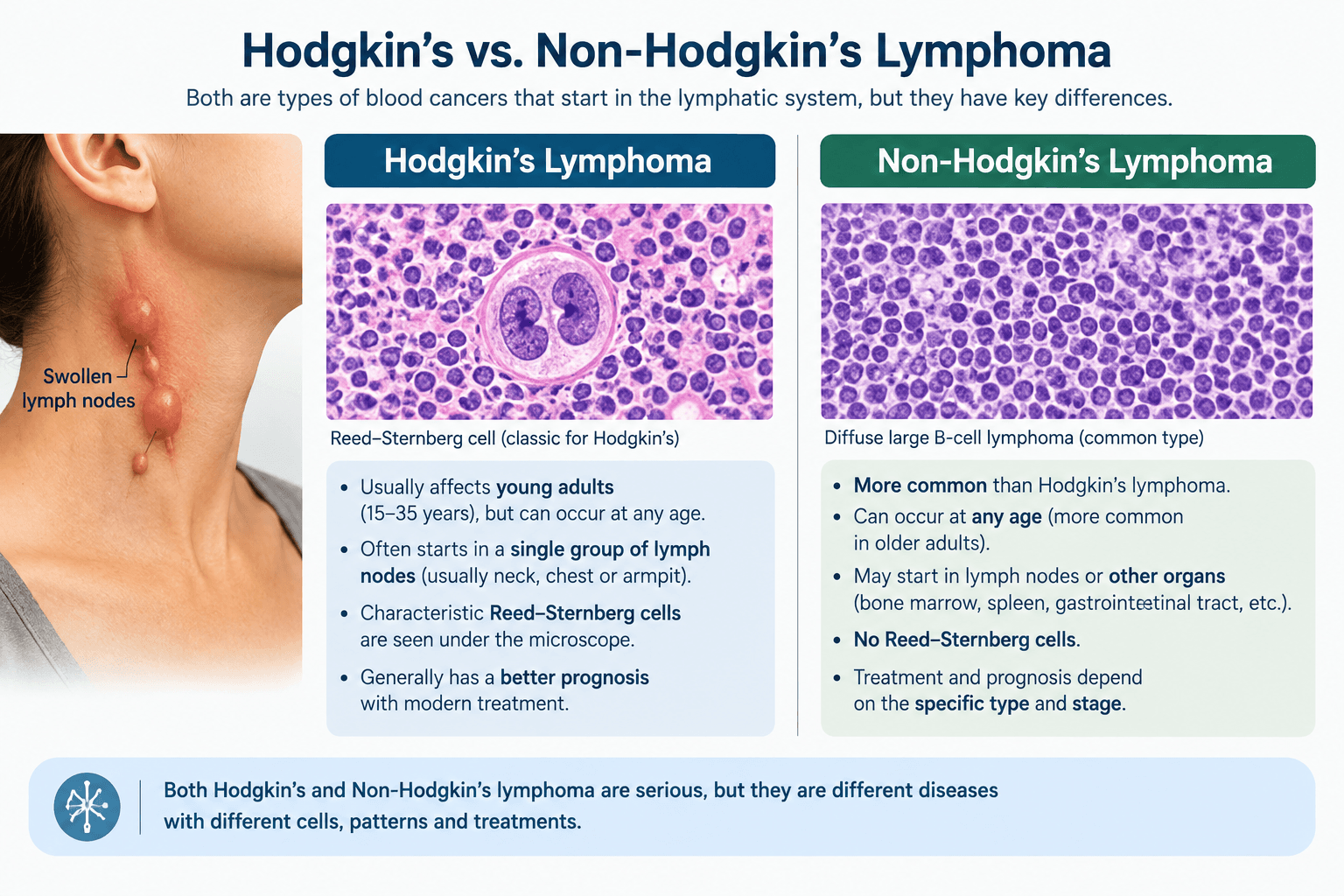
Hodgkin and Non-Hodgkin lymphoma are two major groups of cancers arising from the body's immune cells. They cannot be distinguished merely by touching a lump, but rather through the examination of a tissue sample. Both are treatable, but the specific medications and chances of recovery vary depending on the subtype, stage of spread, and overall condition of the patient.
This educational guide does not promote any single brand, nor does it endorse any company's products as the best. Consult a doctor or pharmacist if a medication substitute is needed; never alter cancer medications on your own.
Quick Information
| Information | Details |
| Disease Names | Hodgkin Lymphoma and Non-Hodgkin Lymphoma |
| System Affected | Lymphatic system, which participates in body defense and fluid drainage |
| Primary Difference | Cellular structure and specific markers identified via biopsy |
| Common Complaint | Painless swollen lymph node in the neck, armpit, or groin |
| Relevant Specialist | Hematologist or Medical Oncologist |
| Potential Treatments | Chemotherapy, targeted therapies, immunotherapy, and radiation therapy |
| Dosage Forms | Tablets, capsules, injections, or intravenous solutions in selected regimens |
| Strength & Dosage | No single uniform strength or dosage; highly individualized |
| Prescription Status | Strictly requires specialist supervision and a formal prescription |
| Immediate Danger Signs | Fever during treatment, difficulty breathing, or unusual bleeding |
Where Does Lymphoma Start?
Lymph nodes are commonly referred to as glands. Certain white blood cells within them fight germs; when their growth becomes uncontrollable, lymphoma can form. The spleen, bone marrow, and other organs may also be involved.
Not every enlarged gland is cancer. Infections of the throat, teeth, or skin can also cause nodes to swell, but the absence of pain should not be a reason for false reassurance. A continuously enlarging node requires evaluation. Lymphoma is not contagious; it does not spread by sitting next to, sharing food with, or shaking hands with a patient.
The Fundamental Difference Between Hodgkin and Non-Hodgkin
Classic Hodgkin lymphoma typically contains specific large, abnormal cells called Reed-Sternberg cells. Non-Hodgkin lymphoma is not a single disease, but rather a collection of numerous subtypes; some grow slowly, while others progress rapidly.
| Feature | Hodgkin Lymphoma | Non-Hodgkin Lymphoma |
| Identification | Specific cellular architecture and markers (Reed-Sternberg cells) | Diverse cellular types and distinct markers |
| Spread | Often moves predictably to adjacent lymph node chains | Spread to nodes or extra-nodal organs in varied patterns |
| Progression | Varies by subtype and stage | Ranges from indolent (very slow) to aggressive (very fast) |
| Treatment | Specific combination regimens, sometimes with radiation | Diverse treatments tailored to the specific subtype |
Do not make assumptions based on the category name alone. Some aggressive subtypes can be completely cured with treatment, while some slow-growing subtypes can be managed for extended periods.
Which Symptoms Warrant Medical Evaluation?
A persistent or growing lump in the neck, armpit, or groin should be evaluated by a doctor—especially if accompanied by unexplained fever, drenching night sweats, or unintentional weight loss.
Itching, fatigue, coughing, chest pressure, or a feeling of abdominal fullness may also occur, though these symptoms have many other causes. Do not self-diagnose. In Pakistan, tuberculosis is also a frequent cause of swollen nodes and night sweats; it is impossible to differentiate the two based on symptoms alone.
If sudden swelling of the face or neck is accompanied by shortness of breath, difficulty swallowing, or severe weakness, do not wait; proceed immediately to a hospital.
Why Is a Biopsy Crucial, and Which Tests Are Done?
A complete blood count provides useful information, but a normal blood report does not rule out lymphoma. Confirmation requires a tissue sample from an affected node or tissue, known as a biopsy. The pathology report examines the cellular architecture alongside specialized immunohistochemical staining.
Extracting a few cells with a fine needle can be helpful for some lumps, but it is often insufficient for full lymphoma classification. A specialist may recommend a core needle biopsy or an excisional biopsy (removing the entire lymph node). The choice depends on the location of the lump and the patient's medical condition.
Managing the sample is equally important. Families coming from distant areas should clarify beforehand where testing will take place, how the specimen will be transported, and whether advanced cellular tests are available. Obtaining a second opinion may require the original tissue slides and paraffin-embedded tissue blocks along with the report.
Do not take steroids on your own before a biopsy; they can temporarily shrink the node and make diagnosis difficult. However, do not abruptly stop steroids if they have already been prescribed by a physician.
Understanding the Stage and Chances of Recovery
The stage indicates where the disease is located in the body. It is determined through physical examination, blood tests, and CT or PET-CT scans as appropriate; some patients may also require a bone marrow biopsy.
Stage alone is not the whole picture. Subtype, age, organ function, and response to initial treatment are also critical. Stage IV lymphoma does not automatically mean an untreatable condition, so do not predict your outcome based on experiences with other types of cancer.
Many patients with Hodgkin lymphoma achieve complete cure. For Non-Hodgkin lymphoma, giving a single overall survival rate would be misleading; ask your specialist for expectations specific to your precise biopsy report.
How Is Treatment Selected and How Does It Work?
Chemotherapy targets rapidly dividing cells. As a result, some healthy fast-growing cells are affected alongside cancer cells. Targeted and certain immunotherapeutic medications attack specific markers on cancer cells or help the body's immune system fight them.
Radiation therapy can treat specific localized areas. If the disease returns or fails to respond to standard treatment, cellular therapies or stem cell transplantation may be considered in selected patients; availability varies by treatment center.
Immediate active drug treatment is not always necessary. In certain slow-growing (indolent) types of Non-Hodgkin lymphoma where symptoms or organ function are not threatened, structured active surveillance ("watch and wait") may be appropriate. However, delay in aggressive disease can be harmful; this decision must be made by a specialist.
Administration, Dosage, and Duration of Treatment
There is no single pill or uniform dose for lymphoma. Medications are often administered in cycled treatment schedules, while certain oral therapies follow a distinct daily routine. Pediatric regimens differ in structure from adult protocols.
The correct dosage depends on age, disease subtype, weight or body surface area, formulation, medical history, and renal/hepatic function; verification by a doctor or pharmacist is mandatory. Directions on taking medications with food, crushing tablets, or opening capsules depend strictly on the specific drug.
Maintain a written schedule detailing medication days, intervals, anti-nausea medications, and upcoming lab tests. Even if a lump shrinks quickly, do not stop treatment on your own; completion and efficacy are determined through scheduled medical assessments.
What to Do in Case of a Missed or Overdose?
If an oral cancer medication dose is missed, do not take a double dose. Contact your treatment center the same day for instructions. If vomiting occurs after taking a dose, do not repeat the dose on your own. If an infusion appointment is missed, do not reschedule without clinical guidance.
If an accidental extra dose is taken, seek immediate medical assistance without waiting for symptoms to appear. Keep the medication package, dose details, and timing ready. Do not induce vomiting on your own, as the risks vary depending on the drug involved.
Side Effects and Warning Signs of Immediate Danger
Nausea, mouth sores, hair loss, constipation or diarrhea, fatigue, and tingling in the hands and feet can occur with certain treatments, though not every patient experiences every side effect. Keep a written record of when a symptom started and how it affects eating or drinking.
A drop in white blood cells increases the risk of infection. If your temperature reaches 38°C (100.4°F) or higher during chemotherapy, contact your clinic or emergency department immediately—or follow any stricter temperature threshold provided by your care team. Do not take fever-reducing medication and wait until morning.
Seek urgent emergency care for the following symptoms:
Shortness of breath, chest pain, or fainting.
Uncontrolled bleeding, vomiting blood, or black, tarry stools.
Persistent vomiting, inability to retain fluids, or severely decreased urine output.
Facial swelling, itching, or breathing difficulty during or shortly after an infusion.
Because certain treatments can affect the heart, lungs, or nerves, routine monitoring tests must not be skipped.
Precautions in Pregnancy, Children, and Pre-existing Conditions
Inform your care team before the first dose if you are pregnant, suspect pregnancy, or plan to have children in the future. Some treatments affect fertility; timely counseling on sperm or egg preservation can be beneficial. Contraception methods and required durations are determined according to the specific medication.
Do not assume breastfeeding is safe. Breastfeeding is unsafe during administration of many cancer drugs, and the timeline for safely resuming varies. Children require specialized care at dedicated pediatric centers.
Always disclose a history of heart, kidney, liver, or lung disease, chronic allergies, or hepatitis. Certain immunosuppressive treatments can reactivate latent Hepatitis B, making baseline screening and prophylactic medication necessary in some cases.
Other Medications, Herbal Remedies, and Vaccines
Provide a complete list of all prescription and over-the-counter medications, including pain relievers, blood thinners, vitamins, powders, and herbal supplements. Natural products are not inherently safe; some can cause liver toxicity or interfere with the efficacy of cancer drugs.
Taking over-the-counter aspirin or ibuprofen on your own for pain can be dangerous if blood platelets are low. Restrictions regarding specific fruit juices or alcohol also vary based on the specific drug; consult your pharmacist.
Vaccination timing must be coordinated with your treatment team. Certain live-attenuated vaccines are contraindicated during periods of immunosuppression, while other vaccines may produce a reduced immune response.
When Must Treatment Be Paused or Modified?
Contraindications and precautions vary across lymphoma therapies. In the event of severe allergic reactions, active severe infections, marked cytopenias (low blood counts), or organ dysfunction, specific drugs may need to be postponed, reduced, or substituted. These decisions are made based on clinical evaluation and lab results.
Do not create treatment gaps on your own at home. If severe new symptoms arise after taking oral medication, seek immediate guidance before taking the next dose; in the case of respiratory distress or loss of consciousness, call for emergency medical help directly.
Purchasing, Generic Substitutes, and Storage
Treatment is not defined solely by a brand name. Verify the active ingredient, strength, formulation, manufacturer, expiration date, and storage instructions. Sharing the same active ingredient does not automatically make every formulation or biologic drug interchangeable. Obtain approval from your treatment center before using any substitute.
Leaving medication inside a vehicle in hot weather (such as Karachi's heat) is improper. For injectable medications requiring cold chain maintenance, ask the pharmacy for appropriate transport arrangements; simply placing every medication in a home freezer is not safe and can ruin the drug.
Keep tablets in their original packaging, away from moisture and children. Do not crush chemotherapy tablets or dispose of them in household waste; consult your treatment center regarding proper disposal or return of unused or expired medications.
Practical Preparation Between Home and Clinic
Keep a dedicated file containing biopsy reports, scan results, blood work, prescriptions, and emergency contact numbers. Digital photos on a phone are helpful, but preserve the original physical reports. Inquiring about required pre-treatment lab work and costs beforehand can prevent unnecessary travel.
Keep a reliable thermometer at home. Handwashing, safe drinking water, and thoroughly cooked food are essential safety practices; completely isolating the patient from family without a medical reason is unnecessary. If weight loss occurs, consult a clinical dietitian rather than imposing arbitrary dietary restrictions. You may also inquire with the hospital's social welfare department regarding financial assistance eligibility.
Common Misconceptions
A painless lump is harmless: The presence or absence of pain does not determine whether a lump is cancerous.
A biopsy causes cancer to spread: A medically indicated biopsy is the primary tool for accurate diagnosis; do not delay testing out of fear.
Stage IV means terminal illness: In lymphoma, several advanced-stage subtypes remain highly treatable and curable.
Herbal remedies can replace chemotherapy: There is no proven herbal alternative to curative lymphoma therapy, and delaying standard treatment can be harmful.
Frequently Asked Questions
Which is more dangerous, Hodgkin or Non-Hodgkin lymphoma?
The broad name alone does not provide the answer. The specific subtype, rate of growth, extent of spread, and response to therapy are far more important; seek clarification based on your specific biopsy report.
Can a blood test prove lymphoma?
Generally, no. Blood tests assess overall health and organ function, but confirmation and precise subtyping require a tissue biopsy in almost all cases.
Does every patient receive chemotherapy?
No, treatment approaches vary. Some slow-growing types may initially be managed with active surveillance, while others require targeted drugs, radiation, chemotherapy, or a combination of modalities.
Should oral medication be taken before or after meals?
Check the specific instructions on the prescription and package insert. There is no single rule for all cancer medications; if empty-stomach administration is specified, do not alter it on your own.
The lump has shrunk; can treatment be stopped?
Do not stop on your own. Residual microscopic disease may persist despite visible improvement, and decisions regarding treatment completion are made using formal restaging assessments.
Is it safe to work or drive during treatment?
This depends on your energy levels, blood counts, and medication side effects. Avoid driving and inform your care team if you experience dizziness, drowsiness, or neuropathy (tingling/numbness in hands and feet).
Are lymphoma medications addictive?
Cancer therapeutics themselves do not cause addiction. However, certain supportive medications prescribed alongside them for pain or sleep carry their own specific precautions.
Why are follow-up visits necessary after completing treatment?
Follow-up visits monitor for disease recurrence and manage late side effects of treatment. Scans are not required at every visit; report any new lumps, fever, or weight loss promptly between visits.
References
U.S. National Cancer Institute (NCI): Adult Hodgkin Lymphoma and Adult Non-Hodgkin Lymphoma Treatment Patient Guides.
National Health Service (NHS), UK: Hodgkin Lymphoma and Non-Hodgkin Lymphoma Diagnosis and Treatment.
U.S. Centers for Disease Control and Prevention (CDC): Guidance on Infection Prevention and Low White Blood Cell Counts in Cancer Patients.
Important Medical Disclaimer
This content is for educational purposes and does not substitute for professional medical advice from a qualified doctor or pharmacist. Always consult your doctor or pharmacist before using any medication, dosage, or treatment.