Amino Acids & Modernaminos
Learn amino acid chemistry, metabolism, and clinical uses, plus how to assess a Modernaminos label before considering any supplement or research product.
By Dr. Amina Rahman, PharmD12 min read
Reviewed by Medical Review Team ·
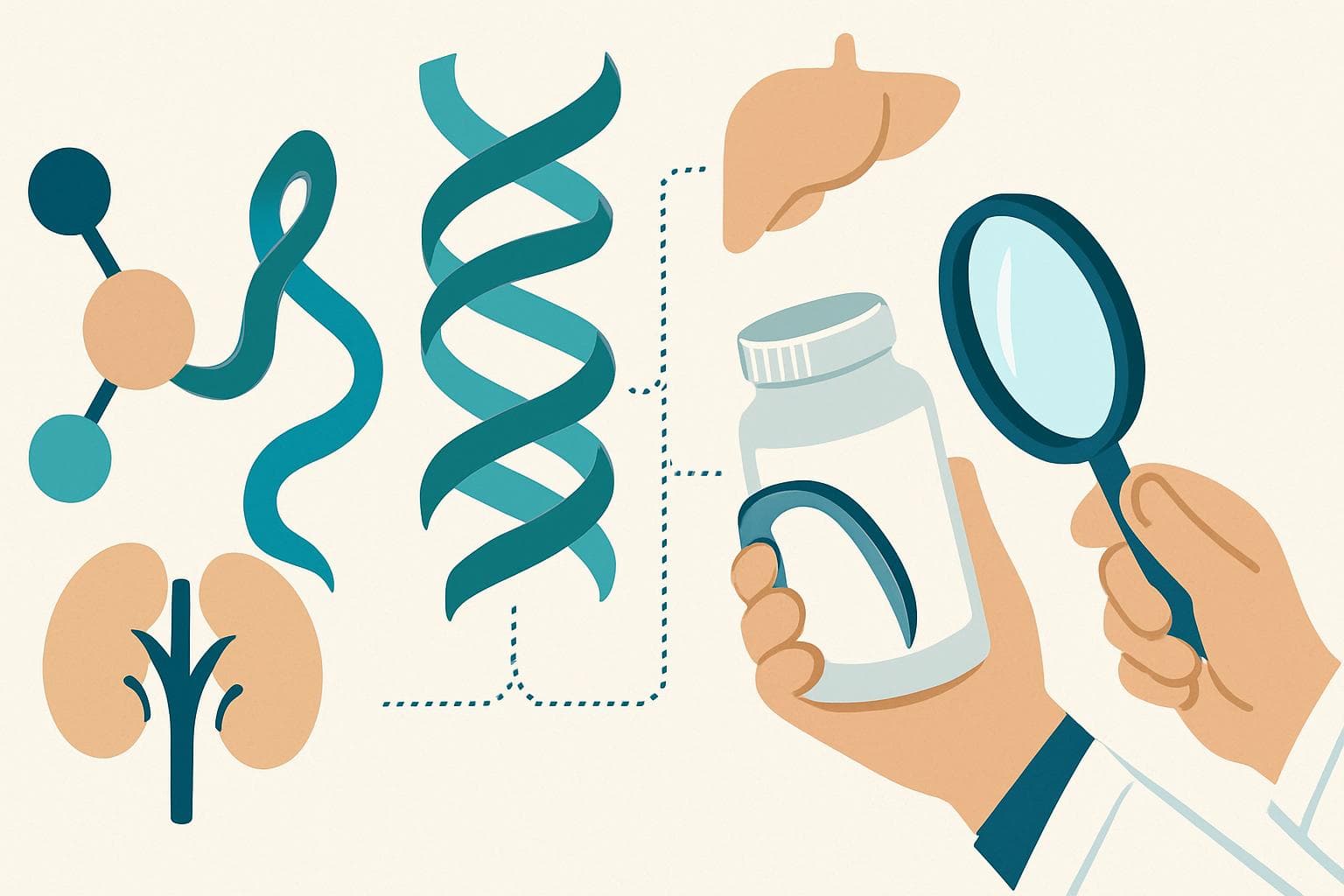
Amino acids are organic molecules that build proteins and participate in metabolism, signaling, and nitrogen transport. “Modernaminos” is not a standard biochemical term or an International Nonproprietary Name (INN); the name alone does not establish a product’s ingredients, purpose, or safety.
These Pharm-D study notes explain the science and the practical checks needed when a commercial name appears beside it. This is education, not advertising for any company. Compare options with a pharmacist rather than treating a name, website, or purity claim as evidence of clinical benefit.
Quick Answer / Overview
Amino acids are not medicine. They include normal dietary nutrients, ingredients in clinical nutrition, and molecules used for specific therapeutic purposes. Their effects depend on the individual substance, formulation, route, and patient.
If “Modernaminos” refers to a particular seller or product, assessment requires its exact label. Do not assume that something marketed alongside amino acids is an ordinary nutritional supplement; a peptide or research chemical requires a different assessment.
The key distinction is identity. A biochemical category explains what something is, while a verified label and regulatory status help establish what a particular preparation can legitimately be used for.
Key Definitions: The Language Behind the Label
- Amino acid: A molecule containing amino and carboxyl functional groups. In the standard protein-building amino acids, these attach to the same central, or alpha, carbon.
- Side chain: The variable part, often written as R, that determines many chemical properties.
- Peptide: A chain of amino acids connected by peptide bonds.
- Protein: or more amino acid chains folded into structures that perform biological functions; no single length cutoff settles every peptide–protein distinction.
- Essential amino acid: that humans cannot synthesize in sufficient quantities and must obtain through nutrition.
- Bioavailability: The extent and rate at which a substance becomes available systemically; oral amino acids also undergo substantial intestinal and liver metabolism.
- INN: A standardized generic name for a pharmaceutical substance, not a commercial brand name.
Classification: Learn Both Nutrition and Chemistry
Two classification systems answer different questions. Nutritional classification asks whether the body can make enough; chemical classification explains solubility, charge, folding, and interactions.
| Classification | Examples | Clinical or examination relevance |
|---|---|---|
| Essential | Histidine, isoleucine, leucine, lysine, methionine, phenylalanine, threonine, tryptophan, valine | All nine must be supplied adequately through nutrition |
| Nonessential under usual conditions | Alanine, aspartate, glutamate, serine | The body can normally synthesize them |
| Conditionally essential | Arginine, cysteine, glutamine, tyrosine, among others depending on context | Synthesis may become inadequate during particular developmental stages or illnesses |
| Branched-chain amino acids, or BCAAs | Leucine, isoleucine, valine | A subgroup of essential amino acids, not a complete protein source |
| Acidic side chains | Aspartate, glutamate | Usually negatively charged at physiological pH |
| Basic side chains | Lysine, arginine, histidine | Charge depends on side-chain chemistry and pH; histidine is especially useful in buffering and catalysis |
“Nonessential” does not mean unimportant. It describes synthetic capacity, not biological value.
For chemistry revision, also recognize polar uncharged residues such as serine and nonpolar residues such as valine. Most protein amino acids have the L configuration; glycine is achiral because its side chain is hydrogen.
STICKY NOTE — Classification trap: “Conditionally essential” does not automatically mean that supplementation improves outcomes in every critically ill patient. Clinical evidence must support the particular intervention.
How Amino Acids Work: From Charge to Nitrogen Disposal
Structure determines behavior
At physiological pH, many free amino acids exist mainly as zwitterions: molecules containing both positive and negative charges. Their overall charge depends on pH and any ionizable side chain.
This matters beyond examinations. Charge affects membrane transport and protein interactions, while the isoelectric point—the pH at which average net charge is zero—helps explain separation techniques and solubility behavior.
Protein synthesis needs a complete supply
Ribosomes join amino acids in an order specified by messenger RNA. The resulting sequence influences folding and function, producing enzymes, transporters, receptors, and structural proteins.
Leucine helps signal nutrient availability through the mechanistic target of rapamycin complex 1, or mTORC1, pathway. However, a signal is not a complete building supply: sustained protein synthesis still requires the other amino acids and adequate energy.
Nitrogen and carbon follow different routes
Transamination transfers an amino group between molecules. Many aminotransferases require pyridoxal phosphate, the active form of vitamin B6. Nitrogen is collected and transported through pathways involving glutamate, glutamine, and alanine.
Ammonia requires careful handling. The liver converts much of the nitrogen destined for excretion into urea, which the kidneys eliminate. Carbon skeletons enter energy pathways or contribute to glucose or ketone production, depending on the amino acid.
Dietary protein
 ↓ digestion
Peptides and free amino acids
 ↓ intestinal absorption
Circulating amino acid pool
 ├→ Protein and specialized molecule synthesis
 └→ Breakdown
 ├→ Nitrogen → mainly urea → urinary excretion
 └→ Carbon skeletons → energy, glucose, or ketones
For examinations, leucine and lysine are exclusively ketogenic. Other amino acids are glucogenic or both glucogenic and ketogenic. The body has no dedicated amino acid storage depot comparable to glycogen or adipose tissue.
PK/PD: Why Form and Route Change the Answer
Pharmacokinetics, or PK, describes absorption, distribution, metabolism, and elimination. Pharmacodynamics, or PD, describes biological effects. Nutrient physiology overlaps with these concepts, but an amino acid mixture does not have universal half-life or mechanism.
Oral proteins need digestion. Free amino acids use intestinal transport systems, while many small dietary peptides enter intestinal cells through peptide transporters and are then hydrolyzed. Several amino acids share transport pathways, creating competition at high concentrations.
An oral peptide is not automatically absorbed intact or clinically active. Conversely, intravenous amino acid solutions bypass intestinal absorption and require prescription-level control of formulation, infusion, and monitoring.
Blood concentrations reflect more than absorption: recent meals, tissue uptake, protein breakdown, and liver or kidney function all contribute. “Fast absorption” therefore does not establish superior clinical benefit, and matching ingredient names does not guarantee interchangeability between formulations.
Clinical Uses: Separate Nutrition From Treatment
Nutritional support
Amino acids support tissue maintenance, growth, and recovery. Most people obtain them through dietary protein; supplements are not automatically needed when food intake already meets requirements.
Enteral nutrition supplies nutrients through the gastrointestinal tract, often using intact or hydrolyzed protein. Parenteral nutrition supplies nutrients intravenously and includes amino acids when indicated. It is used when gastrointestinal feeding cannot adequately or safely meet needs, with specialist monitoring.
Adequate energy matters too. If energy intake is insufficient, more amino acid carbon may be oxidized rather than used for tissue synthesis. Adding a powder does not correct every cause of malnutrition.
Specific diseases and pharmaceutical applications
Phenylketonuria requires controlled phenylalanine intake and specialist medical nutrition. Maple syrup urine disease involves impaired breakdown of branched-chain amino acids and requires disease-specific management. Ordinary fitness blends are unsuitable substitutes for these prescribed nutritional strategies.
Some related compounds have established medicine roles. Acetylcysteine, a cysteine derivative, is an antidote for paracetamol poisoning under defined treatment protocols; that does not make cysteine supplements equivalent antidotes.
Do not generalize across molecules. A recognized therapeutic role for amino acid or derivative does not validate another compound, a proprietary mixture, or claims about muscle gain, immunity, or “anti-aging.”
Assessing a Modernaminos Product: Identity Before Claims
Without an exact product name and label, its composition cannot be established here. Treat “Modernaminos” as an identification question, not a pharmacological classification.
Check the following before discussing benefit:
- Exact ingredient: Record the generic chemical name, including salt or derivative where relevant.
- Amount and serving: Distinguish content per capsule, scoop, vial, and full serving. A proprietary blend may hide individual quantities.
- Form and route: Establish whether it is a food supplement, prescription preparation, peptide, or laboratory reagent.
- Intended use: Look for wording such as “research use only” or “not for human consumption.” These are not invitations to self-experiment.
- Traceability: Check manufacturer details, batch number, expiry date, storage instructions, and applicable local authorization.
- Evidence: Match the claim to studies of the same substance, route, formulation, and clinical population.
A certificate of analysis has limits. Even if genuine, it does not by itself demonstrate treatment efficacy, regulatory approval, or suitability for injection; a chemical purity result does not establish sterility or acceptable endotoxin levels.
IMPORTANT — Product boundary: Never swallow or inject a research-only preparation. Do not calculate a human dose from an animal experiment, seller chart, or discussion.
Dosing: Why There Is No Universal Amino Acid Dose
No responsible dose can be assigned to an unidentified product. Even a confirmed ingredient requires an indication, route, formulation, nutritional assessment, and consideration of kidney or liver function before an appropriate regimen can be selected.
Food-based protein targets, supplement servings, and prescribed intravenous amino acid doses answer different clinical questions. They are not interchangeable. Neither scoop size nor vial concentration tells you whether a regimen is appropriate.
For Pharm-D calculations, verify units first. A stated mass per serving cannot be interpreted as the amount of each component unless the label provides that breakdown. Concentration also differs from total container content.
Confirm the exact product, dose, route, frequency, and duration with a doctor or pharmacist before use. Never transfer dosing instructions from a nutritional powder to a peptide or injectable preparation.
Side Effects, Precautions, and When to Stop
Oral amino acid preparations can cause nausea, abdominal discomfort, or diarrhea, depending on the ingredient, quantity, and formulation. Sweeteners and other excipients may contribute. More is not necessarily better.
High intake of amino acid can alter transport or metabolism of others. Risk assessment must remain ingredient-specific, particularly when several supplements overlap or the product contains additional stimulants, minerals, or herbal ingredients.
Seek professional review before supplementation in kidney disease, significant liver disease, pregnancy, breastfeeding, childhood, or an inherited metabolic disorder. These situations do not all require blanket avoidance, but unsupervised regimens can miss important nutritional restrictions or monitoring needs.
Levodopa provides a useful interaction example: large neutral amino acids can compete with its transport, so protein intake may affect response in some people with Parkinson’s disease. Do not independently eliminate protein or change medicine timing; an individualized plan should protect both symptom control and nutrition.
Stop a suspected supplement and seek urgent help for facial swelling, breathing difficulty, collapse, or severe confusion. Persistent vomiting, substantial diarrhea, or worsening symptoms also warrant assessment. Bring the container or clear label photographs.
Intravenous nutrition has additional risks, including catheter infection and metabolic disturbances. Severely malnourished patients also need assessment for refeeding syndrome, which involves dangerous electrolyte shifts during nutritional restoration—not simply an allergy to amino acids.
Common Confusions: Compare Like With Like
| Item | What it provides | What it does not establish |
|---|---|---|
| Protein food or protein powder | A mixture of amino acids after digestion | Automatic suitability for every metabolic disorder |
| Essential amino acid mixture | The essential amino acids listed on its label | Adequate total energy or a complete diet |
| BCAA mixture | Leucine, isoleucine, and valine | All nine essential amino acids |
| Peptide preparation | A particular amino acid sequence | Oral effectiveness, injection safety, or regulatory approval |
| Research-only chemical | Material intended for laboratory investigation | Authorization for human treatment |
The most useful counseling insight is to examine the missing information. If the ingredient amount, route, or intended use cannot be established, debating claimed benefits is premature.
REMEMBER — Evidence boundary: Biological plausibility is a starting point. A molecule participating in muscle or hormone physiology does not prove that taking extra improves health.
Quick Pharm D Notes
- Definition: Amino acids contain amino and carboxyl groups; their side chains determine important chemical behavior.
- Classification: Keep nutritional categories separate from side-chain categories.
- Process: Digestion and absorption feed an amino acid pool used for synthesis or breakdown.
- Nitrogen handling: Transamination redistributes amino groups; urea formation supports nitrogen disposal.
- Examples: Leucine is a BCAA, phenylalanine is essential, and glycine is achiral.
- Clinical significance: Nutrition support and metabolic disorders require different amino acid strategies.
- Exam point: Standard introductory teaching covers 20 common protein amino acids; human proteins can also incorporate selenocysteine through specialized machinery.
- Practice point: A commercial name is insufficient for interaction checking or dose selection.
FAQ
Is Modernaminos another name for amino acids?
No. Amino acids are a defined biochemical category. “Modernaminos” does not identify a specific ingredient or standardized medicine; check the exact product label before drawing conclusions.
Are amino acids and protein the same thing?
No. Amino acids are the building units, while proteins are chains folded into functional structures. Digestion releases amino acids and small peptides from dietary protein.
Are BCAAs enough to build muscle?
BCAAs alone cannot supply every essential amino acid needed for protein synthesis. Training, adequate energy, and sufficient overall protein matter more than assuming that a three-amino-acid blend is complete nutrition.
Can I take amino acid supplements every day?
That depends on the ingredient, amount, dietary need, medical conditions, and medicines. Daily use is not automatically beneficial or safe; review the actual preparation rather than the category name.
Does “research use only” mean a product is safe if it is pure?
No. Purity does not establish a safe human dose, clinical benefit, or suitability for a particular route. Research-only labeling should not be treated as permission for self-treatment.
Last-Minute Revision
- Humans require nine essential amino acids through nutrition.
- BCAAs are a subgroup, not a complete essential amino acid mixture.
- Glycine is achiral; leucine and lysine are exclusively ketogenic.
- Nitrogen disposal and carbon skeleton metabolism are separate concepts.
- Nutritional supplements, therapeutic preparations, and research reagents are not interchangeable.
- Verify identity before assessing dose, interactions, or benefit.
References
- Harper’s Illustrated Biochemistry: amino acid metabolism and protein chemistry.
- Lippincott Illustrated Reviews: Biochemistry: nitrogen metabolism and inherited metabolic disorders.
- World Health Organization: International Nonproprietary Names programme.
- U.S. Food and Drug Administration: dietary supplement consumer information.
- NICE guideline CG32: Nutrition support for adults.
Important Medical Disclaimer
This article is for general educational purposes and is not a substitute for advice from a qualified doctor or pharmacist. Always consult your doctor/pharmacist before using any medicine, changing a dose, or starting treatment.
Related reading
If this article on Amino Acids & Modernaminos: Pharm-D Notes and Safety was helpful, explore these related guides for more practical information on similar topics.
- Surbex Z Uses, Dosage and Side Effects: Patient Guide — Learn what Surbex Z can and cannot treat, how to check its ingredients, and when side effects or overlapping supplements need a pharmacis…
- Chemical Classification of Glycosides — Chemical Classification of Glycosides Introduction Glycosides are naturally occurring organic compounds in which a sugar molecule ( glyco…
- Nims Tablet Uses: Pain Relief, Dose and Liver Safety — Learn what Nims tablets may treat, how to check the ingredient, and when to stop. Practical guidance on dosing, liver risks and safer pai…
- Plant-Derived Alkaloids: Is Kratom Itself an Alkaloid? — From isolation to therapeutic application — a structured review for pharmacy curricula.
- Apoptosis Defined: Mechanisms and Pharm-D Study Notes — Define apoptosis with clear pathways, morphology, clinical examples and exam distinctions, plus practical safety notes on apoptosis-targe…
- Alkaloids: Definition, Characteristics, Classification — Alkaloids are defined as a group of naturally occurring chemical compounds that mostly contain basic nitrogen atoms. The term "alkaloid"…