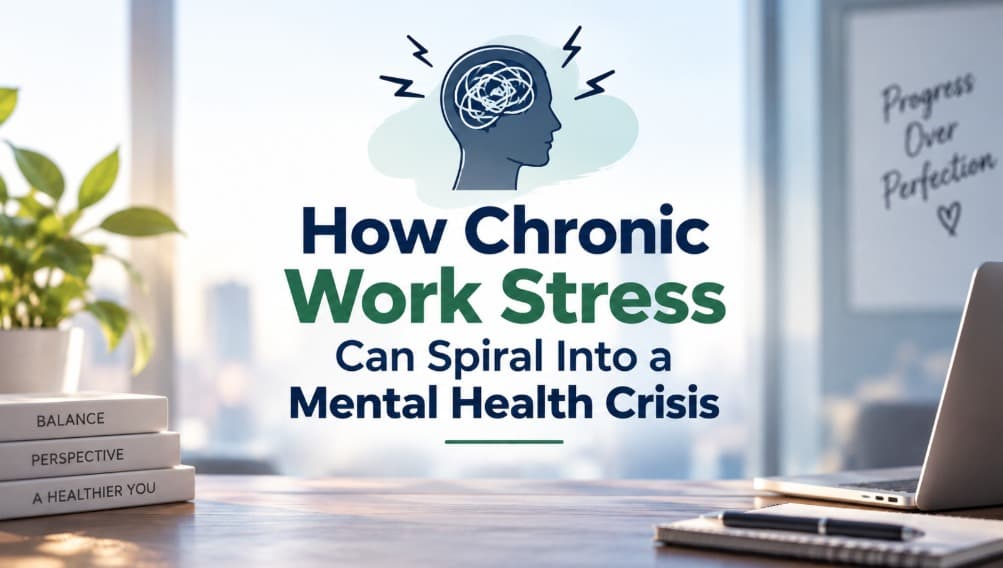
How Chronic Work Stress Can Spiral Into a Mental Health Crisis
How Chronic Work Stress Can Spiral Into a Mental Health Crisis Work stress used to mean a hectic Monday or a looming deadline. For millions of professionals today, it means something far heavier: a constant, low-grade
By Dr. Amina Rahman, PharmD4 min read
Work stress used to mean a
hectic Monday or a looming deadline. For millions of professionals today, it
means something far heavier: a constant, low-grade state of dread that follows
them from the office to the dinner table and into a sleepless 2 a.m. What
starts as “just a stressful season” can quietly evolve into anxiety,
depression, or a full-blown mental health crisis if it isn’t addressed early.
The Slow Burn of Occupational Stress
Chronic work stress rarely announces itself. It builds gradually through overwhelming workloads, unclear expectations, toxic management, or a culture that treats burnout as a badge of honor. Cortisol, the body’s primary stress hormone, stays elevated for weeks or months instead of spiking and receding as it’s designed to do. Over time, this sustained physiological stress response damages sleep quality, immune function, and emotional regulation.
The warning signs are often dismissed as normal fatigue: irritability with coworkers or family, difficulty concentrating, a growing sense of cynicism, or physical symptoms like headaches and stomach issues. Many people push through these signals because taking a step back feels like falling behind. That’s exactly how chronic stress becomes dangerous — it hides in plain sight until it doesn’t anymore.
What makes chronic occupational stress especially difficult is that there is rarely one single cause to identify and fix. A demanding project may end, but constant emails, unrealistic deadlines, staffing shortages, or pressure to remain available can keep the stress response active. Even when someone leaves the workplace, the mental habit of constantly anticipating the next problem can continue. Over time, this can make ordinary responsibilities feel unusually difficult and leave little room for meaningful recovery.
When Burnout Crosses Into Crisis
Burnout and clinical mental health conditions are not the same thing, but burnout is one of the clearest on-ramps to anxiety disorders, major depressive episodes, and even suicidal ideation. Research consistently links prolonged occupational stress to higher rates of generalized anxiety and depression, particularly in high-pressure industries like tech, healthcare, law, and finance.
The tipping point often looks like this: someone who was “handling it” suddenly can’t get out of bed, has panic attacks before opening their laptop, or starts relying on alcohol or medication just to function through the workday. At this stage, willpower and a long weekend off aren’t enough. This is where structured treatment becomes essential rather than optional.
Recognizing this transition early can make a meaningful difference. A person does not necessarily have to wait until symptoms completely interfere with work or relationships before seeking professional support. Persistent changes in sleep, mood, concentration, motivation, or the ability to manage everyday responsibilities can all be reasons to speak with a qualified mental health professional. Early support can also help identify whether someone is experiencing burnout, an anxiety disorder, depression, or another condition that requires a different approach to treatment.
Why Professionals Delay Getting Help
Career-driven individuals frequently avoid treatment because they fear it will disrupt their job, damage their professional reputation, or require them to disappear from work entirely. This fear keeps people in crisis far longer than necessary, and it’s one of the biggest reasons flexible, high-quality care matters. An IOP for work burnout is designed specifically for this situation — offering structured clinical support during set hours while allowing someone to keep working, parenting, or managing daily responsibilities around treatment.
Levels of Care That Actually Fit Real Life
For those living in or near Southern California, a mental health IOP in Orange County provides a middle ground between weekly therapy, which is often too light for an active crisis, and inpatient care, which is usually more intensive than someone still working actually needs. Intensive outpatient programs combine individual therapy, group sessions, and skills-based coursework several times a week, giving people real tools to interrupt the stress-to-crisis pipeline before it escalates further.
For professionals who can’t step away from work travel, childcare, or geographic constraints, a virtual IOP in California removes the biggest barrier to consistent care: logistics. The same clinical rigor — licensed therapists, evidence-based modalities, structured group work — is delivered from home, which means someone doesn’t have to choose between their job and their mental health.
The Bottom Line
Chronic work stress is not a personal failing or a sign of weakness; it’s a predictable physiological and psychological response to sustained pressure without adequate recovery. Left unaddressed, it can spiral into conditions that are much harder to treat than the stress that started it. The good news is that intervention doesn’t require quitting a job or disappearing from life — it requires the right level of structured support, delivered in a way that actually fits how people live and work today.
Important Medical Disclaimer
This article is for general informational and educational purposes only and is not intended to provide medical advice, diagnosis, or treatment. Mental health symptoms can have different causes and may require individualized evaluation by a qualified healthcare professional. Information about burnout, anxiety, depression, or treatment options should not be used as a substitute for professional medical guidance. If you are experiencing persistent or worsening mental health symptoms, consult a licensed healthcare provider to discuss your individual situation and appropriate treatment options. In an emergency or immediate crisis, contact local emergency services or seek urgent medical assistance.