Mast Cell Activation Syndrome: Symptoms and Treatment
Understand mast cell activation syndrome, how doctors confirm it, treatment options, and the warning signs that need emergency care in Pakistan.
By Dr. Khalid Mehmood, MD10 min read
Reviewed by Medical Review Team ·
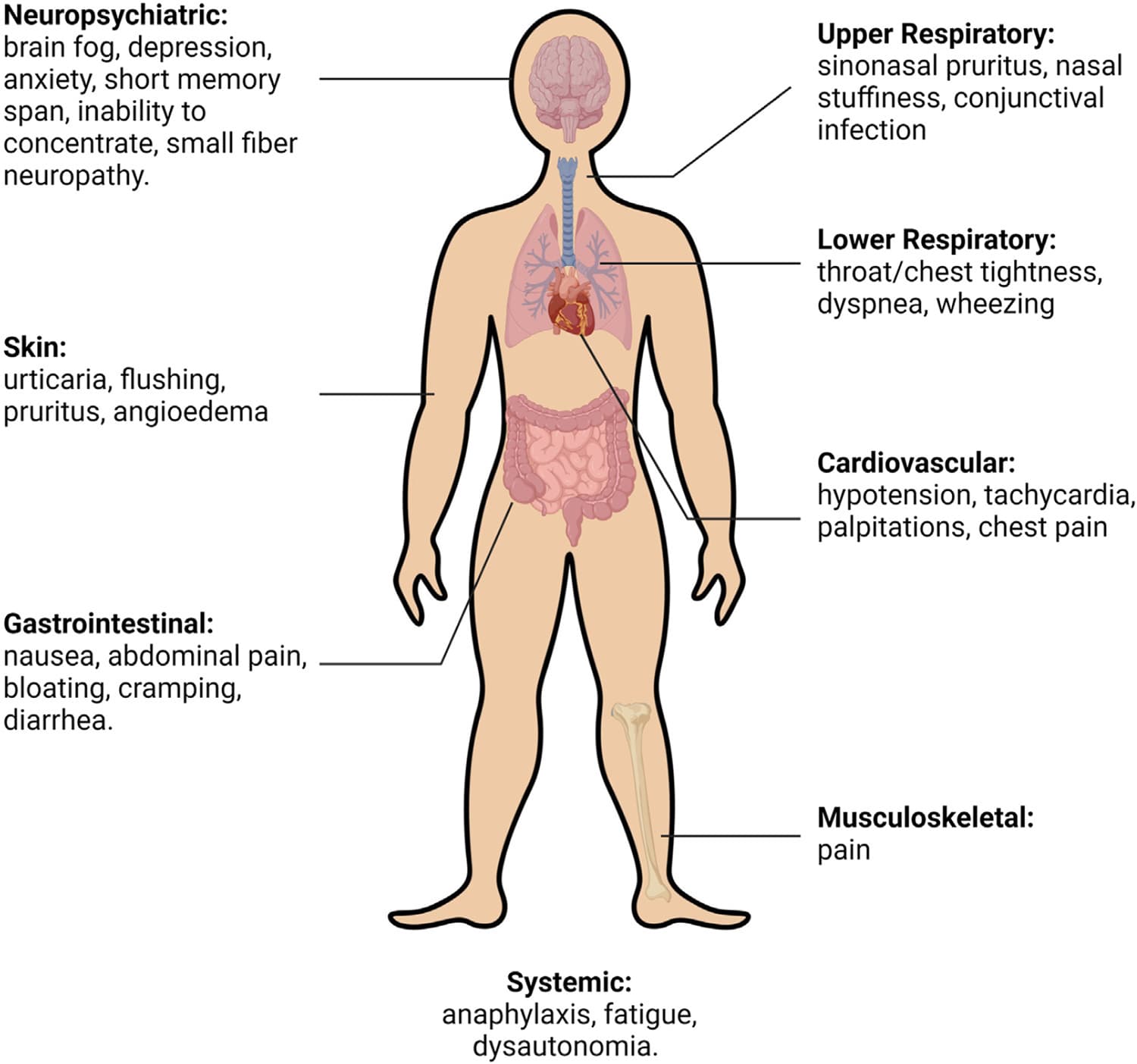
Mast cell activation syndrome (MCAS) causes repeated episodes of excessive mast-cell chemical release, often affecting several body systems at once. Diagnosis requires more than a symptom checklist, and breathing difficulty or collapse needs emergency treatment.
This guide is educational, not advertising for any company’s product. Compare medicine options with a pharmacist.
Quick Information
| Information | Details |
|---|---|
| Generic name | MCAS is a condition, not a medicine |
| Brand names / classes | Discuss generic treatment classes rather than brand |
| Drug class | Treatment may include H1 and H2 antihistamines and mast-cell stabilisers |
| Main uses | Symptom prevention; adrenaline treats anaphylaxis |
| Available forms | Tablets, liquids, selected oral preparations, emergency injections |
| Common strengths | Product-specific; there is no single MCAS strength |
| Route | Usually oral maintenance treatment; intramuscular adrenaline for anaphylaxis |
| Prescription / OTC | Depends on medicine and formulation; confirm locally in Pakistan |
| Common side effects | Some treatments cause sleepiness, headache, or stomach upset |
What is mast cell activation syndrome?
Mast cells are immune cells found in the skin, airways, gut, and other tissues. They release mediators—chemical messengers such as histamine—that help defend the body but can also produce allergic-type reactions.
MCAS involves recurrent, systemic activation. Typical episodes combine symptoms such as flushing or hives with diarrhoea, wheezing, or faintness, rather than persistent symptom alone.
It is not the same as mastocytosis, a disorder involving abnormal mast-cell accumulation. The conditions can overlap. An allergy specialist may investigate an underlying allergy, a mast-cell disorder, or episodes with no identified cause.
How symptoms develop—and how medicines help
Released mediators can widen blood vessels, irritate nerves, tighten airways, and disturb digestion. A person may therefore develop abdominal cramps and low blood pressure during the same episode.
Treatment targets different pathways. Cetirizine or fexofenadine, both H1 antihistamines, can reduce itching and hives; famotidine, an H2 blocker, reduces stomach acid and may help selected gastrointestinal symptoms.
Oral sodium cromoglicate, a mast-cell stabiliser, may be considered for some patients, particularly those with gastrointestinal symptoms. Benefits vary. Antihistamines may help within hours, whereas preventive treatment may need several weeks of review; neither replaces adrenaline during anaphylaxis.
How doctors confirm the diagnosis
Symptoms alone are not enough. Consensus approaches generally require all three of the following:
- Repeated episodes consistent with systemic mast-cell activation, usually involving at least two organ systems.
- An objective rise in a mast-cell mediator during an episode, commonly blood tryptase.
- Improvement with treatment that blocks mediators or reduces their release.
For tryptase, clinicians commonly use an episode level exceeding 1.2 × the baseline level + 2 ng/mL. This compares your own results; a laboratory’s normal range alone cannot settle the question.
Timing matters. An acute sample is ideally obtained within about to four hours of symptom onset, with a baseline sample taken after complete recovery, usually at least 24 hours later. Testing must never delay emergency treatment.
A normal baseline does not exclude MCAS, but normal results do not automatically prove it either. Specialist urine mediator tests may help in selected cases; availability and interpretation vary.
Chronic hives, food allergy, asthma, medication reactions, and other illnesses can mimic parts of the picture. Feeling better after an antihistamine does not, by itself, establish MCAS.
When doctors recommend treatment
Preventing recurrent symptoms
Doctors may recommend regular, usually less-sedating antihistamines when episodes interfere with daily life. Persistent symptoms sometimes require additional medicines, but treatment should follow the symptom pattern and diagnostic assessment—not a standard “MCAS stack.”
Preparing for severe reactions
People at risk of anaphylaxis need a written emergency plan and assessment for prescribed adrenaline, also called epinephrine. Ask about access to an auto-injector in Pakistan and obtain device-specific training; availability may be limited locally.
Dose and how to take treatment
There is no universal MCAS dose. The exact dose depends on age, condition, formulation, medical history, and kidney or liver function; confirm it with your doctor or pharmacist.
Some antihistamines are taken daily, while other treatments require divided doses or particular meal timing. Follow the individual label. Do not copy higher-dose specialist regimens from support groups.
Children need age-appropriate products and, sometimes, weight-based instructions. Measure liquids with an oral syringe. Ask before crushing, chewing, or splitting tablets, especially modified-release formulations.
Change non-urgent treatment at a time when your clinician agrees. Otherwise, identifying what helped—or caused trouble—becomes difficult.
Side effects and emergency warning signs
Treatment effects depend on the medicine:
- H1 antihistamines can cause drowsiness, headache, or dry mouth, even when labelled less sedating.
- Famotidine may cause headache, constipation, or diarrhoea.
- Oral sodium cromoglicate may cause nausea or abdominal discomfort.
- Montelukast, sometimes used selectively, carries warnings about serious mood, sleep, and behavioural changes. Stop it and contact the prescriber promptly if these appear.
Treat breathing difficulty, throat swelling, collapse, or rapidly worsening symptoms as an emergency. Use prescribed adrenaline promptly according to your plan and call emergency services; Rescue 1122 operates in many areas of Pakistan, but confirm local coverage.
Lie flat and avoid standing or walking. If breathing is difficult, sit with legs extended; follow dispatcher instructions. Antihistamines do not treat dangerous airway swelling or shock, and emergency assessment remains necessary after adrenaline.
Warnings and precautions
Pregnancy and breastfeeding require medicine-by-medicine review. Do not stop all treatment automatically, because uncontrolled reactions also carry risks; adrenaline remains first-line treatment for anaphylaxis during pregnancy.
Older adults are more vulnerable to confusion, falls, and urinary problems from sedating antihistamines. Children may become unusually agitated rather than sleepy.
Kidney or liver disease can change suitable dosing. Tell the prescriber about heart-rhythm problems, glaucoma, difficulty passing urine, asthma, and previous drug reactions. Before surgery or contrast imaging, share your reaction history so the team can plan; blanket avoidance of all anaesthetics is not appropriate.
Drug, supplement, and food interactions
Check every active ingredient. A cold-and-flu tablet may already contain an antihistamine, making an additional allergy tablet an accidental duplicate.
Alcohol, sleeping tablets, opioid painkillers, and sedating antihistamines can combine to impair alertness. Some antihistamines also interact with medicines affecting heart rhythm.
Fexofenadine has specific cautions involving fruit juices and aluminium- or magnesium-containing antacids; ask your pharmacist about spacing and take it as labelled. Disclose vitamins, herbal mixtures, and supplements, including products marketed as “histamine blockers.” Their safety and effectiveness are not assured.
Who should avoid particular treatments?
Contraindications belong to individual medicines, not MCAS as a whole. Avoid a product that previously caused a confirmed serious allergic reaction unless a specialist has reassessed it.
Do not start aspirin for flushing yourself. It can trigger severe reactions in susceptible people and is used selectively under specialist supervision.
Conversely, MCAS does not mean every antibiotic, vaccine, or painkiller is unsafe. Record the exact suspected medicine and reaction instead of adding unsupported allergy labels.
Overdose: when to seek urgent help
Too much antihistamine can cause marked sleepiness, agitation, a fast heartbeat, seizures, or abnormal heart rhythms, depending on the product.
Seek urgent advice after a suspected overdose, especially in a child—even before symptoms develop. Do not induce vomiting. Take the packet and report what was taken, how much, and when.
What if a dose is missed?
Follow that medicine’s leaflet. Usually, take the missed dose when remembered unless the next dose is near; then skip it. Never double a dose without medical advice.
Rescue adrenaline is different: it is used for an emergency, not to catch up on routine treatment.
How long is treatment needed?
Some patients need prevention; others can simplify treatment after triggers or associated illnesses are addressed. Review benefit, side effects, and diagnostic confidence regularly.
Do not stop everything together. Symptoms may return, and prolonged systemic corticosteroid treatment, if prescribed, may require a supervised taper. A clinician can plan step-down treatment while preserving your emergency plan.
Storage in Pakistan’s climate
Follow each product’s temperature, moisture, and light instructions. Keep medicines away from children, bathroom humidity, parked cars, and direct sunlight; Karachi’s heat makes car storage particularly unsuitable.
Check adrenaline-device expiry dates and any viewing window as instructed. Do not refrigerate or freeze a device unless its leaflet permits it. Ask a pharmacist about safe hot-weather transport and replacement arrangements.
Forms, strengths, and neutral product comparison
Antihistamines may come as tablets or oral liquids, while oral sodium cromoglicate availability varies. Emergency adrenaline devices differ in strength and operating technique.
Compare the INN—the internationally recognised generic name—along with concentration, formulation, instructions, and excipients, meaning inactive ingredients. Cetirizine and fexofenadine are different medicines, not interchangeable milligram-for-milligram products.
A familiar brand name does not guarantee the same formulation. The same generic name does not guarantee identical release characteristics or bioavailability across all formulations either; confirm any switch with your clinician or pharmacist. Check current prices locally rather than relying on outdated listings.
Common misconceptions
- “Many unexplained symptoms prove MCAS.” Diagnosis requires an appropriate pattern and objective evidence, not a symptom count.
- “A high baseline tryptase always means MCAS.” Other explanations exist and may need specialist assessment.
- “Everyone needs a strict low-histamine diet.” Evidence is limited, and unnecessary restriction can harm nutrition.
- “Natural treatments cannot trigger reactions.” Supplements can cause adverse effects and interactions too.
A practical flare record and testing plan
Prepare before the next episode. Ask which nearby facility can collect acute tryptase, whether a request form is needed, and how the result will reach your clinician.
Keep two lists: everyday symptoms and distinct attacks. For each attack, record the time, affected body systems, suspected exposure, medicines used, and response; photograph visible hives if safe.
This separation is useful. It helps prevent weeks of fatigue or bloating from being mistaken for a documented systemic episode, while giving the specialist better evidence than a long, undated symptom list.
Patient FAQ
Can MCAS be cured?
There is no established universal cure. Treatment aims to reduce episodes, manage underlying causes where possible, and prevent severe outcomes.
Can a routine blood count diagnose it?
No. A routine blood count cannot confirm MCAS; assessment usually needs appropriately timed mediator testing and clinical evidence.
Can I have MCAS without hives?
Yes, skin symptoms are not mandatory. However, symptoms must still fit the diagnostic criteria, and other causes need evaluation.
Is MCAS the same as histamine intolerance?
No. Histamine intolerance is a separate, less clearly defined concept; neither label should be assigned solely from food-related symptoms.
Should I avoid many foods?
Start with reproducible personal triggers. If a dietary trial is advised, involve a dietitian and plan reintroduction rather than permanent broad restriction.
Can I drive after an antihistamine?
Wait until you know its effect. Do not drive if sleepy, dizzy, or slowed, even with a less-sedating product.
Are antihistamines addictive?
Common antihistamines are not considered addictive. Symptoms returning after stopping usually reflect illness, although medication-specific stopping effects can occur.
Can heat or exercise trigger symptoms?
They can in some people. Discuss pacing, cooling, hydration, and an emergency plan rather than abandoning all physical activity.
Can children develop MCAS?
Yes, but childhood symptoms have many possible causes. Seek paediatric assessment before starting restrictive diets or adult medicine regimens.
Which specialist should I see?
An allergist or clinical immunologist is usually appropriate. A physician can coordinate referral, including haematology when a clonal mast-cell disorder is suspected.
Sources
- American Academy of Allergy, Asthma & Immunology: Mast Cell Activation Syndrome (MCAS).
- World Allergy Organization: Anaphylaxis Guidance 2020.
- US Food and Drug Administration: boxed-warning communication for montelukast regarding serious mental-health side effects.
Important Medical Disclaimer
This article is for general educational purposes and is not a substitute for advice from a qualified doctor or pharmacist. Always consult your doctor/pharmacist before using any medicine, changing a dose, or starting treatment.