Is Meningitis Contagious? What Patients and Caregivers Should Know
Meningitis is inflammation of the lining around the brain and spinal cord. Whether it is contagious depends on its cause. Some germs that cause…
By Dr. Amina Rahman, PharmD9 min read
Reviewed by Medical Review Team ·
Meningitis is inflammation of the lining around the brain and spinal cord. Whether it is contagious depends on its cause. Some germs that cause meningitis can spread between people, especially meningococcal bacteria during close, prolonged contact. Other causes, including many fungal and parasitic infections, do not usually spread from person to person. Having contact with someone who has meningitis does not automatically mean you will become ill. If you or someone nearby has possible meningitis symptoms, seek urgent medical care rather than waiting to find out how it spreads.
What causes meningitis, and how does spread vary?
Meningitis can be caused by bacteria, viruses, fungi, parasites, and, less commonly, non-infectious conditions. The cause matters because contagiousness, treatment, and advice for contacts differ.
Bacterial meningitis
Some bacteria that cause meningitis can spread through respiratory or throat secretions, such as saliva. This generally involves close contact, for example living in the same household, kissing, or sharing a small enclosed space for a prolonged period. Meningococcal disease is important example. It can become life-threatening quickly, so suspected cases need emergency assessment.
Other bacteria, including those that can cause pneumococcal or Haemophilus influenzae type b (Hib) meningitis, may also spread through respiratory secretions. However, a person carrying a bacterium does not necessarily develop meningitis. The risk and the need for preventive medicine depend on the specific germ, the nature of contact, and local public-health guidance.
Tuberculosis (TB) can cause meningitis. TB bacteria usually spread through the air from a person with infectious TB affecting the lungs or throat; TB meningitis itself is not generally caught by casual contact with someone who has it. If TB is suspected, clinicians and public-health staff assess whether there is another infectious TB site and whether household contacts need evaluation.
Viral meningitis
Many viruses that can cause meningitis spread between people, but they often cause mild or no illness rather than meningitis. Enteroviruses, for example, can spread through contaminated hands or surfaces and through respiratory or stool contamination. Other viruses have different routes. A clinician may recommend handwashing, cleaning, or other precautions based on the suspected virus.
Viral meningitis is not the same as bacterial meningitis. Some cases improve with supportive care, while particular viruses may need specific treatment. It is not safe to assume the cause from symptoms alone.
Fungal, parasitic, and non-infectious causes
Fungal meningitis is often linked to exposure to fungi in the environment or to particular health conditions; it generally does not spread from person to another. Parasitic meningitis is uncommon and is usually associated with a specific exposure, not ordinary contact with an affected person. Cancer, some medicines, and other conditions can also cause meningitis-like inflammation without a contagious infection. A medical assessment is needed to identify the cause.
When to seek emergency care
Meningitis can worsen rapidly. Go to an emergency department or call local emergency services if someone has a severe or rapidly worsening headache with fever, a stiff neck, confusion, unusual drowsiness, seizures, repeated vomiting, or sensitivity to light. A purple or red rash that does not fade when pressed can be an emergency, but a rash may be absent. Do not wait for every symptom to appear, and do not delay care while trying home treatment or arranging a routine appointment.
Babies and young children may not show the usual symptoms. Seek urgent care for a baby who is difficult to wake, unusually irritable, feeding poorly, vomiting, breathing abnormally, having a seizure, or has a bulging soft spot. Fever or an unusually low temperature in a very young baby also needs prompt medical advice. A clinician should assess concerning symptoms even if the child has no rash or cannot describe a headache.
If travel to care is difficult, contact the nearest hospital or emergency service for directions. In Pakistan, emergency arrangements vary by city and area; use the fastest available route to urgent assessment. Do not give leftover antibiotics or wait to see whether symptoms settle.
What should close contacts do?
If a doctor or public-health team tells you that you were a close contact of someone with meningococcal disease or another infection requiring contact management, follow their instructions promptly. Preventive antibiotics may be recommended for certain contacts, but they are not suitable for everyone and must be selected by a qualified clinician. The timing can matter. Do not use another person's medicine, buy antibiotics without advice, or take a partial course left at home.
A doctor may ask about the confirmed or suspected organism, when contact happened, whether you shared a household or sleeping space, and whether there was direct exposure to saliva or respiratory secretions. Being in the same classroom, workplace, clinic, or public place does not always count as close contact; the decision depends on the infection and circumstances. Ask the treating team what applies to you rather than relying on general advice.
Contacts should watch for symptoms and seek urgent care if they develop fever, severe headache, stiff neck, confusion, a concerning rash, or other rapidly worsening illness. Preventive medicine does not replace monitoring, and it is not a reason to ignore symptoms.
Reduce spread while the cause is being assessed
Until clinicians provide cause-specific advice, practical steps can reduce spread of common respiratory and stomach infections:
- Wash hands with soap and safe water, especially after using the toilet, changing nappies, or wiping a nose, and before preparing food.
- Avoid sharing cups, bottles, eating utensils, toothbrushes, or items that have saliva on them.
- Cover coughs and sneezes, dispose of tissues safely, and clean frequently touched surfaces.
- Avoid close face-to-face contact when someone is acutely unwell, where practical.
- Follow hospital instructions about masks, visitors, isolation, or testing. Do not isolate someone for longer than advised without asking the care team.
These steps do not replace vaccination, urgent treatment, or contact-specific preventive medicine. Meningitis itself is not single contagious disease, so broad precautions cannot tell you whether a particular exposure needs treatment.
Vaccination and prevention in Pakistan
Vaccines can prevent some infections that cause meningitis, but no vaccine prevents every cause. Ask a doctor or vaccination service to review the person's age, previous vaccine record, health conditions, travel plans, and current national or provincial recommendations. Bring the vaccination card if available. Vaccine availability and schedules can vary, so confirm current guidance with a qualified local service [ADD SOURCE].
Do not assume that a past vaccine covers every meningitis-causing germ, or that a vaccine can treat an illness that has already started. If symptoms suggest meningitis, seek emergency care even if the person is vaccinated.
Avoid common mistakes with medicines
Meningitis is not a condition to self-treat with pharmacy medicines. Antibiotics are needed for many bacterial causes, but the choice and route depend on the suspected germ and clinical assessment; urgent hospital treatment may be required. Antibiotics do not treat viral infections, and taking them unnecessarily can cause harm and contribute to antimicrobial resistance. Never stop a prescribed antibiotic early or change it without the prescriber's advice. If a dose is missed, the patient vomits after a dose, or side effects occur, contact the prescriber or pharmacist for instructions rather than doubling a dose.
Do not take preventive antibiotics unless they are prescribed or supplied under an appropriate public-health plan. Tell the clinician or pharmacist about allergies, pregnancy, breastfeeding, kidney or liver problems, and all medicines and supplements being used. Check the active ingredient and instructions on any medicine label; do not use a product based on a familiar brand name. If you have a chronic condition or take regular medicines, ask a pharmacist or doctor before adding an over-the-counter pain or fever medicine. Such medicines may ease discomfort but cannot rule out meningitis or treat its cause.
What to expect at a medical assessment
Clinicians may ask about symptoms, recent illness, vaccination, travel, health conditions, and contact with someone who was diagnosed with an infection. Tests may include blood tests and, when appropriate, examination of fluid around the brain and spinal cord. The care team decides which tests are safe and necessary. If bacterial meningitis is suspected, treatment may begin urgently while test results are pending. Do not delay emergency evaluation because you are worried about tests or because symptoms temporarily improve.
If the patient is admitted, ask the team what organism is suspected or confirmed, what isolation precautions are needed, whether household or other close contacts need assessment or preventive treatment, and whom to contact if symptoms develop. Keep follow-up instructions and medicine details together, and tell other caregivers what warning signs require urgent help.
FAQ
Can I catch meningitis from sharing a room?
Not necessarily. Risk depends on the cause and the type and duration of contact. Some infections spread through close contact with respiratory or throat secretions; casual proximity may not require preventive medicine. Ask the treating team or public-health staff about the specific exposure.
Should everyone in the household take antibiotics?
No. Preventive antibiotics are recommended for certain infections and contact situations. A clinician or public-health team should identify who needs them and which medicine is appropriate. Do not share or self-start antibiotics.
Is meningitis contagious after treatment begins?
There is no single answer for all causes. The period of contagiousness and any precautions depend on the organism and the treatment. Follow the hospital's or public-health team's instructions; do not decide that contact is safe simply because treatment has started.
Can someone carry a germ without getting meningitis?
Yes. People may carry or catch a germ without developing meningitis, and many infections cause other symptoms or none at all. That is why exposure does not prove that someone has meningitis, but concerning symptoms still need urgent assessment.
Medical disclaimer
This article is for general education and does not diagnose, treat, or replace advice from a qualified doctor, pharmacist, or public-health professional. Meningitis can be a medical emergency. Seek urgent care for suspected meningitis, and follow local clinical advice about testing, treatment, vaccination, and contact management. Medical guidance and vaccine recommendations can change; verify current advice with a qualified local source.
Important Medical Disclaimer
This article is for general educational purposes and is not a substitute for advice from a qualified doctor or pharmacist. Always consult your doctor/pharmacist before using any medicine, changing a dose, or starting treatment.
Related reading
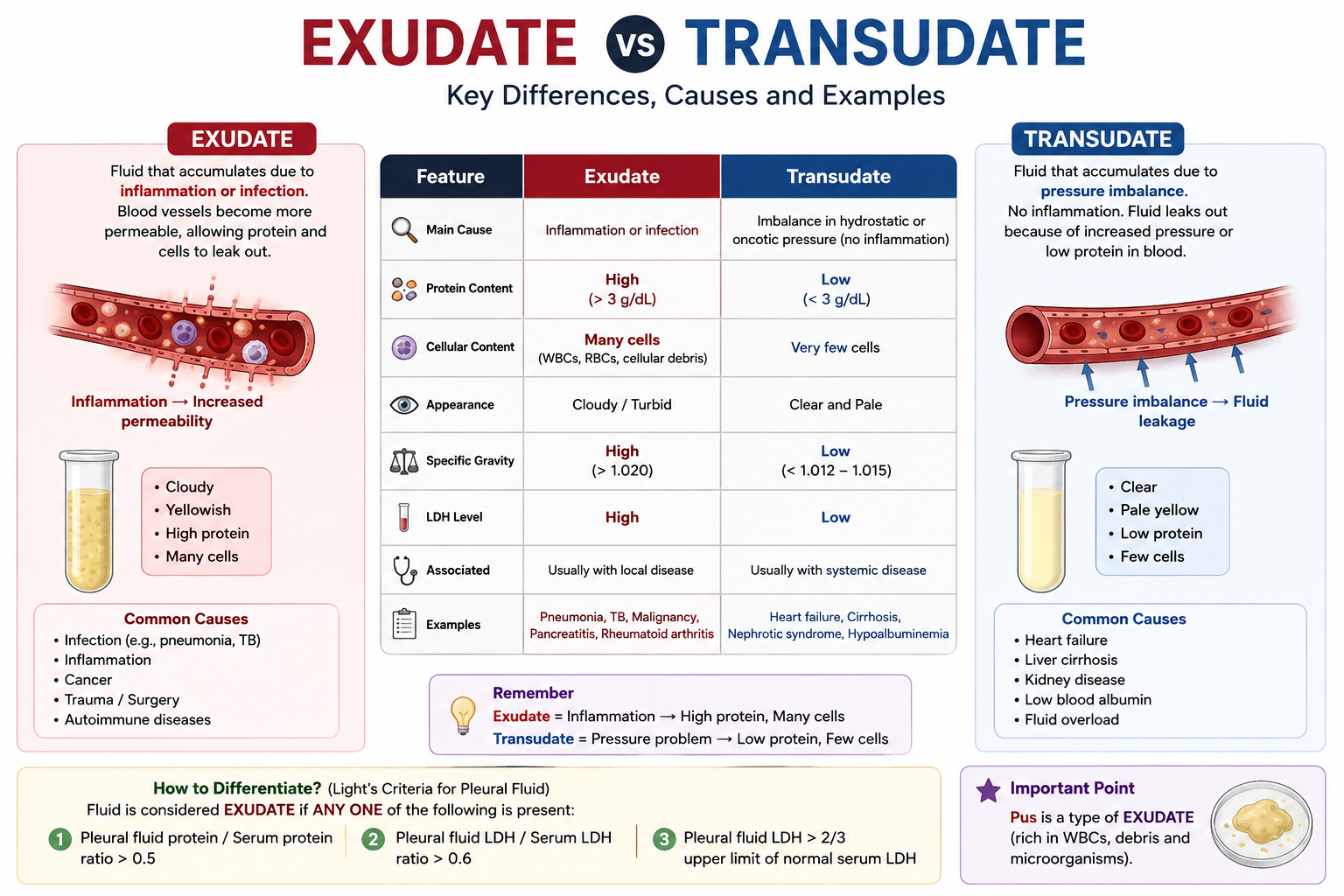
Learn more about fluid types and how they differ.
- What is difference between exudate and transudate fluid. — Learn how exudate and transudate differ as types of fluid that can collect in body tissues or cavities.