HPLC Method Validation in Pharmaceutical Analysis
ICH-aligned validation parameters for assay and impurity methods in QC laboratories.
By Sarah Chen, MSc10 min read
Reviewed by Dr. Khalid Mehmood, MD ·
HPLC Method Validation — Notes From Someone Who Actually Had to Learn This
I'll be honest, the first time "method validation" came up in my analytical pharmacy class, I zoned out a little. It sounded like paperwork. Then our instructor asked a question that actually stuck with me: "If your HPLC method gives you a number, how do you know that number is real?"
That's really the whole point of this topic. Anyone can run a sample through an HPLC and get a peak with a number attached to it. The question is whether that number can be trusted enough to decide whether a batch of medicine goes out to patients or gets rejected. Method validation is basically the proof that your method isn't lying to you.
I'm writing this the way I wish someone had explained it to me — not as a checklist to memorize the night before an exam, but as a story of what could go wrong with an HPLC method, and how each validation parameter is really just a way of catching specific kind of failure.
First, a quick reality check on the guideline situation
If you're studying from an older textbook, you've probably seen ICH Q2(R1) referenced everywhere — it was the standard for validation of analytical procedures since 2005. But it's actually been replaced. In late 2023 the ICH Assembly adopted a revised version, ICH Q2(R2), and it became officially effective in June 2024. A new companion document, ICH Q14, came out alongside it too, dealing more with how you develop a method rather than how you validate it.
So if your notes mention Q2(R1), that's not wrong exactly — the underlying logic hasn't changed much — but it's outdated as the "current" reference. Worth mentioning this to your instructor if you're not sure which version they're testing you on, because I got caught out by this myself when comparing my old notes to a newer paper.
What HPLC is doing, briefly
Just so we're on the same page — HPLC (High Performance Liquid Chromatography) works by pushing a liquid sample through a column under high pressure. Inside the column is the stationary phase, and depending on how strongly different components of your sample interact with it, they come out ("elute") at different times. A detector picks up each component as it exits, and you get a chromatogram — basically a series of peaks, each representing something in your sample.
Having a method that gives you nice, clean peaks is step one. Validation is where you actually prove the method behaves reliably enough to depend on.
Specificity — can it tell your drug apart from everything else in the sample?
This is usually the first thing checked, and honestly it makes sense why. If your method can't distinguish the actual drug from impurities, degradation products, or whatever else might be floating around in the sample, then nothing else you measure after that really means anything.
The way this is usually tested is through something called a forced degradation study — you intentionally stress the sample with heat, light, acidic or basic conditions, and oxidation, and then check whether the main drug peak stays clean and separated from anything that starts appearing due to the stress. Analysts often use a photodiode array detector here to check "peak purity," basically confirming that what looks like peak isn't secretly two overlapping ones.
Linearity and range
You prepare several standard solutions at different known concentrations — usually at least five points across the range you expect to work in — and check whether the instrument's response goes up proportionally with concentration. If you plot it, you want something close to a straight line, and this is usually judged using the correlation coefficient from linear regression, along with the slope and intercept.
The "range" isn't just wherever the line looks straight though. It's the span where linearity, accuracy, and precision have all been shown to hold together, not just of them.
Accuracy — is the number actually close to the truth?
Accuracy gets tested by spiking a known amount of the drug into a sample and seeing how much of it you actually recover when you measure it. If you added an amount equivalent to 100% and your method reports back 99.2%, that's your recovery. This is usually checked at more than concentration level, not just once, since a method might behave differently at low versus high concentrations.
Precision — and this is where people usually mix things up
Precision isn't single thing, and I remember being confused about this at first. There are actually three levels people talk about:
Repeatability is the tightest circle — same analyst, same day, same instrument, running the same sample multiple times. Intermediate precision widens that a bit — still the same lab, but maybe a different analyst, a different day, sometimes a different instrument, to see how much that normal internal variation affects your results. Reproducibility is the widest circle — comparing results between completely different labs, which mostly comes up when a method is being transferred somewhere else.
The easiest way I found to remember it: each level just adds more source of "real world" variability on top of the last.
LOD and LOQ
These matter mainly when you're dealing with trace amounts — impurity testing, that kind of thing — rather than a straightforward assay of the main drug. LOD, the detection limit, is the smallest amount you can reliably say is "there" at all. LOQ, the quantitation limit, is stricter — it's the smallest amount you can actually measure with acceptable accuracy and precision, not just detect. People sometimes assume these are basically the same thing, but LOQ is a genuinely higher bar.
There are a couple of accepted ways to determine these — visually, based on signal-to-noise ratio (roughly 3:1 for LOD, 10:1 for LOQ is the commonly cited approach), or statistically, using the standard deviation of the response along with the slope of the calibration curve.
Robustness — and why it's not the same as system suitability
Robustness is about deliberately nudging the method's conditions a little — the mobile phase composition, the pH, the column temperature, the flow rate — and seeing whether the results still hold up. It matters because in a real lab, conditions are never perfectly identical every single day. A method that falls apart the moment pH shifts by a tiny amount is going to cause real headaches on a busy QC bench.
This is genuinely of the most commonly confused points in coursework, so it's worth being precise about it: robustness is something you test once, during method validation, on purpose. System suitability testing is completely different — it's something you check every single time you run the method routinely, confirming things like theoretical plates, tailing factor, and resolution look fine that day before you trust the results you're about to generate. is a validation exercise, the other is a daily quality check.
How the parameters map to different types of tests
Not every parameter applies to every kind of test, and this trips people up in exams. Roughly speaking (always check the specific method's requirements and your lab's SOP, since this can vary):
| Parameter | Assay (quantitative) | Impurity testing (quantitative) | Impurity limit test | Identification |
|---|---|---|---|---|
| Specificity | Required | Required | Required | Required |
| Linearity | Required | Required | Not required | Not required |
| Range | Required | Required | Not required | Not required |
| Accuracy | Required | Required | Not required | Not required |
| Precision | Required | Required | Not required | Not required |
| LOD | Not required | Sometimes | Required | Not required |
| LOQ | Not required | Required | Not required | Not required |
| Robustness | Required | Required | Sometimes | Sometimes |
A rough picture of how the whole process flows
Decide what the method is actually for
            ↓
Figure out which parameters apply (see table above)
            ↓
Run the experiments: specificity → linearity/range →
accuracy → precision → LOD/LOQ → robustness
            ↓
Compare results against pre-agreed acceptance criteria
            ↓
Write it all up in a validation report
            ↓
Method is approved for routine use — with system
suitability checked every time it's actually run
Why any of this matters outside an exam room
This isn't just academic. Every time a QC analyst reports a tablet contains, say, 98.5% of its labeled drug content, that number means something because the HPLC method behind it was validated. Same story with stability testing — tracking how a drug degrades over time to determine shelf life depends entirely on a method that's specific and accurate enough to catch small amounts of degradation products without confusing them with something else.
Mistakes I've seen (and made) with this topic
Assuming every parameter applies to every method — it doesn't, and the table above is the fix for that confusion. Mixing up accuracy and precision — a method can be very precise (tight, repeatable numbers) while still being inaccurate if there's a consistent bias pulling every result away from the true value. And of course, robustness versus system suitability testing, which I already mentioned but genuinely trips up a lot of students, myself included at point.
A few questions worth knowing cold
What's actually different between LOD and LOQ? LOD just means you can reliably say something is present. LOQ means you can measure it accurately and precisely — a stricter requirement.
Is Q2(R1) still the correct guideline to cite? Not anymore, officially — it's been replaced by Q2(R2), effective June 2024. Older material may still reference Q2(R1), so it's worth checking which version applies to your context.
Do all eight parameters need to be validated for every method? No. It depends on what kind of test you're running — an identification test, for instance, doesn't need linearity or accuracy the way a quantitative assay does.
How is robustness different from system suitability testing? Robustness is tested once, deliberately, during validation. System suitability is checked every time the method is used in routine practice.
Why does forced degradation matter for specificity? Because it proves your method can separate the actual drug from whatever it breaks down into — without that, you can't be sure your "drug" peak isn't contaminated by an overlapping degradation peak.
The short version, for last-minute revision
Method validation proves an HPLC method is trustworthy for its intended purpose, and it's currently governed by ICH Q2(R2), effective June 2024, which replaced the older Q2(R1). The core parameters are specificity, linearity, range, accuracy, precision (with its three levels — repeatability, intermediate precision, reproducibility), LOD, LOQ, and robustness. Not every method needs every parameter validated — it depends on whether you're running an assay, an impurity test, or an identification test. LOQ is a stricter requirement than LOD. And robustness (checked once, during validation) should never be confused with system suitability testing (checked every routine run).
Sources
- ICH Q2(R2): Validation of Analytical Procedures — adopted by the ICH Assembly, November 2023; effective June 2024.
- ICH Q2(R1): Validation of Analytical Procedures: Text and Methodology, 2005 (now superseded, but still found in older references).
- ICH Q14: Analytical Procedure Development — adopted alongside Q2(R2).
- U.S. FDA, Center for Drug Evaluation and Research (CDER) guidance on analytical procedures and methods validation.
Written as a study note for Pharm D coursework. Always check with your instructor or the current guideline directly before relying on this for coursework or actual regulatory work — guidelines get revised, and it's worth confirming you're working from the current version.
Related reading
If this article on HPLC Method Validation in Pharmaceutical Analysis was helpful, explore these related guides for more practical information on similar topics.
- Solid Dosage Formulation Principles — Binders, disintegrants, and compression science for tablet development.
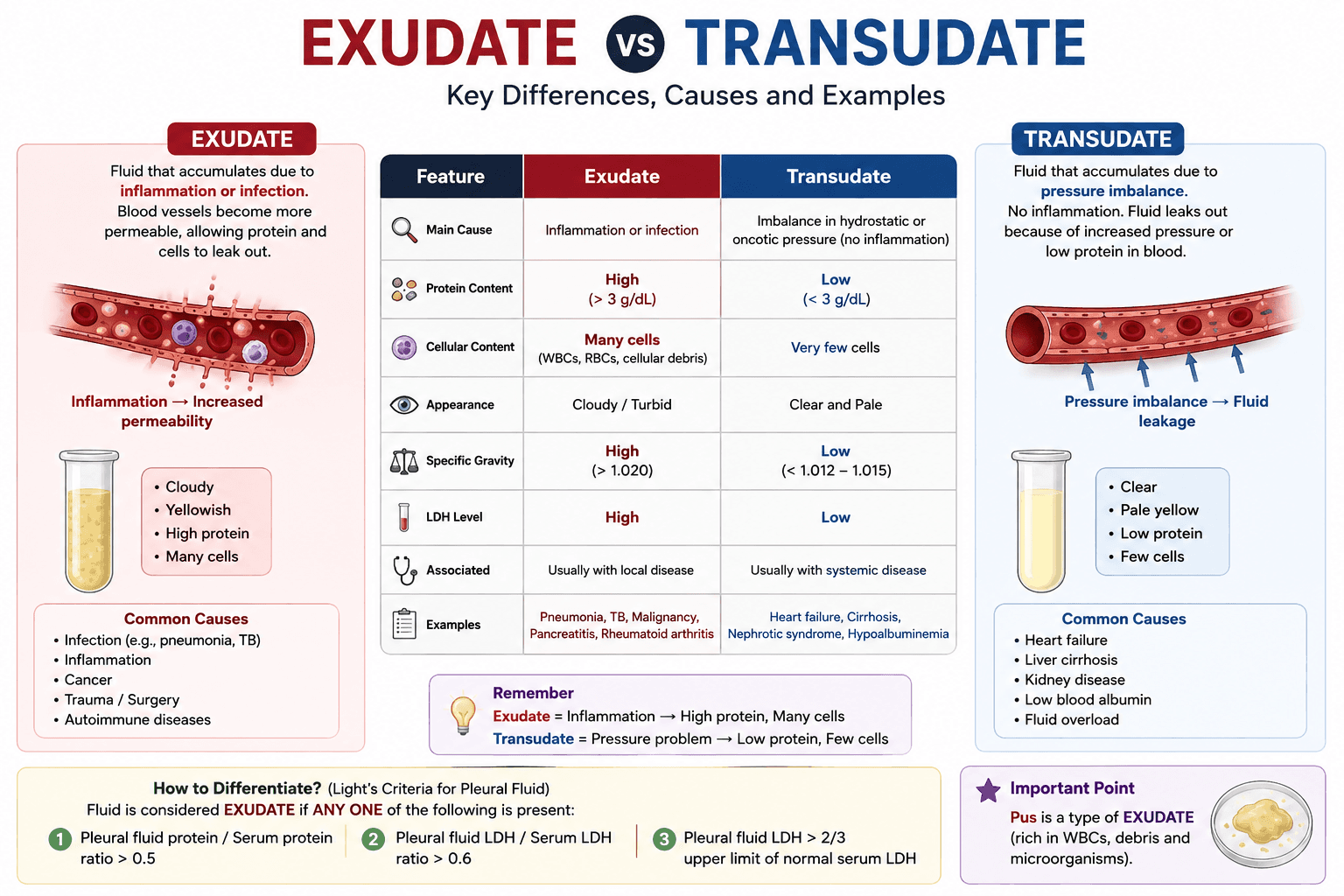
- What is difference between exudate and transudate fluid. — Exudate and Transudate Exudate and transudate are two types of fluid that can accumulate in body tissues or body cavities. They are diffe…
- Adverse Drug Reaction Reporting Systems — Pharmacovigilance fundamentals for students and practicing pharmacists.
- The "7 Minutes After Death" Claim — What's Actually True? — The "7 Minutes After Death" Claim — What's Actually True? A few weeks ago a classmate sent me a video that had been going around — the on…
- i’m a 30-year-old working mom. how do olay moisturizers perform compared to l’oréal’s skincare line? — Olay vs L'Oréal: Which Actually Wins for Busy 30-Somethings? Okay so picture this. It's 7 AM. Coffee's already gone cold because some…
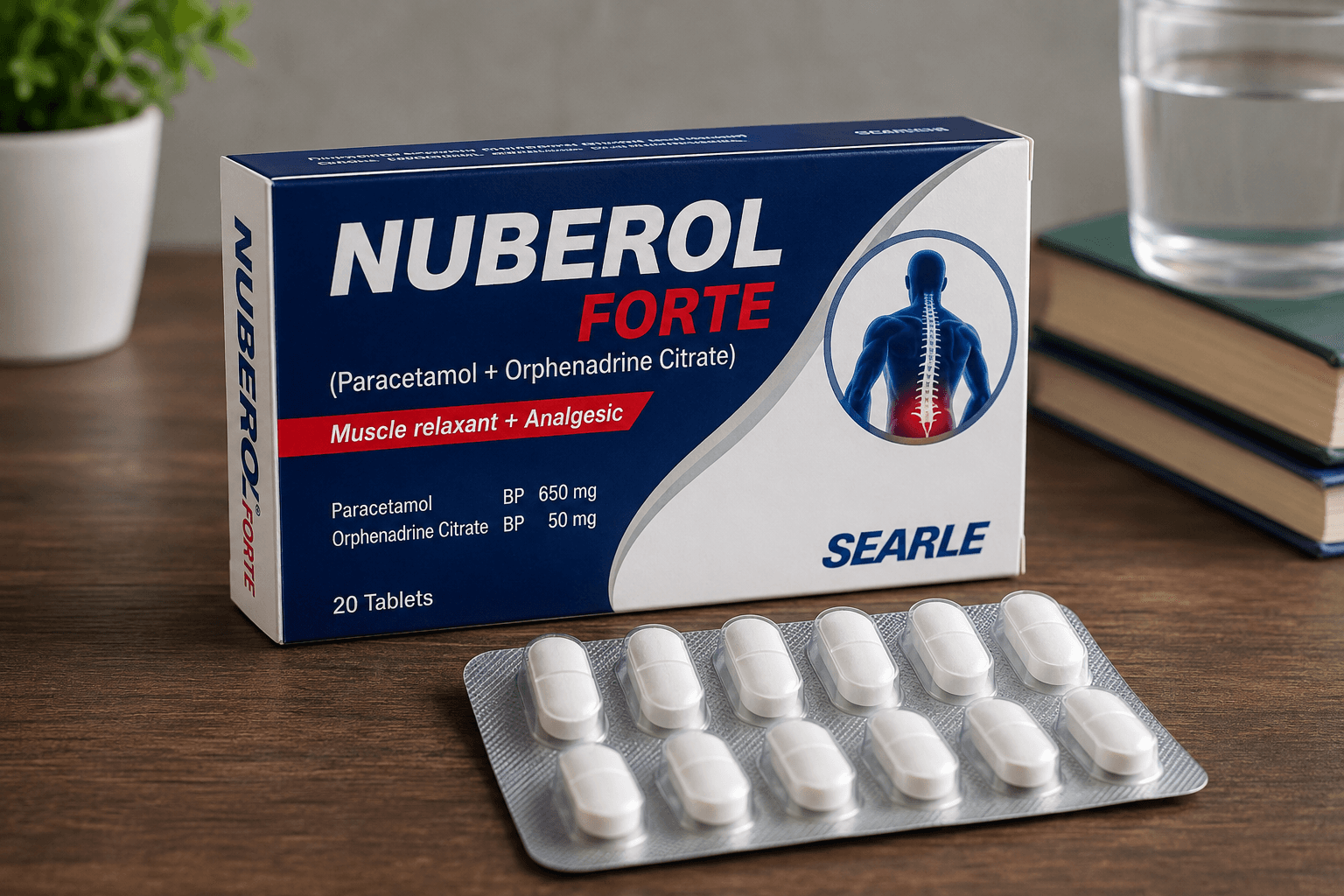
- nuberol forte uses in urdu — نیوبیرول فورٹ (Nuberol Forte): استعمالات، ترکیبِ عمل اور Pharm D نوٹس تعارف پاکستان میں کمر درد، موچ، یا پٹھوں کی اکڑن کے لیے Nuberol For…