Accuracy and Precision: Definitions, Types and Examples
Revise accuracy and precision with pharmacy examples, types of precision, error calculations, and exam tips that separate repeatability from accuracy.
By Maya Brooks, MPH5 min read
Reviewed by Medical Review Team ·
Accuracy describes how closely a measured result agrees with an accepted reference value. Precision describes how closely repeated measurements agree with another under specified conditions.
These analytical measurement concepts help Pharm-D students judge whether laboratory results are trustworthy. A tightly grouped set of results can still be wrong.
These notes are educational, not advertising any company’s product; compare medicine options with a pharmacist when relevant.
Quick Answer / Overview
Accuracy asks, “Is the result close to the reference?” Precision asks, “Do repeated results agree?” Pharmaceutical method validation evaluates both, because consistent results alone cannot establish that a medicine assay gives the correct answer.
REMEMBER: Precision does not prove accuracy.
Key Definitions
- Reference value: The accepted comparison value, often established using a suitable reference material or procedure.
- Trueness: Agreement between the average of many measurements and a reference value; it concerns systematic error.
- Bias: A systematic difference between the average measured value and the reference value.
- Random error: Unpredictable variation that makes repeated results scatter.
Terminology needs care. In metrology, accuracy is a qualitative concept related to both trueness and precision; pharmaceutical validation commonly evaluates accuracy through recovery or comparison with accepted reference results.
Types of Accuracy: What Should You Write?
There is no universal ICH classification of accuracy into named “types.” Some teaching notes use absolute accuracy and relative accuracy, but these are better explained through absolute and relative error.
For an illustrative assay with a reference concentration of 100 mg/L and a measured result of 98 mg/L:
| Expression | Calculation | Result |
|---|---|---|
| Signed measurement error | Measured − reference | −2 mg/L |
| Absolute error magnitude | Size of the difference | 2 mg/L |
| Relative percentage error | (Measured − reference) ÷ reference × 100 | −2% |
| Percentage recovery | Measured ÷ reference × 100 | 98% |
For spike-recovery studies, account for analyte already present: recovery is the measured increase divided by the amount added, multiplied by 100.
IMPORTANT: These are reporting expressions, not universally recognized regulatory “types of accuracy.” Follow your syllabus, but explain the distinction.
Types of Precision
ICH Q2(R2) distinguishes three levels. Conditions determine the category.
| Level | Conditions assessed | Pharmacy laboratory example |
|---|---|---|
| Repeatability | Same operating conditions over a short interval | One analyst prepares replicate assay samples during session |
| Intermediate precision | Variation within laboratory | Different days, analysts, or equipment, as relevant |
| Reproducibility | Variation between laboratories | Laboratories test a shared material using the specified method |
Precision is commonly expressed using standard deviation, which measures spread, or relative standard deviation (RSD):
RSD (%) = standard deviation ÷ mean × 100.
A smaller RSD generally indicates tighter agreement, but acceptable limits depend on the method’s purpose, concentration, matrix, and predefined validation criteria—not a universal percentage.
STICKY NOTE: Repeated injections from vial assess injection precision; they do not establish precision of the complete sample-preparation procedure.
Practical Interpretation and Common Mistakes
Consider illustrative readings against a reference value of 100 mg/L:
- 90, 90, 90: Highly precise, but clearly biased.
- 90, 100, 110: The mean matches the reference, but individual results scatter substantially.
- 99, 100, 101: Close agreement with each other and with the reference.
The second pattern is an exam trap. A correct average can hide poor precision, so report the spread alongside the mean rather than declaring the method accurate from the average alone.
Reference comparison → assess bias/recovery → assess replicate spread → judge fitness for purpose.
In practice, check reference-standard potency, dilution records, balance performance, and sample preparation before blaming the instrument. Consistently poor extraction can produce tightly clustered but low assay results.
Do not repeatedly retest until results pass. Investigate failures under the laboratory’s approved procedure. These calculations are not dosing instructions; confirm any medicine dose with a doctor or pharmacist.
Quick Pharm D Notes
- Classification: Precision includes repeatability, intermediate precision, and reproducibility.
- Process: Compare with a reference and evaluate independent replicates.
- Significance: Reliable assays support medicine quality decisions.
- Exam point: Calibration alone does not validate the full analytical procedure.
FAQ
Can a result be precise but inaccurate?
Yes. A miscalibrated balance may repeatedly give similar but biased measurements.
Are accuracy and trueness identical?
Not strictly. Trueness concerns systematic error; accuracy also relates to precision in metrology.
Is reproducibility the same as repeatability?
No. Repeatability uses closely matched conditions; reproducibility evaluates between-laboratory variation.
Does 100% recovery prove a valid method?
No. Precision, specificity, range, and other relevant performance characteristics still need assessment.
Does every method need the same RSD limit?
No. Acceptance criteria must suit the intended analytical use.
Last-Minute Revision
- Accuracy concerns reference agreement.
- Precision concerns repeated agreement.
- Bias and scatter are different problems.
- State experimental conditions when reporting precision.
References
- ICH Q2(R2): Validation of Analytical Procedures.
- JCGM 200: International Vocabulary of Metrology—Basic and General Concepts and Associated Terms (VIM).
Important Medical Disclaimer
This article is for general educational purposes and is not a substitute for advice from a qualified doctor or pharmacist. Always consult your doctor/pharmacist before using any medicine, changing a dose, or starting treatment.
Related reading
If this article on Accuracy and Precision: Definitions, Types and Examples was helpful, explore these related guides for more practical information on similar topics.
- HPLC Method Validation in Pharmaceutical Analysis — ICH-aligned validation parameters for assay and impurity methods in QC laboratories.
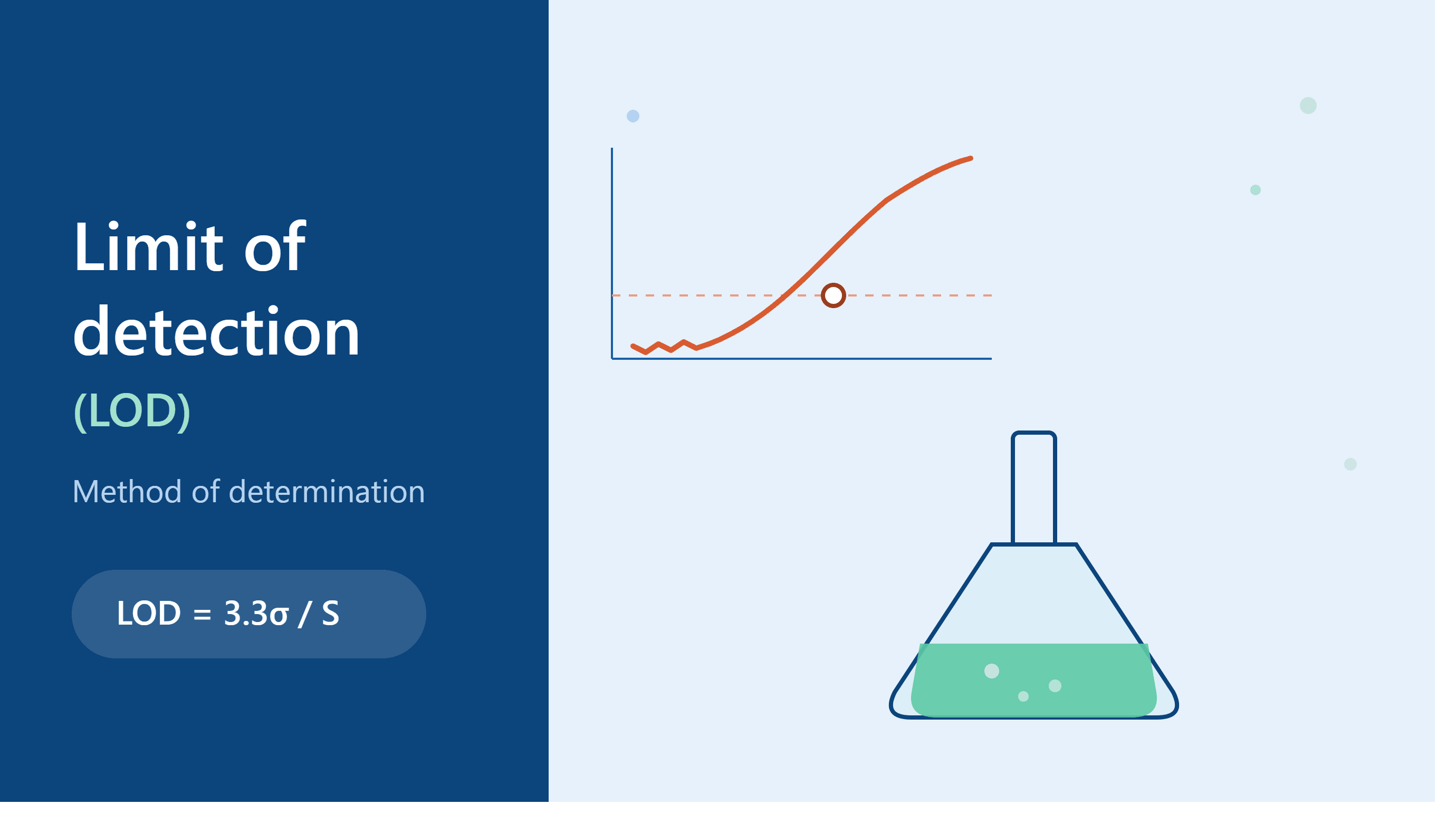
- Limit of Detection (LOD): Method of Determination Explained Simply — How Is the Limit of Detection (LOD) Actually Determined? When an analytical method is validated — an HPLC assay, a UV method, even a simp…
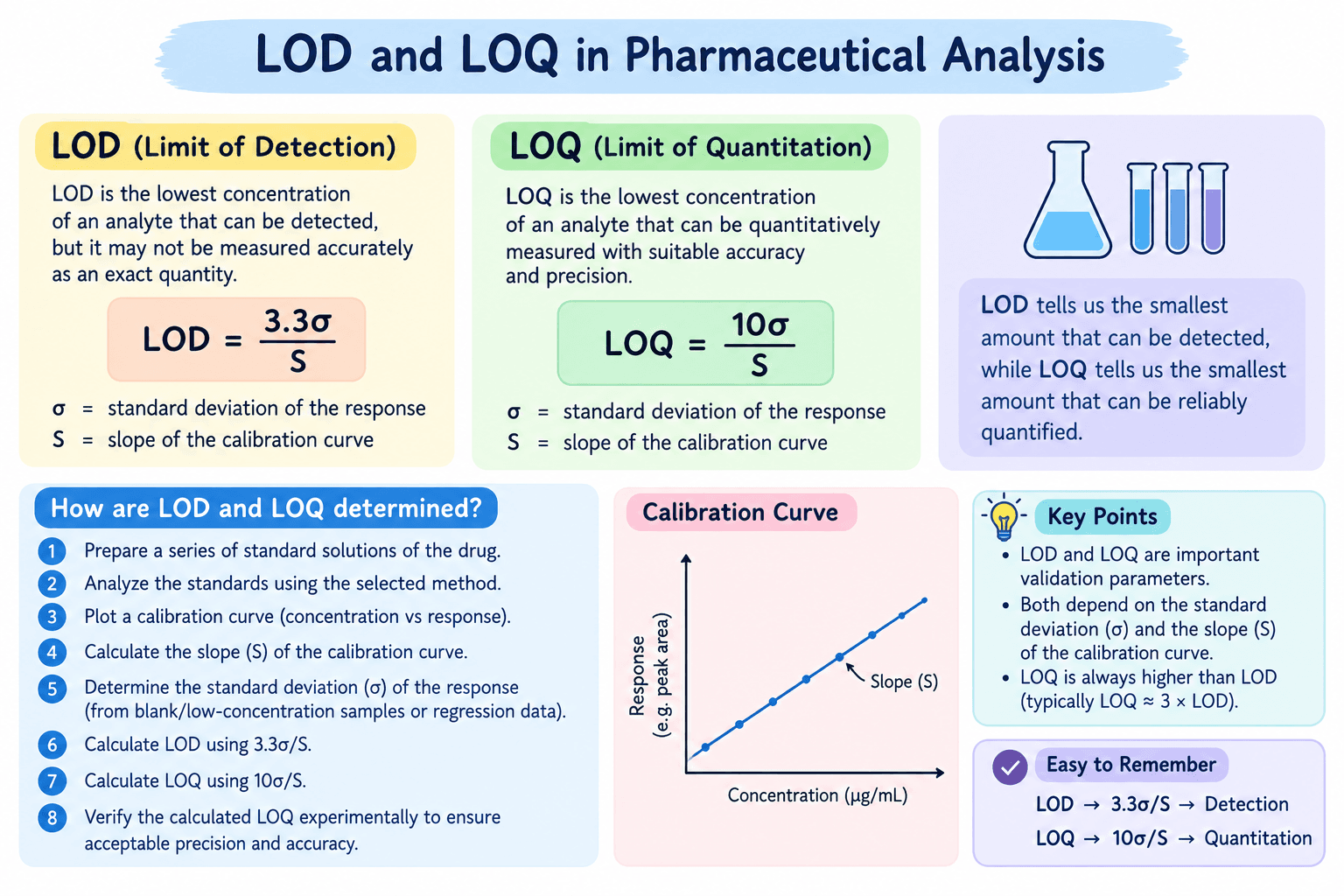
- How LOD and LOQ is determined & Describe sensitivity of a method ? — dits? See our FAQ or pricing.
- Adverse Drug Reaction Reporting Systems — Pharmacovigilance fundamentals for students and practicing pharmacists.
- Medication Therapy Management in Community Practice — How structured MTM visits improve outcomes and expand the pharmacist's clinical role.
- Understanding Drug–Drug Interactions in Clinical Pharmacy Practice — A practical overview of clinically significant interactions.