Supplement information & guide theweeklyhealthiness
Supplement Information & Guide: How to Choose, Use and Question Supplements Wisely Walk down the supplement aisle of any pharmacy and you’ll see hundreds of bottles promising more energy, better sleep, sharper focus,
By Dr. Khalid Mehmood, MD10 min read
Reviewed by Medical Review Team ·
Supplement information & guide theweeklyhealthiness: How to Choose, Use and Question Supplements Wisely
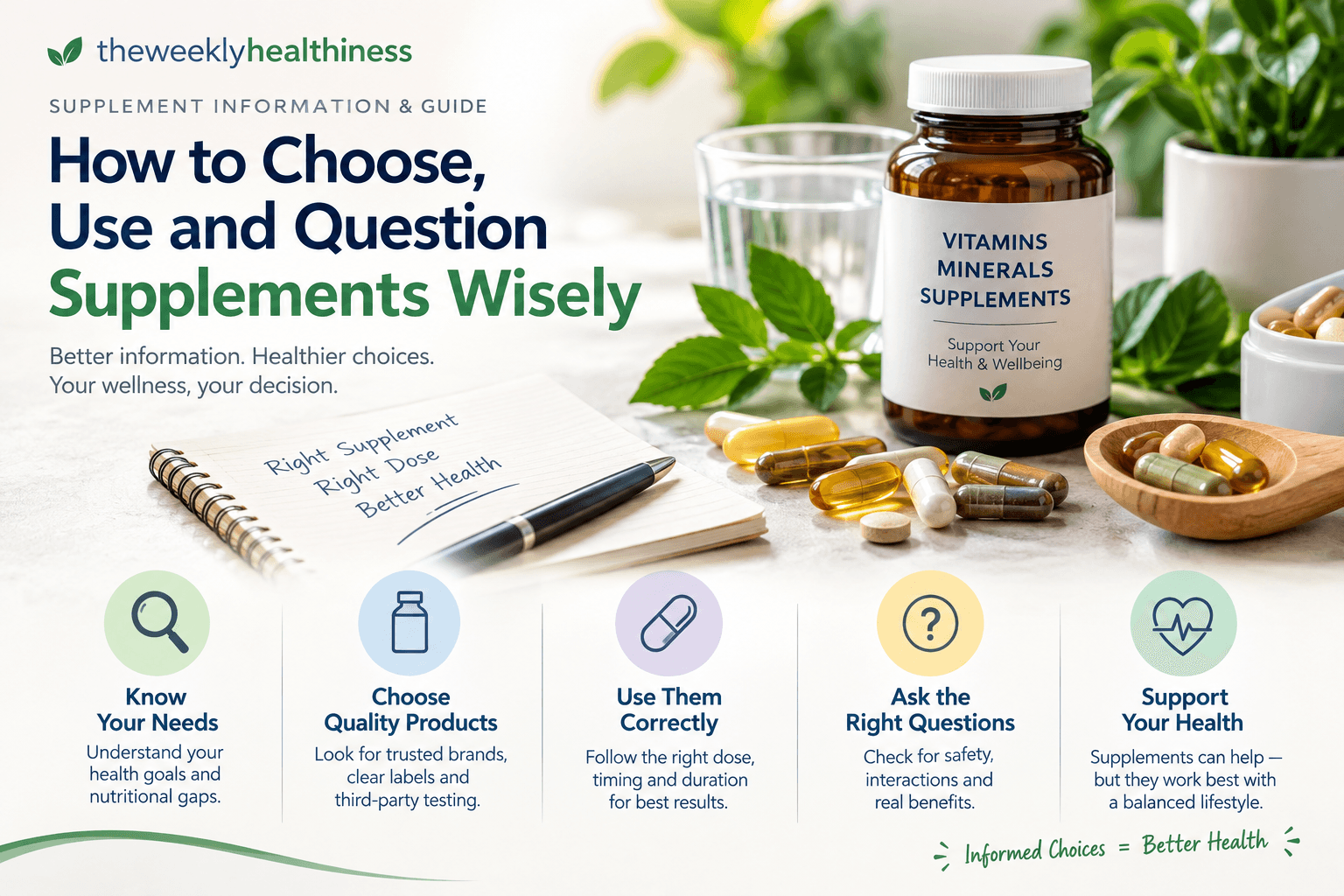
Walk down the supplement aisle of any pharmacy and you’ll see hundreds of bottles promising more energy, better sleep, sharper focus, and stronger immunity. Some of those products help certain people. Many do nothing noticeable. A few can cause harm when used the wrong way.
This supplement information & guide from TheWeeklyHealthiness is built for the person standing in that aisle, phone in hand, wondering what is actually worth buying. Instead of ranking “top 10 miracle pills,” it gives you a way to think: five questions to ask before you buy, how to read a label, which supplements have solid evidence for specific groups, and when to skip the bottle and talk to a professional.
First, What Is a Supplement (and What Isn’t It)?
A dietary supplement is a product taken by mouth that contains or more ingredients meant to add to your diet. These include vitamins, minerals, herbs and botanicals, amino acids, fiber, probiotics, and fatty acids like omega-3.
The word that matters is add. Supplements are not medicines, and they aren’t a replacement for meals. Food delivers fiber, protein, and thousands of natural compounds that no capsule fully copies. Think of supplements as a tool for specific gaps, not a safety net for a poor diet.
Why Regulation Is Different From What Most People Assume
Many shoppers assume that anything sold on a shelf has been checked for safety and effectiveness. That’s not how it works in many countries. In the United States, for example, the FDA doesn’t approve dietary supplements for safety or effectiveness before they’re sold. The manufacturer is responsible for making sure the product is safe and the label is truthful, and regulators step in mainly after problems appear. Rules differ in the UK, EU, Canada, Australia, and elsewhere, but the practical lesson is the same: quality varies a lot between brands, so you need to do part of the checking yourself.
The Five-Question Check Before You Buy
Run any supplement through these questions. If you can’t answer them, wait.
1. What specific problem am I trying to solve?
“I want to feel healthier” is not a reason. “My doctor found low vitamin D” or “I eat no animal products and need B12” is. A clear purpose helps you pick the right ingredient and the right dose, and tells you later whether it worked.
2. Do I actually have a gap?
Blood tests can confirm deficiencies in nutrients like vitamin D, B12, iron, and folate. Taking iron when you aren’t low, for instance, can cause side effects and, at high levels over time, real harm. Testing first saves money and avoids guesswork.
3. Is there good evidence for this ingredient and this use?
Be wary of any claim based on “studies show” without naming them. Strong evidence usually means human trials, ideally several, in people similar to you. Animal or test-tube results are interesting but are a long way from proof.
4. Is it safe alongside my medications and conditions?
Supplements can interact with prescriptions. A well-known example is St. John’s wort, which can reduce the effectiveness of many medicines, including some antidepressants and birth control pills. Vitamin K can interfere with blood thinners like warfarin. If you take any regular medication, ask a pharmacist or doctor before adding anything.
5. Has the product been independently tested?
This question separates better products from risky ones, and the next section covers it.
How to Read a Supplement Label Like a Skeptic
Labels can be confusing on purpose. Here is what to look at.
Check the “Supplement Facts” panel. It lists each ingredient, the amount per serving, and the percentage of the daily value. Compare the amount with recognized recommended intakes and upper limits for your age and sex.
Look for third-party testing seals. Independent programs such as USP, NSF International, and ConsumerLab test whether a product contains what it says and is free from certain contaminants. A seal isn’t a guarantee of effectiveness, but it does improve your odds on quality.
Be careful with “proprietary blends.” These list a total weight for a mix of ingredients but not the amount of each one. You can’t tell whether the useful ingredient is present in a meaningful dose or just sprinkled in.
Notice the form of the nutrient. Magnesium citrate, glycinate, and oxide, for example, are absorbed differently and affect the stomach differently. The “best” form depends on your goal.
Watch for red-flag language. Treat these as warning signs:
| Red flag | Why it matters |
|---|---|
| “Cures,” “treats,” or “reverses” a disease | Supplements can’t legally claim to cure diseases in most markets |
| “Detox,” “cleanse,” or “flush” | Your liver and kidneys already do this; the term is mostly marketing |
| “Secret formula” or “doctors hate this” | Vague, emotional, and unverifiable |
| Dozens of ingredients in pill | Doses are often too small to matter |
| Huge doses (thousands of percent of daily value) | More is not better and can be harmful |
Supplements With the Strongest Evidence for Specific Groups
No single supplement is right for everyone. These are examples where evidence or health guidance is relatively strong for certain people. Always confirm with a healthcare professional before starting.
Vitamin D. People with limited sun exposure, darker skin in northern climates, older adults, and those with confirmed low levels may benefit. Because it’s fat-soluble, too much can build up, so dose matters.
Vitamin B12. Found mainly in animal foods, so people following vegan diets are commonly advised to supplement or use fortified foods. Some older adults and people on certain stomach medications also absorb it poorly.
Folic acid or folate. Health authorities recommend it for people who could become pregnant, because it lowers the risk of certain birth defects when taken before and during early pregnancy.
Iron. Helpful for diagnosed iron-deficiency anemia, which is more common in menstruating and pregnant women, but when a test shows you need it.
Omega-3 (fish oil or algae oil). People who rarely eat fish may consider it. Evidence for benefits varies by condition, so it’s worth discussing with a doctor, especially for heart-health goals.
Calcium. Often recommended when dietary intake is low. Food sources come first, and excess calcium from pills isn’t harmless, so match the dose to your actual shortfall.
Common Supplement Mistakes (and How to Avoid Them)
Stacking too many products at once. If you start five supplements together and feel unwell, you can’t tell which caused it. Introduce at a time.
Assuming “natural” means safe. Poisonous plants are natural too. Herbal products can be strong, and some have been linked to liver problems in rare cases.
Doubling up without realizing it. A multivitamin, a “hair and nails” gummy, and an immune powder may all contain the same vitamin. The totals can exceed safe upper limits.
Ignoring the timing. Some nutrients absorb better with food (fat-soluble vitamins A, D, E, K), while others, like iron, may be taken on an emptier stomach or separated from calcium and coffee. Check the guidance for your specific product.
Expecting overnight results. Many supplements take weeks or months to show an effect, and some will show none. Decide in advance how long you’ll trial and what you’ll measure.
Using supplements to avoid fixing basics. If you sleep four hours a night, eat mostly ultra-processed food, and rarely move, no capsule will cancel that out.
Special Situations That Call for Extra Care
Talk to a doctor or pharmacist before using supplements if you are pregnant or breastfeeding, planning surgery, managing a chronic condition such as kidney or liver disease, taking prescription medicines, or giving products to children. High doses of vitamin A, for example, are a concern during pregnancy, and several herbs aren’t recommended around surgery because they can affect bleeding or anesthesia.
Stop taking a product and seek medical help if you notice an allergic reaction, severe stomach problems, an irregular heartbeat, or any other worrying symptom after starting it.
A Simple Routine for Starting a New Supplement Safely
- Write down your goal and what “working” would look like.
- Check with a healthcare professional, especially if you take medication.
- Pick a product with third-party testing and a clear, full ingredient list.
- Start with product at a sensible dose, not the maximum.
- Keep a short note about how you feel, sleep, or any side effects.
- Review after 8 to 12 weeks. If you can’t see a benefit, stop and save your money.
Food First: A Quick Reality Check
Before reaching for a bottle, look at what you can add to your plate:
- Vitamin C: citrus, peppers, kiwi, strawberries
- Magnesium: pumpkin seeds, almonds, spinach, whole grains
- Iron: lentils, beans, red meat, fortified cereals (pair plant sources with vitamin C)
- Omega-3: oily fish, flaxseed, chia, walnuts
- Calcium: dairy, fortified plant milks, tofu set with calcium, leafy greens
- Vitamin D: fatty fish, fortified foods, and sensible sun exposure
For many people, small improvements in daily meals do more than a cabinet full of supplements.
Frequently Asked Questions
Do I need a multivitamin?
Most people who eat a varied diet don’t need one. It may help if you have a restricted diet, limited appetite, or specific needs identified by a professional.
Are gummies as good as capsules?
Not always. Gummies can contain less of certain nutrients and more sugar, and their stated amounts can drift as they sit on a shelf. Check the label and testing information.
Can I take supplements forever?
Some are intended for long-term use under guidance, while others are meant for a short period. Review your list at least a year with a professional.
How do I know if a supplement is working?
Compare your starting goal with how you feel, or with lab results, after a fair trial period. If you can’t measure any change, it may not be doing much for you.
Is more expensive better?
Not necessarily. Price doesn’t prove quality. Independent testing and transparent labeling are better indicators.
Final Thoughts
Supplements can be useful when they’re matched to a real need, taken at a sensible dose, and chosen from a trustworthy source. They work poorly as a shortcut. The best “supplement information & guide” is the that makes you ask better questions: What is the gap? What is the evidence? Is it safe for me? Is the product tested?
Start with your food, sleep, and movement. Add a supplement when there’s a clear reason, and review it regularly. Small, informed choices will serve your health far better than a shelf full of bottles.
Important Medical Disclaimer
This article is for general educational purposes and is not a substitute for advice from a qualified doctor or pharmacist. Always consult your doctor/pharmacist before using any medicine, changing a dose, or starting treatment.
Related reading
If this article on Supplement information & guide theweeklyhealthiness was helpful, explore these related guides for more practical information on similar topics.
- Wutawhealth Wellness Information Tips, Tricks & Advice Guide — Wutawhealth Wellness Information Tips, Tricks & Advice Guide Wutawhealth wellness information tips, tricks & advice can mean different th…
- Fitness Guide Thespoonathletic — Build a safer fitness plan with Pharm-D notes on exercise targets, medicine interactions, supplements, glucose monitoring, and urgent war…
- JalbiteHealth Guide by JustALittleBite for Healthy Living — JalbiteHealth Guide by JustALittleBite for Healthy Living: Simple Habits That Actually Last Most people don’t struggle with healthy livin…
- Immunization Updates for Pharmacy Practice — Seasonal recommendations and workflow tips for pharmacy-based vaccination services.