Heart Attack vs Cardiac Arrest vs Heart Failure: Symptom and First Aid Families Should Know
What are the stages of congestive heart failure? “Congestive heart failure” (often called heart failure) means the heart cannot pump or fill well enough…
By Dr. Amina Rahman, PharmD6 min read
Reviewed by Medical Review Team ·
A relative suddenly complains of chest discomfort. person starts having trouble breathing while climbing a flight of stairs. Another just collapses. All of these can be very similar in appearance and can be extremely alarming, but they may be indicative of very different heart conditions.
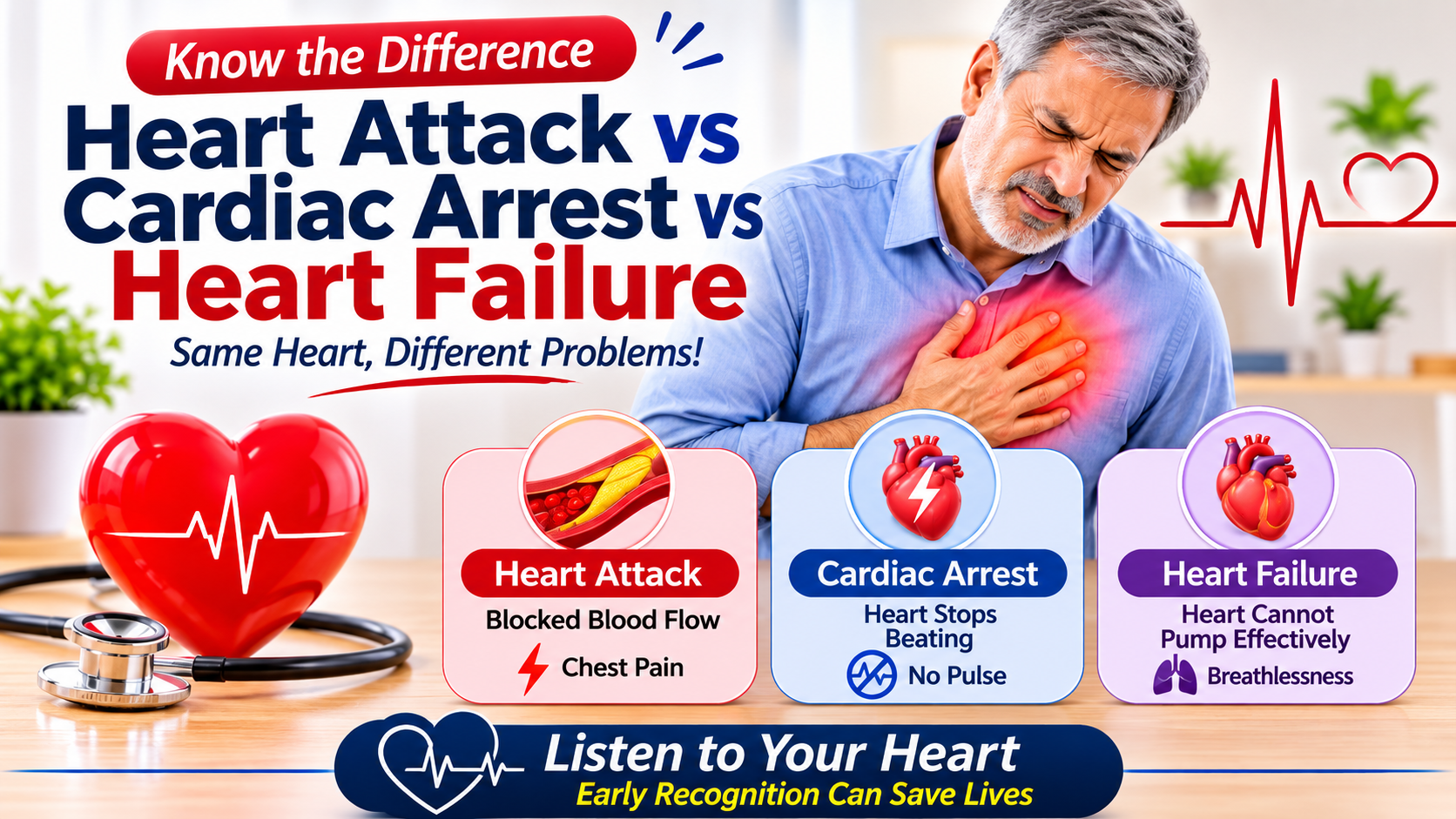
Cardiac arrest, Heart attack, and Heart failure are all things which affect the heart and are therefore often confused. They are not the same, though, and it's important to know the difference so families can respond appropriately.
Key Takeaways
- Heart failure means the heart isn't pumping effectively. It doesn't mean the heart has stopped.
- Chest pressure, sweating, nausea and breathlessness can all be signs of a heart attack.
- Sudden collapse, unresponsiveness and abnormal breathing are all signs of cardiac arrest.
- Calling 112, spotting the symptoms early and knowing the basics of CPR can make all the difference.
- Families looking after someone with heart failure should be alert to any deterioration in breathlessness, any worsening of the oedema and any sudden weight gain.
Understanding the Difference
1. Heart attack: When blood flow to the heart is blocked
A heart attack (myocardial infarction) is when the flow of blood to part of the heart muscle is blocked, which could be due to a blood clot forming on top of a narrowed coronary artery.
Without enough oxygenated blood, the affected heart muscle starts to be damaged, and the longer treatment is delayed, the more damage can occur.
2. Cardiac arrest: When the heart suddenly stops pumping
Cardiac arrest occurs when an electrical problem disrupts the heart's rhythm, causing it to stop pumping blood effectively. The person suddenly becomes unresponsive and stops breathing normally or gasps for air.
Unlike a heart attack, cardiac arrest results in an immediate loss of the heart's pumping function and, without CPR and defibrillation, is potentially fatal within minutes.
3. Heart failure: When the heart cannot pump blood effectively
Heart failure is when the heart doesn't pump enough blood to meet the body's requirements. It doesn't mean the heart has stopped.
It tends to develop over time, although symptoms can sometimes worsen suddenly. Conditions such as hypertension, coronary artery disease and a previous history of heart attack can all lead to weakening or damage of the heart muscle.
How Can Families Recognise the Warning Signs?
The symptoms can be very similar (particularly breathlessness, fatigue, and chest discomfort), but some features can help differentiate between them.
Heart attack symptoms
- Chest discomfort, pressure or a squeezing sensation which lasts for several minutes or comes and goes.
- Pain radiating to or both arms, the back, the neck, the jaw or the stomach.
- Shortness of breath, sometimes without chest pain.
- Cold sweats, nausea, vomiting or light-headedness.
Women may experience less typical symptoms, including unusual tiredness, nausea, back pain and breathlessness. This is reason why heart attacks can sometimes go unrecognised or be mistaken for other health problems. Therefore, women should never ignore these symptoms, especially when they appear suddenly or occur together.
Cardiac arrest symptoms
- Sudden collapse or unconsciousness.
- No response when you call their name or tap their shoulders.
- No normal breathing at all, just occasional gasps.
- Sudden loss of ability to respond or to move.
Heart failure symptoms
- Breathlessness during everyday activities or while lying down.
- Swelling in the feet, ankles, legs or abdomen.
- Persistent tiredness and reduced exercise tolerance.
- Sudden weight gain from fluid retention.
- Persistent coughing or wheezing, sometimes with frothy sputum.
Unlike cardiac arrest, heart failure symptoms often develop gradually. However, sudden or severe breathlessness can indicate an emergency.
Heart Attack First Aid: What should families do?
If someone is developing the symptoms of a possible heart attack, don't wait to see if the discomfort goes away. Even if it's a very mild discomfort, you need to get medical assessment straight away.
1. Call emergency services
In India, dial 112 for an emergency. Give them the symptoms and your location. Don't wait for the person to go unconscious.
2. Help the person rest
Ask them to stop any physical activity and to sit in a comfortable, supported position. Loosen any tight clothing and help them to remain calm.
3. Do not give medicines casually
If the person has prescribed medication for angina, such as glyceryl trinitrate (GTN), help them use it according to their doctor's instructions. Do not take measures for heart attack first aid on your own. Aspirin may be advised in some suspected heart attacks, but check with emergency services or a healthcare professional first, particularly if there is an allergy or a risk of bleeding.
4. Stay with them
Monitor their breathing and responsiveness while waiting for medical help. Avoid giving food or drink, and do not allow them to drive themselves to hospital.
What should you do during cardiac arrest?
Cardiac arrest requires a different response. CPR (cardiopulmonary resuscitation) and an AED (automated external defibrillator) can help restore circulation and can save a life.
If someone suddenly collapses:
- Check whether the surroundings are safe.
- Tap their shoulders and call out to see if they respond.
- If they are unresponsive and not breathing normally, ask someone to call 112 and find an AED.
- Begin chest compressions immediately. Place both hands in the centre of the chest and push hard and fast.
- For adults, aim for 100–120 compressions per minute, at a depth of approximately 5–6 cm, allowing the chest to return to its normal position between compressions.
- If an AED is available, switch it on and follow its spoken instructions.
If you are not trained in giving rescue breaths, performing hands-only CPR is still much better than doing nothing. Place both hands in the center of the person's chest and push hard and fast at a steady rate, allowing the chest to return to its normal position after each compression. Keep performing chest compressions without interruption until the person shows signs of life, trained emergency medical professionals arrive and take over, or you are physically unable to continue.
What if someone has heart failure?
For someone who has already been diagnosed with heart failure, family members should carefully monitor their condition and look for any changes in their normal symptoms. Increasing ankle or leg swelling, sudden weight gain, unusual tiredness, persistent coughing, or worsening breathlessness may be signs of fluid building up in the body, especially around the lungs.
If the person starts experiencing breathing difficulties, help them sit upright in a comfortable position, as this can make breathing easier. Contact their healthcare team for advice and monitor whether their symptoms improve or become worse. If they develop severe breathlessness at rest, chest pain, blue lips, confusion, or fainting, call an ambulance immediately, as these may be signs of a serious medical emergency.
Family members should ensure that the person takes all prescribed heart medications regularly. Never independently increase the diuretic dose or change heart medications without consulting a healthcare professional. If the person becomes unresponsive and stops breathing normally or gasps, treat it as a possible cardiac arrest. Call emergency services, start CPR immediately, and continue until medical professionals take over.
Important Medical Disclaimer
This article is for general educational purposes and is not a substitute for advice from a qualified doctor or pharmacist. Always consult your doctor/pharmacist before using any medicine, changing a dose, or starting treatment.