Nutrition Advice & Tips: 12 Practical Ways to Eat Better
Nutrition Advice & Tips: 12 Practical Ways to Eat Better Without Overthinking It Nutrition advice is everywhere, and a lot of it contradicts itself. One headline says eggs are great, the next says skip them. One
By Dr. Khalid Mehmood, MD8 min read
Reviewed by Medical Review Team ·
Nutrition Advice & Tips: 12 Practical Ways to Eat Better Without Overthinking It
Nutrition advice is everywhere, and a lot of it contradicts itself. headline says eggs are great, the next says skip them. influencer swears by fasting, another by six small meals a day. No wonder so many people give up and order takeout.
The good news is that the fundamentals of eating well haven’t changed much, and they’re far less dramatic than the internet suggests. These nutrition advice tips from TheWeeklyHealthiness cut through the noise with twelve realistic ideas, a few myths worth dropping, and a one-week plan you can start on Monday.
Before the Tips: Three Ground Rules
Progress beats perfection. A decent meal eaten consistently does more for you than a perfect plan you quit after nine days.
Your needs are personal. Age, sex, activity level, health conditions, culture, and budget all shape what “healthy eating” looks like for you. Treat any advice, including this article, as a starting point.
Food is not fuel. Meals are also pleasure, family, and tradition. Advice that ignores this rarely lasts.
The 12 Nutrition Tips
Tip 1: Build Your Plate Before You Count Anything
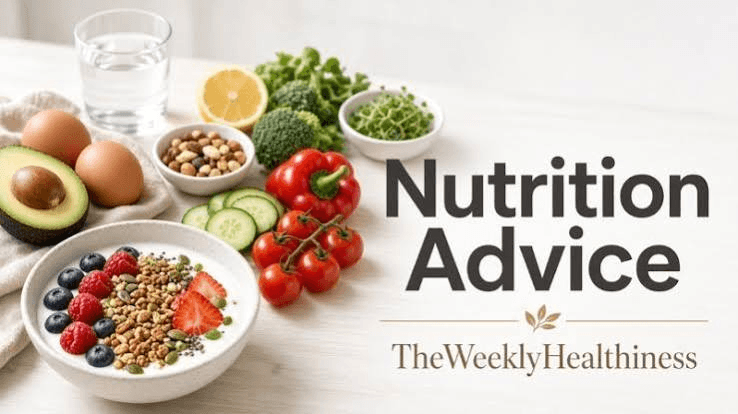
Forget calorie apps for a moment. A simple visual works well: fill about half your plate with vegetables and fruit, a quarter with protein, and a quarter with whole grains or starchy foods, then add a little healthy fat. It’s not a rigid formula, but it steers most meals toward balance without any math.
Tip 2: Make Protein a Habit at Every Meal
Protein helps you feel full, supports muscle, and keeps energy steadier. Good everyday sources include eggs, yogurt, fish, poultry, tofu, beans, lentils, and nuts. If breakfast is usually toast or cereal, adding eggs, Greek yogurt, or a handful of nuts is of the easiest upgrades available.
Tip 3: Eat More Fiber (Slowly)
Most people fall short on fiber, which supports digestion, helps control blood sugar, and keeps you fuller for longer. Oats, beans, lentils, vegetables, fruit with the skin on, and whole grains all contribute. Increase gradually and drink enough fluid, because a sudden jump can cause bloating.
Tip 4: Aim for Color, Not a Number
Instead of stressing about exact servings, try to include a few different colors across the day: leafy greens, orange carrots or sweet potatoes, red tomatoes or peppers, purple berries or cabbage. Different colors generally signal different vitamins and plant compounds, so variety does the work for you.
Tip 5: Choose Smarter Carbs, Don’t Fear Them
Carbohydrates are not the enemy. Your brain and muscles use them for energy. The goal is to lean toward options that come with fiber and nutrients, such as oats, brown rice, whole wheat bread, potatoes with skin, fruit, and legumes, and to enjoy refined carbs like white bread, pastries, and sweets in moderation.
Tip 6: Keep Healthy Fats on the Menu
Fat helps you absorb certain vitamins and makes food satisfying. Favor sources like olive oil, avocado, nuts, seeds, and oily fish. Keep an eye on foods high in saturated fat, such as processed meats, fried food, and many baked goods, rather than cutting all fat.
Tip 7: Drink More Water, and Notice What Else You Drink
Water is the simplest nutrition upgrade there is. Sugary drinks, including soda, sweetened coffee, and many juices, can add a surprising amount of sugar without making you feel full. Try replacing sweet drink a day with water, sparkling water, or unsweetened tea and see how it feels after two weeks.
Tip 8: Read Labels Like a Detective, Not a Judge
You don’t need to scan every package. Focus on three things: the ingredients list (shorter and more recognizable is usually better), added sugars, and sodium. Be careful with front-of-pack claims like “natural,” “light,” or “wholesome,” which are marketing terms rather than guarantees.
Tip 9: Plan Your Week, Not Every Meal
You don’t need a rigid meal plan. Pick three or four dinners for the week, buy the ingredients, and let leftovers and simple meals fill the gaps. Having a plan reduces last-minute fast food decisions and makes grocery shopping faster and cheaper.
Tip 10: Slow Down When You Eat
Eating quickly makes it easy to overshoot fullness before your body signals it. Try putting your fork down between bites, chewing properly, and eating at least meal a day away from screens. It sounds small, but many people find meals more satisfying and digestion more comfortable.
Tip 11: Don’t Skip the Snack Strategy
Snacking isn’t bad. Random snacking when you’re starving is what causes trouble. Keep a couple of useful options within reach, like fruit, nuts, yogurt, hummus with vegetables, or whole grain crackers with cheese. Planned snacks prevent the “I’ll just grab anything” spiral.
Tip 12: Allow Foods You Love
Strict food bans usually backfire and lead to overeating later. A flexible approach, where most of your meals are nourishing and some are purely for enjoyment, is easier to maintain for years. A slice of cake at a birthday is not a failure; it’s part of a normal life.
Five Nutrition Myths Worth Retiring
Myth: Carbs make you fat.
Fact: Overall energy balance, food quality, and lifestyle matter far more than any single nutrient. Whole-food carbs are part of many healthy diets worldwide.
Myth: You must eat six small meals a day to “boost your metabolism.”
Fact: Meal frequency matters less than total intake and what you eat. Eat in a pattern that suits your schedule and hunger.
Myth: Detox diets and cleanses remove toxins.
Fact: Your liver, kidneys, and gut already handle this. Cleanses often just restrict food and can leave you tired or unwell.
Myth: Fat-free is always healthier.
Fact: Many fat-free products add sugar or salt to compensate for flavor. Check the label instead of trusting the claim.
Myth: Eating late at night automatically causes weight gain.
Fact: What and how much you eat across the day matters most. Late eating is mainly a problem if it leads to extra snacking or poor sleep.
A Simple 7-Day Plan to Put These Tips Into Action
You don’t need to do everything at once. Try focus per day, and keep the that feel easy.
| Day | Small focus | How to do it |
|---|---|---|
| Monday | Build the plate | Make dinner half vegetables and add a source of protein |
| Tuesday | Protein breakfast | Add eggs, yogurt, or nuts to your morning meal |
| Wednesday | Water swap | Replace sweet drink with water or unsweetened tea |
| Thursday | Fiber boost | Add beans, lentils, or an extra vegetable |
| Friday | Label check | Read the sugar and sodium on product you buy often |
| Saturday | Plan ahead | Choose three dinners and write a short shopping list |
| Sunday | Slow meal | Eat meal without screens and notice your fullness |
At the end of the week, look back and ask which changes felt natural. Keep those, and add new habit next week.
Quick Grocery List for Better Everyday Eating
Stocking your kitchen well makes good choices automatic. Consider keeping these on hand:
- Fresh or frozen vegetables and fruit: frozen is nutritious, convenient, and often cheaper
- Proteins: eggs, canned fish, beans, lentils, tofu, chicken, yogurt
- Whole grains: oats, brown rice, whole wheat pasta, whole grain bread
- Healthy fats: olive oil, nuts, seeds, avocado
- Flavor boosters: herbs, spices, garlic, lemon, vinegar
When to Get Personalized Advice
General tips are useful, but some situations need a professional. See a doctor or registered dietitian if you have diabetes, kidney or heart disease, food allergies, digestive conditions, are pregnant or breastfeeding, are managing a history of disordered eating, or plan to make big changes to your diet. A professional can build a plan around your health, culture, and budget.
Frequently Asked Questions
What is the single most useful nutrition tip?
There isn’t one, but eating more whole, minimally processed foods, especially vegetables, fruit, beans, and whole grains, is a strong foundation for most people.
How much protein do I need?
It depends on age, activity level, and health. Many adults do well with moderate amounts spread across meals, but your doctor or dietitian can give a number that suits you.
Is it okay to eat out?
Yes. Look for grilled or baked options, add a vegetable side, watch portion sizes, and enjoy the meal without guilt.
How long before I notice a difference?
Some people notice better energy or digestion within a couple of weeks. Other changes, like weight or lab results, take longer and vary by person.
Do I need to give up sugar completely?
No. Most health guidance suggests limiting added sugar rather than eliminating it entirely.
The Takeaway
Good nutrition isn’t about strict rules, expensive superfoods, or perfect days. It’s built from ordinary choices repeated often: a balanced plate, enough protein and fiber, plenty of water, a bit of planning, and room for the foods you love. Start with tip from this list, make it part of your week, and build from there.
These nutrition advice tips from TheWeeklyHealthiness are meant to be a calm, practical starting point, not another set of rules to feel bad about.
Important Medical Disclaimer
This article is for general educational purposes and is not a substitute for advice from a qualified doctor or pharmacist. Always consult your doctor/pharmacist before using any medicine, changing a dose, or starting treatment.
Related reading
If this article on Nutrition Advice & Tips: 12 Practical Ways to Eat Better was helpful, explore these related guides for more practical information on similar topics.
- Wutawhealth Wellness Information Tips, Tricks & Advice Guide — Wutawhealth Wellness Information Tips, Tricks & Advice Guide Wutawhealth wellness information tips, tricks & advice can mean different th…
- Know the causes of white hair and easy ways to prevent it naturally — Learn why hair turns white, which natural habits support healthy growth, and when early greying needs medical checks rather than another…
- Healthrova.com Guides: Check Medicine Advice Safely — Searching for healthrova.com guides? Learn how to check medicine advice, match your pack to a guide, and spot safety warnings before chan…
- Immunization Updates for Pharmacy Practice — Seasonal recommendations and workflow tips for pharmacy-based vaccination services.